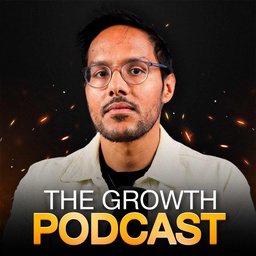
 Aakash Gupta
Automate Your Entire Work Life With Claude Code — No Coding Needed
Aakash Gupta and Dave Killeen on build a personal operating system using Claude Code and Dex.
In this episode of Aakash Gupta, featuring Aakash Gupta and Dave Killeen, Automate Your Entire Work Life With Claude Code — No Coding Needed explores build a personal operating system using Claude Code and Dex Dave runs a single “daily plan” command that automatically aggregates calendar, goals, meeting notes, CRM/deal intel, and market signals into a prioritized plan with drafted follow-up messages.
At a glance
WHAT IT’S REALLY ABOUT
Build a personal operating system using Claude Code and Dex
- Dave runs a single “daily plan” command that automatically aggregates calendar, goals, meeting notes, CRM/deal intel, and market signals into a prioritized plan with drafted follow-up messages.
- Dex is built around plain-text/Markdown “living files” that continuously compound in usefulness as new meetings, tasks, and insights are appended and cross-linked to projects, people, and accounts.
- The workflow extends beyond planning into product execution: ideas are ranked in a backlog, expanded into PRDs, and managed through a lightweight Kanban UI that Claude can advance autonomously.
- The technical backbone is clarified: skills/commands describe repeatable jobs, MCP servers provide deterministic guardrails for integrations, and Claude Code hooks (especially session-start) enforce reliable context injection and learning from mistakes.
- Killeen argues the differentiator vs. ChatGPT-style chats is persistence and compounding context, while emphasizing “taste” (human judgment) to avoid overwhelm and low-quality output at scale.
IDEAS WORTH REMEMBERING
7 ideasOne command can replace hours of context gathering—if your data is wired in.
Killeen’s daily plan pulls from calendar, quarterly/weekly goals, meeting transcripts (Granola), CRM/deal tools (e.g., Clari), newsletters, YouTube, and LinkedIn to produce priorities and even drafted Slack outreach.
“Living files” are the compounding advantage over chat-only AI.
By appending new evidence (meeting actions, stakeholder updates, account changes) to project/person/company pages, future sessions become smarter and faster without relying on opaque model memory.
Use MCP servers when you need reliability and repeatability.
Skills/commands can be probabilistic, but MCP servers enforce tighter, more deterministic interaction patterns with external systems (e.g., consistent task creation rules, safe data access patterns).
Claude Code hooks are what make the system feel persistent and self-improving.
Session-start hooks can inject weekly priorities, strategic pillars, preferences, and past mistakes into every new chat—reducing regressions and keeping work aligned without manually re-briefing the model.
PRDs are now cheap—attention management becomes the real bottleneck.
Generating many parallel PRDs creates cognitive overhead, so Killeen built a Kanban-style UI that scores, ranks, and suggests next actions to keep execution manageable.
Treat AI as a sparring partner that challenges you, not just a generator.
He uses Claude to “grill” the system and his own decisions (e.g., calling out skill sprawl and “harsh truths”), then bakes those constraints into Claude MD and hooks to course-correct behavior.
Clear goals beat detailed instructions; let the agent find the path.
Killeen recommends stating friction/pain points and desired outcomes, using tools like Anthropic’s Prompt Improver (and a Dex equivalent) to sharpen vague prompts into executable objectives.
WORDS WORTH SAVING
5 quotesSo I run one command in the morning, and five minutes later I know what deals need attention, who I'm meeting, what I owe them, and what they owe me. And I didn't gather any of it.
— Dave Killeen
Everything compounds. All the files get smarter and smarter. They're living files.
— Dave Killeen
MCP is better for AI than the APIs… it acts as better guardrails for the AI.
— Dave Killeen
Hooks are magical and really changes how you use Claude Code.
— Dave Killeen
It’s a bit like we’re all Michelin head chefs… we design the menu, and we have the AI chefs in the kitchen doing it for us.
— Dave Killeen
QUESTIONS ANSWERED IN THIS EPISODE
5 questionsIn your daily plan, what are the exact data sources you consider “must-have” (calendar, Granola, CRM), and which are optional but high leverage (YouTube/newsletters/Twitter)?
Dave runs a single “daily plan” command that automatically aggregates calendar, goals, meeting notes, CRM/deal intel, and market signals into a prioritized plan with drafted follow-up messages.
Can you show a concrete example of how a single meeting note gets appended to a person page, project page, and company page—what does that linking schema look like in Markdown?
Dex is built around plain-text/Markdown “living files” that continuously compound in usefulness as new meetings, tasks, and insights are appended and cross-linked to projects, people, and accounts.
Where have skills/commands failed you (misbehavior), and what patterns made you decide to replace a skill with an MCP server?
The workflow extends beyond planning into product execution: ideas are ranked in a backlog, expanded into PRDs, and managed through a lightweight Kanban UI that Claude can advance autonomously.
What does your session-start hook actually inject—weekly priorities, mistakes, preferences—and how do you keep that injection token-efficient?
The technical backbone is clarified: skills/commands describe repeatable jobs, MCP servers provide deterministic guardrails for integrations, and Claude Code hooks (especially session-start) enforce reliable context injection and learning from mistakes.
How do you score and rank backlog ideas (impact, alignment, token efficiency): what definitions or heuristics prevent the AI from gaming the scoring?
Killeen argues the differentiator vs. ChatGPT-style chats is persistence and compounding context, while emphasizing “taste” (human judgment) to avoid overwhelm and low-quality output at scale.
EVERY SPOKEN WORD
Install uListen for AI-powered chat & search across the full episode — Get Full Transcript
Get more out of YouTube videos.
High quality summaries for YouTube videos. Accurate transcripts to search & find moments. Powered by ChatGPT & Claude AI.
Add to Chrome