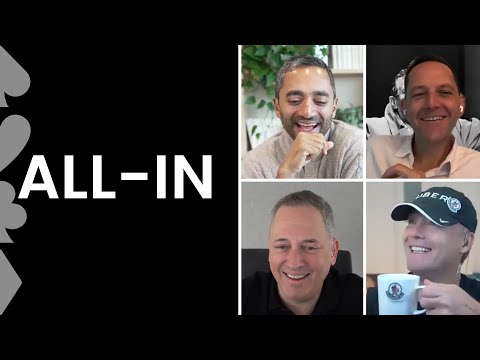
E103: Tech layoffs surge, big tech freezes hiring, optimizing for profits, election preview & more
Chamath Palihapitiya (host), Jason Calacanis (host), David Sacks (host), Narrator, David Friedberg (host), Narrator, Narrator
In this episode of All-In Podcast, featuring Chamath Palihapitiya and Jason Calacanis, E103: Tech layoffs surge, big tech freezes hiring, optimizing for profits, election preview & more explores tech layoffs, Twitter turmoil, media failures, recession fears, biotech breakthroughs The hosts discuss their informal advisory roles at Twitter under Elon Musk, pushing back on reports of a spike in hate speech and arguing activist groups and media are manufacturing a crisis to pressure advertisers. They broaden this into a critique of mainstream journalism, using the fake ‘Ligma Johnson’ Twitter layoff prank as an example of narrative-driven, poorly fact-checked reporting, and debate bylines, Substack, and citizen journalism.
Tech layoffs, Twitter turmoil, media failures, recession fears, biotech breakthroughs
The hosts discuss their informal advisory roles at Twitter under Elon Musk, pushing back on reports of a spike in hate speech and arguing activist groups and media are manufacturing a crisis to pressure advertisers. They broaden this into a critique of mainstream journalism, using the fake ‘Ligma Johnson’ Twitter layoff prank as an example of narrative-driven, poorly fact-checked reporting, and debate bylines, Substack, and citizen journalism.
A major portion of the conversation centers on accelerating tech layoffs, hiring freezes, and a sharp market pivot from growth-at-all-costs to profitability in a high-interest-rate environment; they predict deep restructurings, private equity buyouts, and a wave of companies going private or dying. They urge founders to cut fast and deep, re-orient around cash flow, and mentally reset valuations to today’s reality, not 2021 highs.
They then preview the U.S. midterm elections, expecting a Republican ‘wave’ driven by economic dissatisfaction, criticizing Biden’s messaging on ‘democracy’ instead of inflation, crime, and schooling, and calling for COVID policy investigations rather than ‘pandemic amnesty.’
The episode closes with a science segment on Meta’s large-scale protein-structure prediction from environmental DNA (metagenomes), explaining how AI and cheap compute unlock a vast universe of natural proteins that could power new drugs, fertilizers, materials, and industrial applications.
Key Takeaways
In a high-rate world, near-term cash flow matters far more than distant growth.
With Fed funds potentially around 5% and required returns 500+ bps above that, investors can earn 4–10% in T-bills or quality bonds; this makes unprofitable hyper-growth far less attractive and forces tech companies to prioritize profitability and cash generation today.
Get the full analysis with uListen
Founders should cut once, cut deep, and get to ‘default alive’ as fast as possible.
Repeated 10–13% RIFs destroy morale and still may not ensure survival; the hosts argue Elon’s rumored deep cuts at Twitter will reset expectations, and that decisive restructuring to reach cashflow breakeven is better than clinging to headcount built for the 2021 bubble.
Get the full analysis with uListen
Valuations from 2020–2021 are largely irrelevant; companies must re-price themselves to reality.
Many unicorns have raised more money than they are currently worth, rendering employee options effectively worthless; boards and founders need to accept lower market-clearing valuations, bring in fresh equity, and stop using complex converts to protect egos.
Get the full analysis with uListen
Media incentives favor speed and narrative fit over verification, eroding trust.
The ‘Ligma Johnson’ prank and viral but false stories (e. ...
Get the full analysis with uListen
The coming recession is likely deeper and longer than many operators are planning for.
Portfolio data show most startups are missing forecasts and reforecasting; hosts expect a ‘real’ recession with rising unemployment, tighter capital, and possibly two-plus years of tough conditions, urging conservative planning through 2024–2025 rather than hopeful short-term bets.
Get the full analysis with uListen
Twitter’s bot and hate-speech surge post-acquisition was likely a coordinated attack, not policy change.
They describe a 4chan-driven bot spam campaign with racist terms sent from zero-follower accounts, quickly shut down by Twitter’s existing trust & safety team; they argue activist groups used firehose monitoring to manufacture alarming stats and pressure advertisers, before any moderation rules changed.
Get the full analysis with uListen
AI on metagenomic data opens a massive frontier for new biological tools and products.
Meta’s protein-structure predictions for hundreds of millions of environmental genes, combined with AlphaFold-like work, let scientists mine nature’s ‘parts library’ for novel antibiotics, fungicides, fertilizers, and materials—leveraging cheap compute and sequencing to move biology into in silico design.
Get the full analysis with uListen
Notable Quotes
“Rates will probably be higher than all of you think, and they’ll be higher for longer than all of you want.”
— Chamath Palihapitiya
“It is way better now to grow at 20% and be profitable than it is to grow at 100% and burn money.”
— Chamath Palihapitiya
“This feels to me like the economy’s headed off a cliff right now.”
— David Sacks
“They didn’t figure it out because they didn’t want to, because it fit their narrative, so they don’t fact-check things that fit their narrative.”
— David Friedberg (paraphrasing and agreeing with Sacks/Chamath on media behavior)
“We’re not going to give you amnesty. No, full investigation.”
— Jason Calacanis (on ‘pandemic amnesty’ calls around COVID policy)
Questions Answered in This Episode
If Elon Musk proves Twitter can operate profitably with dramatically fewer employees, how will that reshape expectations for headcount and margins across the entire tech sector?
The hosts discuss their informal advisory roles at Twitter under Elon Musk, pushing back on reports of a spike in hate speech and arguing activist groups and media are manufacturing a crisis to pressure advertisers. ...
Get the full analysis with uListen AI
How should founders balance the moral and cultural costs of deep layoffs against the existential need to become ‘default alive’ in a high-interest-rate environment?
A major portion of the conversation centers on accelerating tech layoffs, hiring freezes, and a sharp market pivot from growth-at-all-costs to profitability in a high-interest-rate environment; they predict deep restructurings, private equity buyouts, and a wave of companies going private or dying. ...
Get the full analysis with uListen AI
What concrete reforms to newsroom incentives and processes could reduce narrative-driven errors while preserving the speed and reach of modern digital journalism?
They then preview the U. ...
Get the full analysis with uListen AI
To what extent is the current populist backlash a rational response to repeated failures of ‘expert’ institutions, and how can those institutions regain trust without simply dismissing dissent as dangerous?
The episode closes with a science segment on Meta’s large-scale protein-structure prediction from environmental DNA (metagenomes), explaining how AI and cheap compute unlock a vast universe of natural proteins that could power new drugs, fertilizers, materials, and industrial applications.
Get the full analysis with uListen AI
How might AI-driven discovery of metagenomic proteins change the economics and timelines of drug discovery, agriculture, and materials science over the next decade?
Get the full analysis with uListen AI
Transcript Preview
What the f- What are you wearing, Jason?
What? Oh, Uber had a big week, so this is the Uber/Moncler crossover hat.
Oh, look at that.
And I also bought a Moncler shirt.
You bought that? Or I sent it to you? Oh, what?
Are you-
You got the watch and the mug?
Oh, you don't know about-
(laughs)
(laughs)
... the Apple Moncler watch?
(laughing)
Or the commemorative mug?
(laughing)
(laughs)
Or the new tat? You don't know about the new neck tats that are coming from Moncler? It's actually a neck tat.
(laughing)
Oh my god. (laughs) Oh, it's so good.
Let's just say somebody got their beak wet.
(laughing)
I'm not saying that I got $100,000 sponsorship-
(laughing)
... but (laughs) we don't have a rule in the agreement about logo placement, do we?
Listen, J-Cal, if anyone was willing to sponsor you, every square inch of your clothing would be covered in ads like a racecar driver.
It is, look.
It'd be like wearing a jumpsuit every day.
These, these, you know, Moncler sponsorships are great. This is five, $5 plus $17 of shipping from France on its Etsy.
(laughs)
What's going on here? I'm going all in. Let your winners ride. Rain man, David Satterfield. What's going on here? And I said we open source it to the fans and they've just gone crazy with it. Love you Betsy. Queen of Kinwah. Going all in.
How was everyone's week? What'd you guys do this week?
Uh, just busy working, um, trying to be helpful where I can. Uh, and that'll be the extent (laughs) of my comments today.
How is Market Street this time of year?
Look, there's all sorts of wild report- I've gotten all sorts of inbound from people asking me if I'm, like, leaving Craft Ventures to do something at Twitter. No, it's not true. We're just, Jason and I are just pitching in and helping out while Elon establishes his permanent team at that company. Elon's the CEO, he's running it, he's the decider, he's making the decisions, and there, some of us are just kinda helping out in any way we can, and that's really the extent of it. It's a, you know, very much part-time thing where we're just helping a friend. Uh-
Yeah.
... but it's been, like, blown up in, by the media into something much more than it actually is.
It is 100% accurate. I am still doing my day job, podcasting, investing in 100 companies a year, just helping out on the margins. Uh, that's it. The end.
I do wanna try talking about one issue that's already public, because it's already been tweeted. So Elon had a tweet this morning about how there's now, like, an advertiser boycott going on. And this falls on the heels of a bunch of reports that came out over the last couple of days that supposedly there's been a big influx of, like, racist tweets. And Jason and I actually saw what was really going on, which was, it- it's all not true. I mean, what happened is that within hours of Elon taking over the company on Friday, there was a 4chan attack, where basically people from this message board created bots to post hundreds of thousands of spam messages that contained racist words and epithets. And within hours, this had been detected and Yoel, who runs the, the trust and safety implementation, he met with me and Jason, and Elon directed him to shut it down. And he, Yoel actually posted a tweetstorm about it. That's the only reason I feel comfortable talking about it, is 'cause Yoel already posted the tweetstorm, but maybe people don't, haven't seen it or they haven't connected all the dots here. But what's really, I think, unfair about this is that as you've, as you've seen, it's not like your feed was all of a sudden filled with racist things. These were spam accounts or bot accounts that were posting to zero followers. They generally have zero followers, or if they do have followers, it's other bot accounts, right? So they're posting racist tweets into the ether, so to speak. It's not degrading anyone's experience. It was shut down promptly. But then what happens is these activist groups, they're monitoring the fire hose, right? And so they publish a report saying that racist tweets have gone up 500% since Elon took over Twitter. The truth is, Elon hasn't even had a chance to change anything about the content moderation policies. He's posted that, like, "Guys, I haven't even, I haven't changed anything about content moderation." Whatever the rules are, they're the same rules that existed prior to he, to him taking over. And this is just an organized operation by people who want to create that report. So then these activist groups basically publish this report, they feed it to news outlets, and then somebody then takes those reports and then feeds 'em to advertisers, and you get a boycott. But I think the, the point here is that Elon didn't do this. This is being manufactured by people who are not operating in good faith. They are trying to manufacture an incident that they can u- then use to hurt the company.
Install uListen to search the full transcript and get AI-powered insights
Get Full TranscriptGet more out of YouTube videos.
High quality summaries for YouTube videos. Accurate transcripts to search & find moments. Powered by ChatGPT & Claude AI.
Add to Chrome