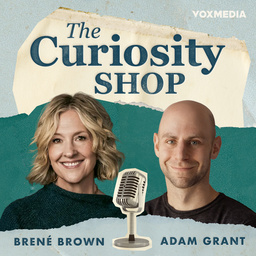
 The Curiosity Shop with Brené Brown and Adam Grant
What the Return-to-Office Debate Gets Wrong
Brené Brown on return-to-office debate reframed: hybrid work, mental models, and authenticity choices.
In this episode of The Curiosity Shop with Brené Brown and Adam Grant, featuring Brené Brown and Adam Grant, What the Return-to-Office Debate Gets Wrong explores return-to-office debate reframed: hybrid work, mental models, and authenticity choices They review research suggesting hybrid work (1–2 days remote) matches in-office productivity while improving satisfaction and retention, and mandates often fail to improve firm performance.
At a glance
WHAT IT’S REALLY ABOUT
Return-to-office debate reframed: hybrid work, mental models, and authenticity choices
- They review research suggesting hybrid work (1–2 days remote) matches in-office productivity while improving satisfaction and retention, and mandates often fail to improve firm performance.
- They reframe the core question from “Where should people work?” to “Which tasks and goals require which environments,” emphasizing job interdependence and intentional work design.
- They debate whether in-person proximity uniquely fuels creativity via weak ties, then explore remote-compatible alternatives (structured weak-tie interactions, intermittent collaboration, and broader global talent access).
- They introduce a systems-thinking “iceberg” tool to diagnose return-to-office conflict at deeper levels (patterns, structures, mental models), arguing leaders must articulate a clear, non–“because I said so” rationale.
- Listener questions broaden the discussion to what birth-order research does and doesn’t support, and to balancing authenticity with editing so a podcast respects both deep thinking and listener time.
IDEAS WORTH REMEMBERING
5 ideasHybrid beats blanket mandates when measured by outcomes, not optics.
They cite findings (e.g., Bloom and others) showing hybrid workers perform similarly to in-office peers on reviews/promotions while reporting higher satisfaction, and note evidence that RTO mandates can reduce satisfaction and recruiting power without improving financial metrics.
The “productivity” frame is too narrow; treat location as job design.
They argue many roles lack clean productivity metrics, so leaders should map tasks to environments (focus vs coordination vs relationship-building) rather than declaring one universal rule.
Interdependence determines how much co-location is actually needed.
Grant’s gymnastics/relay/basketball model suggests independent work needs less in-person time, sequential handoffs need some overlap, and highly reciprocal coordination benefits most from being together—implying different teams need different rhythms.
Weak ties matter for innovation—but you can engineer them remotely.
Brown emphasizes spontaneous cross-team contact as creative infrastructure; Grant counters that remote orgs can replicate this with designed randomness (virtual coffees/lunch pairings), and that intermittent interaction can outperform constant proximity for creativity.
Deep, episodic in-person “windows” may outperform daily co-presence.
NASA and Atlassian examples highlight intensive short sessions (training, offsites, shared challenges) that build belonging and shared stories, followed by distributed focused work—suggesting cadence can matter more than frequency.
WORDS WORTH SAVING
5 quotesI am committed to following the evidence, which I've been doing for the last decade, and I think the evidence is very clear that if you give people one to two days a week to work from anywhere, they are at least as productive if not more so. They're more satisfied, they're more likely to stay, and there's no cost to relationships or collaboration.
— Adam Grant
The question isn't where do people sit, but what tasks need which environment.
— Brené Brown
My objection to the whole vat of that discussion is comes down to an overwhelming frustration that I cannot pin leaders down to a why that makes sense.
— Brené Brown
And it, it actually creates a lack of respect and distrust. It really creates distrust when... And I think what we've seen working, 'cause we were working so closely with leaders, um, during the pandemic and right afterward as they were making these decisions, that if you believe it enough to mandate it, then you should have the discipline to get under the mental model and walk people through it.
— Brené Brown
The conversation should be, how do we achieve organizational goals in ways that are respectful of individuals' lives? And if we have that conversation, I mean, one thing that, that jumps out in the data very clearly isThe flexibility people want most is not where they work. It's when and how much.
— Adam Grant
QUESTIONS ANSWERED IN THIS EPISODE
5 questionsIf hybrid performance is equivalent, which specific organizational outcomes (mentoring quality, onboarding speed, innovation rate, retention) should leaders measure to justify any increase in office time?
They review research suggesting hybrid work (1–2 days remote) matches in-office productivity while improving satisfaction and retention, and mandates often fail to improve firm performance.
How would you operationalize the gymnastics/relay/basketball interdependence model into a practical policy—e.g., a diagnostic that determines each team’s ideal co-location cadence?
They reframe the core question from “Where should people work?” to “Which tasks and goals require which environments,” emphasizing job interdependence and intentional work design.
What are the best proven ways to create “weak-tie collisions” remotely, and how do you prevent them from turning into forced, awkward networking?
They debate whether in-person proximity uniquely fuels creativity via weak ties, then explore remote-compatible alternatives (structured weak-tie interactions, intermittent collaboration, and broader global talent access).
In the NASA example, what makes a short, intense in-person window effective—shared stress, unstructured time, clear mission stakes—and how can non-space organizations replicate that safely?
They introduce a systems-thinking “iceberg” tool to diagnose return-to-office conflict at deeper levels (patterns, structures, mental models), arguing leaders must articulate a clear, non–“because I said so” rationale.
When a leader’s mental model is ‘I need to see people to know they’re working,’ what sequence of questions would you use (without triggering defensiveness) to surface fears and move toward evidence-based experimentation?
Listener questions broaden the discussion to what birth-order research does and doesn’t support, and to balancing authenticity with editing so a podcast respects both deep thinking and listener time.
Chapter Breakdown
What’s surprising about making the podcast (and the “productive hangover”)
Brené Brown and Adam Grant open by comparing notes on what’s unexpectedly emerged from co-hosting—especially how often they agree and how much the conversations keep working on them after recording. They describe the lingering questions, follow-ups, and mindset shifts as a kind of “productive hangover.”
Hybrid work: what the evidence says about productivity and retention
Adam lays out the core research case for hybrid work: one to two work-from-anywhere days often improves satisfaction and retention without hurting performance. Brené largely agrees, and they quickly move beyond the narrow “productivity” frame.
Why the productivity debate uses the wrong metrics (work as job design)
Brené introduces research arguing that many modern roles don’t have clean productivity measures, so the debate should shift to job design. The key question becomes: which tasks need which environment, rather than a blanket rule about location.
Interdependence as the deciding factor: gymnastics, relay, basketball
Adam offers a framework for deciding when co-location helps: pooled, sequential, and reciprocal interdependence. He translates this into three metaphors—gymnastics (independent), relay race (handoffs), and basketball (continuous coordination)—to guide how often teams need to be together.
Culture, mission, and the case for being together—especially via weak ties
Brené argues the strongest case for in-person time is cultural transmission, shared mission, and innovation via “weak ties”—connections outside one’s immediate team. She frames offices as “creative infrastructure,” helping prevent groupthink and self-referential teams.
Counterpoints: structuring collisions remotely, intermittent interaction, and global talent
Adam agrees weak ties matter but challenges the assumption that offices are the only way to create them. He cites ways to engineer weak-tie contact remotely (e.g., randomized virtual lunches), argues intermittent interaction can outperform constant contact, and notes remote teams can access worldwide talent—sometimes increasing innovation.
Humans, embodiment, and the NASA example: short intense windows beat constant proximity
They step back from data to discuss human connection and why fully remote or fully in-office extremes don’t fit how people work. Brené shares NASA training experiences showing the power of getting in the same room for focused periods; Adam adds that NASA prioritizes short, deep team “dives” over long co-location.
Why mandates fail: performance, talent loss, and the “because I said so” leadership trap
Adam cites research that return-to-office mandates don’t improve financial performance but reduce satisfaction and work-life balance—and can hurt recruiting. Brené emphasizes the deeper issue: leaders often can’t articulate a coherent “why,” defaulting to authoritarian reasoning that erodes trust and drives top talent away.
The systems-thinking iceberg: going below the visible problem to patterns, structures, and mental models
Brené introduces Dana Meadows’ systems “iceberg” tool to diagnose return-to-office decisions. Instead of debating only the visible issue (remote vs office), leaders should examine behavior patterns, enabling structures, and deepest assumptions—because deeper leverage points create more durable change.
How to challenge leaders’ assumptions without triggering defensiveness
Using Adam’s story of questioning a CEO, they explore how “evidence battles” can backfire. Brené recommends eliciting fears and core beliefs first (“what do you think is happening at home?”), validating the concern, then inviting openness to research—making it easier to update mental models.
“Slot rattling,” binary bias, and what workers actually want: control over time
Adam introduces George Kelly’s concept of “slot rattling”—swinging between two opposites instead of adding better lenses. They apply it to the RTO tug-of-war and reframe the goal as achieving organizational outcomes while respecting real lives; importantly, the flexibility people most want is often about time and workload, not location.
Listener question: birth order—what’s supported, what’s overclaimed, and why it resonates
They debate birth-order psychology: Brené finds it meaningful as a data point; Adam argues most claims don’t hold up well empirically. They land on a nuanced view: some evidence suggests later-borns take more risks and first-borns pursue conventional achievement, but effects are small and easily distorted by pop psychology and grifting.
Listener question: authenticity vs editing—honesty, listener time, and finding a middle ground
They explore whether heavily edited episodes improve clarity or distort the reality of thoughtful conversation. Brené argues pauses and struggle are part of authentic meaning-making; Adam worries that lack of editing wastes listener time. They agree to experiment with structure, transparency, and selective trimming depending on whether process or content is the point.
EVERY SPOKEN WORD
Install uListen for AI-powered chat & search across the full episode — Get Full Transcript
Get more out of YouTube videos.
High quality summaries for YouTube videos. Accurate transcripts to search & find moments. Powered by ChatGPT & Claude AI.
Add to Chrome