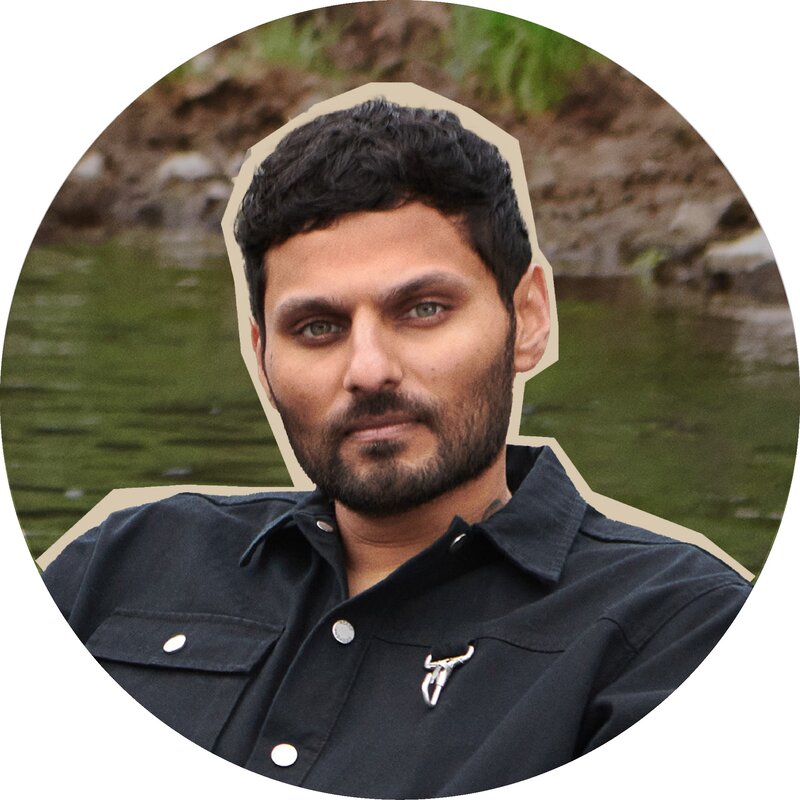
 Jay Shetty Podcast
#1 NEUROSCIENTIST: This Dangerous Habit is DESTROYING Your MEMORY (Here’s How To Fix It FAST)
Jay Shetty and Dr. Rahul Jandial on how working memory fails—and how to protect and train it.
In this episode of Jay Shetty Podcast, featuring Dr. Rahul Jandial and Jay Shetty, #1 NEUROSCIENTIST: This Dangerous Habit is DESTROYING Your MEMORY (Here’s How To Fix It FAST) explores how working memory fails—and how to protect and train it Memory problems often start with normal forgetfulness (like misplaced keys), but because early Alzheimer’s can look similar, prevention habits are valuable for everyone.
At a glance
WHAT IT’S REALLY ABOUT
How working memory fails—and how to protect and train it
- Memory problems often start with normal forgetfulness (like misplaced keys), but because early Alzheimer’s can look similar, prevention habits are valuable for everyone.
- Working memory—holding and manipulating multiple ideas in real time—is the most trainable and most relevant for performance, decision-making, and creativity, and it differs from procedural, semantic, and episodic memory.
- Attention is a limited, “decremental” resource, so reducing distractions and decision fatigue (and structuring your environment) is central to better focus and memory performance.
- Emotional “stamping” makes certain memories (especially negative or traumatic ones) easy to retrieve without effort, and revisiting them safely can uncouple the memory from its painful physiological response.
- Long-term brain health is strongly tied to physical health habits—keeping blood vessels healthy via movement, eating a Mediterranean-style diet for brain fats/insulation, and continually challenging the brain through novelty and learning.
IDEAS WORTH REMEMBERING
5 ideasNot all “memory loss” is the same problem.
Jandial distinguishes procedural (skills), semantic (facts), episodic (life events), and working memory (active juggling); most people should prioritize protecting and training working memory rather than panicking about minor fact/episode lapses.
Because early dementia and normal aging can start similarly, default to prevention.
Misplaced keys can be benign or an early sign, and we can’t reliably predict which path it is; the practical recommendation is to adopt brain-protective habits regardless of perceived risk.
Working memory improves when your day is designed around limited attention.
He frames attention as finite and fading with time-on-task (“decremental vigilance”), so you improve performance by removing distractions, resting, and timing demanding tasks for when your attention reserves are highest.
The same technology that distracts you can also train you—if used deliberately.
He notes FDA-supported digital training approaches (e.g., distraction-avoidance and processing-speed tasks) for older adults and performance contexts, while warning that passive, excessive scrolling can stunt development—especially in kids.
A ‘right-sized’ amount of stress is necessary to grow cognitive capacity.
Using the bone/gravity analogy and flow-state logic, he argues that too little challenge leads to stagnation while too much overload breaks performance; the goal is the next achievable “level” that stretches you without snapping you.
WORDS WORTH SAVING
5 quotesWhether you end up having Alzheimer's or whether you just have age-appropriate subtle loss of memory, it begins with like, "Where did I put my keys?" Like, it all begins that way.
— Dr. Rahul Jandial
We can't tell you which one's gonna go to 10 years later, that adult says, "I can't find my way home."
— Dr. Rahul Jandial
Working memory can be trained. Working memory is the digital therapeutic for Alzheimer's.
— Dr. Rahul Jandial
An emotional imprint on a memory requires no focus and attention.
— Dr. Rahul Jandial
You don't forget the memory. You just uncouple, disassociate the emotional feelings, the trauma, the fear, the physical reaction.
— Dr. Rahul Jandial
QUESTIONS ANSWERED IN THIS EPISODE
5 questionsYou emphasize working memory as the key skill—what are 3–5 specific exercises (non-app, real-world) people can do daily to train it, and how do they measure progress?
Memory problems often start with normal forgetfulness (like misplaced keys), but because early Alzheimer’s can look similar, prevention habits are valuable for everyone.
How do you distinguish normal episodic forgetfulness (names, keys, dinner) from early dementia red flags that warrant immediate evaluation, beyond yearly clock-drawing tests?
Working memory—holding and manipulating multiple ideas in real time—is the most trainable and most relevant for performance, decision-making, and creativity, and it differs from procedural, semantic, and episodic memory.
You describe attention as ‘decremental vigilance’—what schedule structure (work blocks, breaks, sleep timing) best protects it for knowledge workers versus shift workers?
Attention is a limited, “decremental” resource, so reducing distractions and decision fatigue (and structuring your environment) is central to better focus and memory performance.
Your ‘digital diet’ idea is nuanced: what criteria separate brain-training screen use from working-memory-harming screen use, especially for teens?
Emotional “stamping” makes certain memories (especially negative or traumatic ones) easy to retrieve without effort, and revisiting them safely can uncouple the memory from its painful physiological response.
On emotional memories, is the mechanism you describe closer to memory reconsolidation, exposure therapy, or cognitive reappraisal—and what’s the practical difference for someone choosing a therapy modality?
Long-term brain health is strongly tied to physical health habits—keeping blood vessels healthy via movement, eating a Mediterranean-style diet for brain fats/insulation, and continually challenging the brain through novelty and learning.
Chapter Breakdown
Why everyday forgetfulness sparks fear of Alzheimer’s
Dr. Rahul Jandial explains why “Where did I put my keys?” is the most common early worry—and why that symptom alone can’t distinguish normal aging from early dementia. Because the early signs overlap, he argues the safest approach is prevention for everyone, regardless of risk.
Memory isn’t one thing: the 4 types that matter most
They break memory into distinct systems—procedural, semantic, episodic, and working memory—so listeners can worry about the right “bucket.” The central takeaway: working memory is the performance lever you can train, while some other memory systems are either resilient or easily outsourced.
When forgetfulness is normal vs. when it’s dementia
Jandial contrasts age-appropriate cognitive changes with dementia’s accelerating decline that impacts identity and emotional regulation. He highlights why dementia is so difficult for families: the affected person often can’t recognize their own deficits, shifting the burden of detection to loved ones.
What to do if you suspect early dementia in a family member
They outline a gentle, practical pathway: bring concerns to a routine doctor visit, use simple cognitive screening, and track changes over time. Regardless of whether it’s normal decline or early Alzheimer’s, the lifestyle-based interventions remain largely the same.
The prevention ‘recipe’: blood flow, food, and cognitive challenge
Jandial frames brain health as maintaining an energy-hungry, blood-dependent organ. He emphasizes three long-term levers: cardiovascular health to keep brain arteries open, a Mediterranean-style pattern to support neural structure, and ongoing mental challenge to strengthen working memory.
Digital distraction vs. digital training: protecting working memory
They discuss how modern life can either stunt or strengthen attention and working memory, depending on age, volume, and content. Jandial contrasts passive, numbing screen use with targeted cognitive-training tasks shown to improve processing speed and distraction resistance.
The right amount of stress: how challenge builds cognitive capacity
Using the elastic band and “flow” concept, they explain why growth requires stretch—but not so much that you snap. The goal is individualized calibration: find a challenge level that’s enticing, achievable with effort, and progressively expandable through ‘leveling up.’
Focus is a limited resource: decision fatigue and distraction management
Jandial and Shetty connect attention to energy and sleep, describing ‘decremental vigilance’—focus that fades over time. They explore how high performers protect attention by reducing noise, simplifying decisions, and designing environments that preserve cognitive fuel for what matters.
How memory is built and retrieved in the brain’s ‘ecosystem’
Jandial rejects the “filing cabinet” model and explains memory as reconstruction via interconnected networks and hubs. Emotional systems can stamp memories powerfully without deliberate attention, while deliberate recall and learning demand effortful focus.
Why negative memories stick—and how therapy can reduce the emotional charge
They explore how the brain’s protective threat system ties emotion to memory, making painful memories vivid and persistent. The key therapeutic mechanism described: revisiting memories safely can uncouple the emotional stamp from the factual content, reducing physiological reactivity without erasing the event.
Reinforcing positive memory stamps: a ‘flip side’ to negativity bias
Building on loving-kindness style recall, they propose intentionally strengthening positive emotional imprints to shift mind-body state. While not presented as settled experimental proof, the idea is framed as plausible given bi-directional brain–body signaling and network effects.
Therapy and healing aren’t one-size-fits-all—and timing matters
They caution against forcing someone into therapy before they’re ready to engage, noting suppression can be an adaptive coping tool in certain life contexts. Jandial broadens the ‘therapy’ concept to include multiple modalities for depression and trauma, emphasizing informed choice rather than judgment.
Debunking the ‘we use only 20% of our brain’ myth—and what’s actually true
Jandial explains the myth persists because it feels inspiring, but brain imaging shows there’s no dormant ‘unused’ corner waiting to unlock. The more useful truth: new habits and skills require effort (activation energy), then become easier as the brain builds efficient pathways.
Rising early cancer rates: what we can do now (screening + access)
They discuss concerning shifts toward younger onset in some cancers (notably breast and colon), while acknowledging causal certainty is difficult. Jandial emphasizes pragmatic action: improve environmental and lifestyle inputs where possible, expand earlier screening, and reduce barriers so care reaches everyone.
The gap between thoughts and actions: training the ‘internal referee’
Closing the episode, Jandial explains why knowing what to do doesn’t guarantee doing it: behavior is governed by competing wants. He introduces the orbitofrontal ‘arbitrator’ idea and offers tactics to prevent cravings from hijacking behavior by interrupting cues early and building a flexible mitigation plan.
EVERY SPOKEN WORD
Install uListen for AI-powered chat & search across the full episode — Get Full Transcript
Get more out of YouTube videos.
High quality summaries for YouTube videos. Accurate transcripts to search & find moments. Powered by ChatGPT & Claude AI.
Add to Chrome