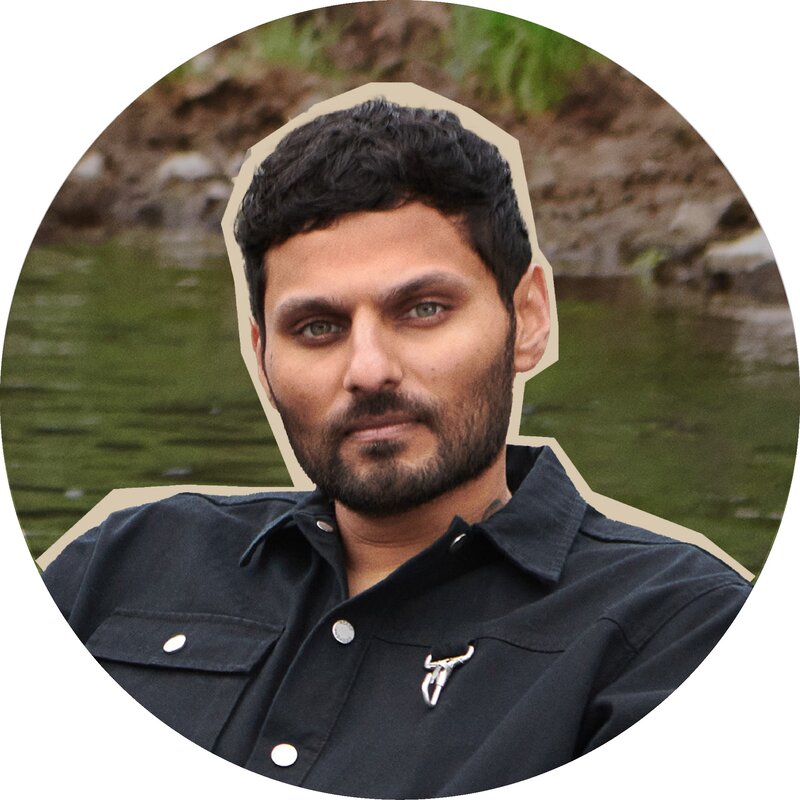
 Jay Shetty Podcast
TONY ROBBINS: If You Want to CHANGE Your Life This Year, Do THIS 3 Step Process…
Jay Shetty and Tony Robbins on tony Robbins’ three-step decisions and fulfillment framework to transform life.
In this episode of Jay Shetty Podcast, featuring Jay Shetty and Tony Robbins, TONY ROBBINS: If You Want to CHANGE Your Life This Year, Do THIS 3 Step Process… explores tony Robbins’ three-step decisions and fulfillment framework to transform life Robbins argues that feeling stuck is primarily a decision-making problem driven by fear of being wrong, perfectionism, and craving certainty that rarely exists.
At a glance
WHAT IT’S REALLY ABOUT
Tony Robbins’ three-step decisions and fulfillment framework to transform life
- Robbins argues that feeling stuck is primarily a decision-making problem driven by fear of being wrong, perfectionism, and craving certainty that rarely exists.
- He reframes decision-making as a three-part sequence—decide, commit, resolve—where immediate action and cutting off alternatives create follow-through.
- He shares a practical six-step framework (OOCEMR) to make major decisions by clarifying outcomes, expanding options, weighing consequences, evaluating probability, mitigating downsides, and resolving to act.
- Robbins contrasts the “science of achievement” (repeatable principles and strategy) with the “art of fulfillment” (personal meaning), warning that success without fulfillment leads to emptiness.
- He critiques extreme “comfort/self-care” culture as weakening resilience and links rising anxiety (especially in Gen Z) to reduced challenge, loss of control, and lack of growth-and-giving purpose.
IDEAS WORTH REMEMBERING
5 ideasNot deciding is often the most damaging decision.
Robbins claims indecision fuels anxiety because the brain struggles with uncertainty; choosing a direction creates feedback faster, even if the initial choice is imperfect.
A real decision requires immediate action to lock in follow-through.
He recommends doing something within minutes—booking, enrolling, scheduling, calling—so the decision survives the emotional “state change” that happens when inspiration fades.
Decision-making works best as a three-step psychological progression.
“Decide” selects a direction, “commit” carries it into the future with compelling reasons, and “resolve” ends inner debate—peacefully—so you persist until it’s done.
Use OOCEMR to replace overwhelm with clarity and probability thinking.
Write it down: define ranked outcomes (and the “why”), list at least three options, map upside/downside consequences, evaluate likelihood, mitigate risks creatively, then resolve and act.
Fulfillment is not the same as feeling good in the moment.
Robbins frames fulfillment as an art rooted in growth and giving; comfort-seeking can reduce capability and make smaller stressors feel overwhelming over time.
WORDS WORTH SAVING
5 quotesIt's not your conditions, it's your decisions that determine the quality of your life.
— Tony Robbins
We're drowning in information, we're starving for wisdom.
— Tony Robbins
The smartest people usually are terrible investors... because the smartest people wanna know everything before they decide. And if you wait till you know everything, the opportunity's gone.
— Tony Robbins
The only people without problems are in cemeteries... so if you don't have any, you better get on your knees and pray for some.
— Tony Robbins
I really believe that success without fulfillment's the ultimate failure.
— Tony Robbins
QUESTIONS ANSWERED IN THIS EPISODE
5 questionsIn your three-step model, what specific actions best “commit” a decision so it doesn’t fade when your emotional state changes?
Robbins argues that feeling stuck is primarily a decision-making problem driven by fear of being wrong, perfectionism, and craving certainty that rarely exists.
Can you give a concrete example of a personal or business decision you made using OOCEMR, including the probabilities you assigned and what you did to mitigate downside?
He reframes decision-making as a three-part sequence—decide, commit, resolve—where immediate action and cutting off alternatives create follow-through.
You cite Gen Z anxiety statistics—what do you believe are the top two behavioral drivers (information overload, comfort culture, social media, etc.), and which intervention would move the needle fastest?
He shares a practical six-step framework (OOCEMR) to make major decisions by clarifying outcomes, expanding options, weighing consequences, evaluating probability, mitigating downsides, and resolving to act.
How do you distinguish “resolve” (never give up) from stubbornness—when is pivoting the right move within your framework?
Robbins contrasts the “science of achievement” (repeatable principles and strategy) with the “art of fulfillment” (personal meaning), warning that success without fulfillment leads to emptiness.
You argue comfort won’t make you proud; what’s a practical weekly plan to build discomfort tolerance without sliding into burnout or “hustle culture”?
He critiques extreme “comfort/self-care” culture as weakening resilience and links rising anxiety (especially in Gen Z) to reduced challenge, loss of control, and lack of growth-and-giving purpose.
Chapter Breakdown
Feeling stuck: why decisions—not conditions—shape your life
Tony argues that people feel stuck because they avoid deciding, often due to fear of being wrong or imperfect. He reframes stress as a loss of perceived control and positions decision-making as the most important life skill for regaining agency.
Stop waiting for certainty: use faith and act to learn faster
Tony explains that the smartest people often delay decisions because they want complete information, but life rarely offers certainty. He introduces faith (not religion) as the ability to move forward despite uncertainty, and emphasizes that action reveals truth quickly.
Trial-and-error leadership: “When put in command, take charge”
Through a General Schwarzkopf story, Tony shows that effective leaders decide even without perfect information. The goal is to decide, learn outcomes faster, and pivot instead of spending years in analysis paralysis.
Small decisions build momentum—and action makes it real
Tony recommends starting with small, low-stakes decisions to strengthen the “decision muscle.” He stresses that a decision only becomes real when followed by immediate action that locks in follow-through.
The 3-step process: Decide → Commit → Resolve
Tony explains why people “decide” but fail to follow through: they treat decision-making as one step. He distinguishes deciding (a moment), committing (future-focused reasons), and resolving (inner certainty: ‘it’s done’).
Problems are the path: decision-making as continual growth
Jay and Tony emphasize that one decision doesn’t ‘solve’ life—decision-making is continuous. Tony reframes problems as a sign of life and spiritual development: resistance builds strength, like muscle training.
A practical framework for big choices: Tony’s OOCEMR method
Tony shares his structured six-step decision model for important choices, built to reduce overwhelm and clarify values. The method moves from desired outcomes to options, consequences, probabilities, downside reduction, and final resolve—on paper, not in your head.
Spirituality vs manifestation: integrating inner growth with strategy
Tony contrasts ‘East’ (inner development) and ‘West’ (external achievement) and argues you need both. Spirituality, in his view, is the highest priority—but it doesn’t replace pragmatic strategy; it should guide it.
Two skills for an extraordinary life: science of achievement + art of fulfillment
Tony distinguishes between learnable, repeatable achievement (a science) and personal meaning (an art). Many people succeed materially yet feel empty; fulfillment depends on growth, giving, and values unique to each person.
Success without fulfillment, Gen Z mental health, and the self-care trap
Tony argues that modern ‘comfort-first’ self-care can weaken resilience and increase anxiety. He cites alarming Gen Z anxiety/medication statistics and claims greater control, purposeful doing, and challenge improve satisfaction more than avoidance does.
Self-esteem is earned: grit, hard choices, and meaning-driven work
Tony challenges the idea that self-esteem comes from others’ opinions or affirmations. He defines self-esteem as self-earned through doing difficult, values-aligned actions and distinguishes hustle (money-only) from growth (mission-based).
Purpose evolves: you can have multiple purposes across life roles
Tony advises against obsessing over one lifelong purpose statement. Purpose is contextual—parenting, partnership, service, and work can each carry distinct meaning that shifts over time.
Fatherhood and life seasons: spring, summer, fall, winter as a growth map
Tony compares life stages to seasons, emphasizing pattern recognition and timing. He reflects on fatherhood in his 20s (adopting and raising children amid building his career) versus his 60s (more wisdom, presence, and gratitude).
If you had everything forever, would life matter? Limits create meaning
Tony shares a ‘heaven casino’ story to illustrate that endless winning eliminates value and gratitude. Recognizing life’s limits increases reverence for relationships, moments, and contribution.
Time To Rise Summit, Tony Robbins Network, and closing: relationship with God as personal
Jay and Tony close with Tony’s invitation to Time To Rise (free, immersive, momentum-building) and mention the Tony Robbins Network. Tony describes his relationship with God as emotional guidance and argues spirituality should be personal—‘as unique as your signature.’
EVERY SPOKEN WORD
Install uListen for AI-powered chat & search across the full episode — Get Full Transcript
Get more out of YouTube videos.
High quality summaries for YouTube videos. Accurate transcripts to search & find moments. Powered by ChatGPT & Claude AI.
Add to Chrome