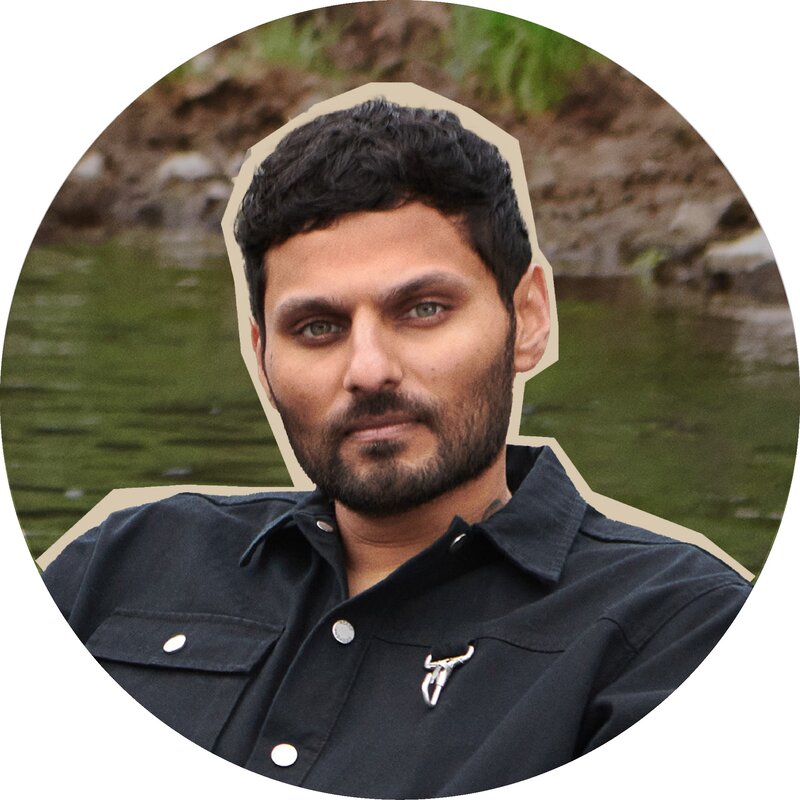
 Jay Shetty Podcast
Alex Honnold Explains the Mindset Behind Climbing Taipei 101 LIVE
Jay Shetty and Alex Honnold on alex Honnold on fear, fun, and preparing for Taipei 101.
In this episode of Jay Shetty Podcast, featuring Jay Shetty and Alex Honnold, Alex Honnold Explains the Mindset Behind Climbing Taipei 101 LIVE explores alex Honnold on fear, fun, and preparing for Taipei 101 Honnold says he’s climbing Taipei 101 primarily because it’s uniquely suited, rare to get permission, and genuinely fun rather than a stunt for spectacle.
At a glance
WHAT IT’S REALLY ABOUT
Alex Honnold on fear, fun, and preparing for Taipei 101
- Honnold says he’s climbing Taipei 101 primarily because it’s uniquely suited, rare to get permission, and genuinely fun rather than a stunt for spectacle.
- He explains that long-term, consistent exposure to fear changes your relationship to it, making fear feel like a manageable bodily sensation rather than a command to stop.
- His approach to high-risk performance centers on staying well within limits, using scouting, deliberate training blocks, and detailed visualization of process and conditions.
- He rejects “visualize the outcome” culture in favor of daydreaming and rehearsing the mechanics, sensations, and contingencies that determine execution.
- The conversation expands into values—parenting, partnership, perfectionism, and purpose—showing how he channels fame and money into environmental work via the Honnold Foundation and Planet Visionaries.
IDEAS WORTH REMEMBERING
5 ideasChoose challenges in the “sweet spot” you can execute on command.
For a live, permitted climb, Honnold avoids “cutting edge” difficulty; he wants something challenging enough to require focus but reliable enough to perform safely under real-world conditions.
Consistency beats mystique—30 years of reps makes “fearlessness” look like talent.
He frames the famous amygdala scan as a training outcome: repeated exposure and practice reshape responses, similar to meditation or any long-term mental training.
Treat fear as data, not a verdict.
Honnold distinguishes between background fear you can ignore (systems are safe) and fear that signals genuine danger (rock quality, conditions), then slows down, breathes, evaluates, and sometimes bails.
Free soloing demands conservative discipline, not maximal bravery.
With a rope, climbers push past limits to grow; without one, the rule is staying well within the comfort zone because a single fall is unacceptable.
Visualization works best when you rehearse process, sensations, and conditions—not just success.
He visualizes foot slip sensations, humidity vs dryness on glass/metal, and even catastrophic fall scenarios in advance so those thoughts don’t ambush him mid-climb.
WORDS WORTH SAVING
5 quotesEveryone watching the movie comes out of it like, "Well, there's something wrong with his brain." And you're like, no, the takeaway is that if you practice something your whole life, you get better at it.
— Alex Honnold
Fear is a sensation in your body, same as like lots of other things... it's like hunger.
— Alex Honnold
But if you're free-soloing, you stay well within your comfort zone because obviously you, you just can't fall off.
— Alex Honnold
The thing with climbing is at least you're choosing the risks that you're taking, and obviously I'm training for them, I'm preparing for them.
— Alex Honnold
My aspiration is to die at 80 with grandkids around me, and it's hard to do that if you live alone in a van.
— Alex Honnold
QUESTIONS ANSWERED IN THIS EPISODE
5 questionsWhat specific architectural features of Taipei 101 make it “secure” to climb compared to something like the Burj Khalifa?
Honnold says he’s climbing Taipei 101 primarily because it’s uniquely suited, rare to get permission, and genuinely fun rather than a stunt for spectacle.
When you decide to bail on a climb, what are the concrete signals (mental, physical, environmental) that cross the line from manageable fear to real danger?
He explains that long-term, consistent exposure to fear changes your relationship to it, making fear feel like a manageable bodily sensation rather than a command to stop.
You mentioned humidity might actually help on glass/metal—what ideal weather window are you hoping for on climb day, and how would you adapt if conditions are wrong?
His approach to high-risk performance centers on staying well within limits, using scouting, deliberate training blocks, and detailed visualization of process and conditions.
How do you structure a multi-month training plan when you said hard effort is only sustainable for 3–6 weeks before a deload?
He rejects “visualize the outcome” culture in favor of daydreaming and rehearsing the mechanics, sensations, and contingencies that determine execution.
For someone who defaults to worst-case thinking, what’s a step-by-step way to turn that into useful “process visualization” rather than anxiety?
The conversation expands into values—parenting, partnership, perfectionism, and purpose—showing how he channels fame and money into environmental work via the Honnold Foundation and Planet Visionaries.
Chapter Breakdown
Why Taipei 101: Permission, timing, and a 12-year dream
Jay opens by asking why Alex is climbing Taipei 101 live, and Alex explains the simple-but-rare motivator: it’s fun, it’s awesome, and getting permission is the hard part. He shares that he first scouted the building years ago and has been waiting for the right opportunity ever since.
Choosing a fringe path: from climbing kid to “pro” with van life
Alex describes starting around age 10 and how climbing used to be far more niche, making professionalism feel unlikely. He explains how sponsorships, low overhead van living, and gradual momentum eventually turned climbing into a sustainable career.
What climbing skill really is: movement, technique, and consistent reps
Jay asks what mastery looks like, and Alex emphasizes repetition and movement fundamentals over mystique. He breaks down efficient climbing as leg-driven technique, with hands often used for balance, plus the role of grip strength and practical training volume.
Getting lost outdoors: confusion as part of the adventure
The conversation turns to navigating outdoors and Alex’s experiences getting lost, from everyday misroutes near home to rare moments of being truly disoriented. He frames it as a feature of real exploration—uncertainty is woven into the joy of the mountains.
Fear, the amygdala myth, and exposure as practice
Jay brings up the famous brain-scan story, and Alex reframes it: repeated exposure to fear changes your relationship to it, much like meditation practice can. He argues the takeaway isn’t that something is ‘wrong’ with his brain—it's that training alters responses.
Fear as a body sensation: hunger, excitement, and decision-making
Alex explains fear as physical sensation—often comparable to hunger—and emphasizes discerning when fear is informative versus noise. They explore how nervousness and excitement overlap and how climbers use breathing, pausing, and rational evaluation to choose actions.
Discipline of limits: why free soloing means staying inside your edge
Jay probes how Alex manages boundaries, and Alex draws a sharp contrast: roped climbing encourages pushing limits, while free soloing requires conservative margins. He discusses bailing as a normal, disciplined decision rather than a failure.
Training to peak: timing, deloads, and preparing mind and body
Alex outlines how he ramps training closer to the event to avoid injury and fatigue, emphasizing peak timing over long, unsustainable buildup. He describes the basics—sleep, nutrition, volume—along with the reality of parenting interruptions and keeping things normal.
Intentional risk: why chosen danger beats accidental danger
Alex compares climbing risk to everyday risks people take casually, like drinking and driving or texting while driving. His point: climbing is a deliberate, trained-for risk with layers of mitigation, while many daily dangers are taken unconsciously.
Visualization as performance tool: process over outcome
Jay and Alex go deep on visualization, highlighting that Alex rehearses mechanics, textures, conditions, and even consequences—not just a celebratory finish. Alex reframes visualization as ‘daydreaming’ and stresses imagining the process and scenarios (humidity, friction, feelings) to reduce surprises.
Keeping big goals psychologically manageable: stacking projects and staying chill
Alex explains that the main challenge in major solos is psychological, so he avoids inflating the moment. He shares how he stacked goals around Free Solo—framing it as part of a broader year—to reduce pressure and keep performance consistent.
Nature vs. nurture: kids, risk tolerance, and early wiring
The conversation turns to parenting and how traits may be innate versus shaped by environment. Alex describes a low-anxiety baseline and a parenting style that allows minor bumps while preventing catastrophic harm—watching curiosity and boldness emerge in his kids.
Perfectionism, pressure, and selective effort: ‘recovered perfectionist’
Alex reflects on perfectionism learned at home and how he’s evolved into targeted intensity: work hard where it matters and drop the rest. Jay connects this to high performance—knowing what deserves obsessive focus and what doesn’t.
Daily habits for peak performance: vegetarian eating, sugar discipline, real sleep
Alex shares practical lifestyle choices: mostly vegetarian, minimal dairy, whole foods, and especially cutting desserts to improve how he feels. He also describes an eight-hour sleep target shaped by the realities of young children waking at night.
Relationships, meaning, and mission: partnership, foundations, and Planet Visionaries
Alex discusses how marriage and kids changed how he weighs projects, and what he values in a life partner: daily friendship and conversation. He then explains his broader impact through the Honnold Foundation (community solar) and his Planet Visionaries podcast spotlighting conservation work—turning opportunities into usefulness.
Tommy Caldwell’s letter + Final Five: reframing, failure, and the long view
Jay surprises Alex with a heartfelt letter from Tommy Caldwell praising Alex’s positivity, reframing ability, honesty, and generosity—making Alex visibly uncomfortable in a humorous way. The episode closes with rapid questions about advice, failure as constant training, changing values, van life, and a family-centered vision of a good death.
EVERY SPOKEN WORD
Install uListen for AI-powered chat & search across the full episode — Get Full Transcript
Get more out of YouTube videos.
High quality summaries for YouTube videos. Accurate transcripts to search & find moments. Powered by ChatGPT & Claude AI.
Add to Chrome