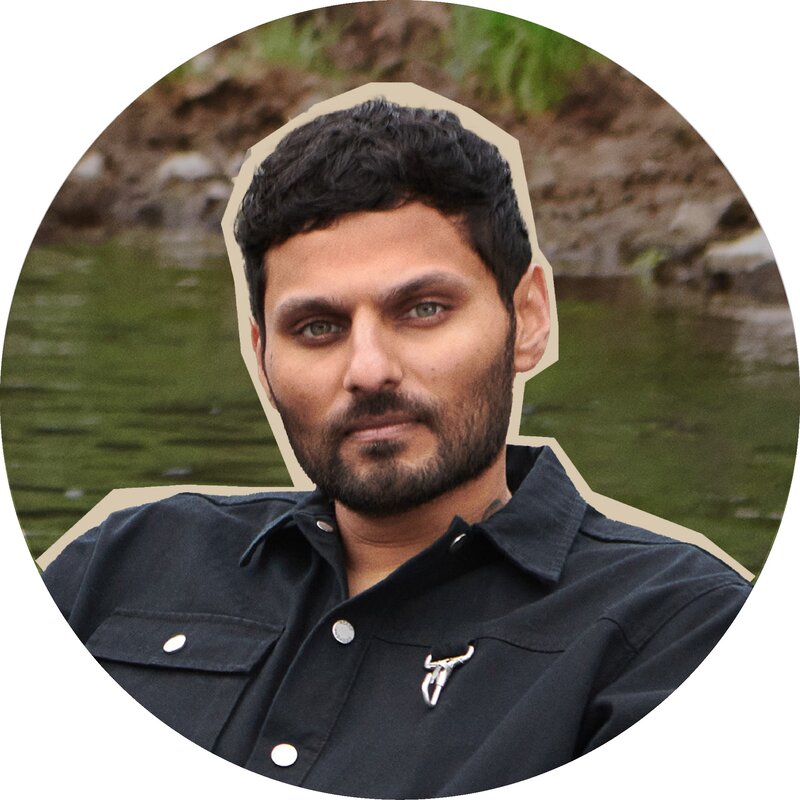
 Jay Shetty Podcast
MALALA: The TRUTH Behind The Attack
Jay Shetty and Malala Yousafzai on malala on survival, activism, trauma healing, and girls’ education worldwide.
In this episode of Jay Shetty Podcast, featuring Jay Shetty and Malala Yousafzai, MALALA: The TRUTH Behind The Attack explores malala on survival, activism, trauma healing, and girls’ education worldwide Malala describes waking from a coma into a globally defined identity and the pressure to “live up” to being seen as endlessly brave while still trying to be a normal teenager.
At a glance
WHAT IT’S REALLY ABOUT
Malala on survival, activism, trauma healing, and girls’ education worldwide
- Malala describes waking from a coma into a globally defined identity and the pressure to “live up” to being seen as endlessly brave while still trying to be a normal teenager.
- She explains how life under Taliban rule systematically erased girls’ freedom—banning education, restricting movement, and enforcing fear—prompting her early activism through local action and a BBC blog.
- She recounts the school-bus shooting, the disorientation of recovery in the UK, and the rapid acceleration into speeches, awards, and founding Malala Fund while still grieving a lost childhood.
- She details delayed PTSD and anxiety that resurfaced years later, how therapy and supportive friendships helped her heal, and why emotional support is as essential as academic opportunity.
- She argues that durable change comes from long-term, locally led activism and policy shifts—especially in Afghanistan—alongside investments in safe schools, girls’ secondary education, and accountability for gender oppression.
IDEAS WORTH REMEMBERING
5 ideasPublic praise can become a psychological cage.
Malala internalized the world’s “mythical heroine” narrative and felt she couldn’t show fear, grief, or normal teenage needs, which later complicated her ability to process trauma.
Education is both refuge and resistance in patriarchal and violent contexts.
She frames school as a sanctuary where girls can explore identity and possibility; when it’s taken away, activism can become a forced response to reclaim a basic right.
Allies—especially men in patriarchal societies—can be decisive catalysts.
Malala emphasizes her story wasn’t unique in desire, but was unique in permission and protection: her father refused to “clip her wings,” modeling how men can shift norms by stepping up.
Extremism often uses religion as cover for misogyny and power.
She argues the Taliban’s anti-education stance is not rooted in Islam’s emphasis on seeking knowledge, but in patriarchy, dehumanization, and control—making education a counter to indoctrination.
Trauma can return years later, even after outward “recovery.”
A college incident triggered flashbacks and panic attacks seven years post-attack, illustrating delayed PTSD and how being labeled “brave” can add shame when symptoms appear.
WORDS WORTH SAVING
5 quotesThe Taliban wanted to stop one girl from learning. Let's educate every girl in the world.
— Malala Yousafzai
My story is not unique. So many other girls in my hometown wanted to speak out against the Taliban oppression for their right to education, but their brothers or their fathers stopped them. The only thing that's different in my story is that my father did not stop me.
— Malala Yousafzai
Don't ask me what I did, but ask me what I did not do. I did not clip her wings.
— Malala Yousafzai
I just wish that I could have all of that in the UK as well, in this new school.
— Malala Yousafzai
I just... reflect on, um—On how we can create a world where no other child faces a bullet.
— Malala Yousafzai
QUESTIONS ANSWERED IN THIS EPISODE
5 questionsWhen you say you “embraced” the identity the world gave you after the coma, what parts of yourself did you have to hide to make that possible?
Malala describes waking from a coma into a globally defined identity and the pressure to “live up” to being seen as endlessly brave while still trying to be a normal teenager.
You describe shifting from trying to ‘convince the Taliban’ to addressing root causes—what specifically changed your mind, and what does that shift look like in practice at Malala Fund?
She explains how life under Taliban rule systematically erased girls’ freedom—banning education, restricting movement, and enforcing fear—prompting her early activism through local action and a BBC blog.
In Afghanistan, what are the most promising “alternative education” models you’re supporting (home-based learning, community classes, online), and what are their biggest safety risks?
She recounts the school-bus shooting, the disorientation of recovery in the UK, and the rapid acceleration into speeches, awards, and founding Malala Fund while still grieving a lost childhood.
You mentioned the Taliban’s misuse of Islam—what arguments or examples have been most effective when speaking with communities who are religious but hesitant about girls’ schooling?
She details delayed PTSD and anxiety that resurfaced years later, how therapy and supportive friendships helped her heal, and why emotional support is as essential as academic opportunity.
How do you advise young activists to balance visibility (which can bring protection and resources) with the security risks that visibility creates?
She argues that durable change comes from long-term, locally led activism and policy shifts—especially in Afghanistan—alongside investments in safe schools, girls’ secondary education, and accountability for gender oppression.
Chapter Breakdown
Waking up to a new identity after the attack
Malala describes coming out of a coma to discover her story had become global news—and that the world had already decided who she was. She reflects on the pressure to “live up” to the brave-activist image while still being a teenager trying to study and recover.
Nobel Prize day: extraordinary recognition, ordinary school expectations
Malala recounts learning she’d won the Nobel Peace Prize while still attending school, and choosing to finish her classes anyway. She shares how visibility and acclaim didn’t automatically translate into belonging or easy friendships at her new school.
School as sanctuary—and why education feels like oxygen
She revisits her childhood in Pakistan: mischievous, competitive, always participating, and deeply grateful for school. Malala explains how, in patriarchal settings where girls’ mobility is restricted, school becomes both freedom and safety.
The family stories that reveal education as privilege
Malala explains she didn’t need to imagine a life without education—she saw it in the women around her, including her mother’s interrupted schooling. These examples shaped her understanding that education determines whether girls can choose their futures.
Her father as ally: redefining ‘honor’ and fatherhood
Malala credits her father’s values for making her activism possible, noting many girls wanted to speak up but were stopped by male relatives. She emphasizes how men’s support can shift norms across communities when a few fathers model change.
Taliban takeover: fear, restrictions, and the day girls’ school was banned
Malala details what Taliban control looked like day-to-day—announcements, threats, killings, bans on women’s movement and art. She recalls the devastating impact of the girls’ education ban and the clandestine efforts to keep learning anyway.
Finding a voice at 11: the BBC blog and early activism
She explains how documenting life under the Taliban began as a way to break the world’s silence. With her father’s support, Malala wrote anonymously for the BBC and spoke locally—activism shaped by circumstance rather than choice.
Choosing courage over silence—and living with the threat
Malala describes weighing silence under oppression versus speaking out despite danger, and how fear was real even before the attack. She was often more worried about the Taliban targeting her father than herself.
The attack on the school bus and the disorienting aftermath
Malala recounts the school bus ambush, being shot, and her fragmented memory of the moment. She shares waking in a UK hospital unable to speak, repeatedly asking for her father, and realizing life had irreversibly shifted.
Becoming a global symbol overnight: activism, family burden, and lost adolescence
After recovery, Malala is quickly pulled into speeches, interviews, a UN appearance, and a book deal while also restarting school. She describes how the pace left little room to be silly, make friends, or process trauma—turning identity into obligation.
Taliban narratives, religion misused, and refocusing the fight
Malala explains how the Taliban justified the attack through fabricated claims about Islam and “disobedience.” She describes shifting from trying to ‘convince’ extremists to addressing root causes—using education to counter indoctrination and inequality.
Trauma returns years later: PTSD, panic, and the ‘imposter’ feeling
Years after believing she’d moved on, Malala experiences severe flashbacks and panic attacks triggered in college. She reveals how the most painful part was feeling she’d failed the world’s definition of her as fearless.
Therapy and friendship as lifelines: rebuilding a window of tolerance
Malala shares how friends normalized therapy and supported her through sleeplessness and anxiety. She discusses learning coping tools (like breathing techniques), accepting healing takes time, and understanding capacity can shrink or expand.
Belonging, love, and equality: from relationship ‘coach’ to choosing partnership
She talks about friendship as a space to be unfiltered, then describes insecurity after facial nerve damage and doubts about being lovable. Malala recounts falling in love with Asser, grappling with marriage as an institution, and insisting on mutual equality.
Activism today: local leaders, girls’ education under crisis, and building lasting change
Malala connects girls’ education to wars, displacement, climate disasters, and the Taliban’s gender apartheid in Afghanistan. She argues lasting progress comes from funding local activists, shifting policy and narrative over decades, and building institutions like her school in Pakistan that include mental health support.
EVERY SPOKEN WORD
Install uListen for AI-powered chat & search across the full episode — Get Full Transcript
Get more out of YouTube videos.
High quality summaries for YouTube videos. Accurate transcripts to search & find moments. Powered by ChatGPT & Claude AI.
Add to Chrome