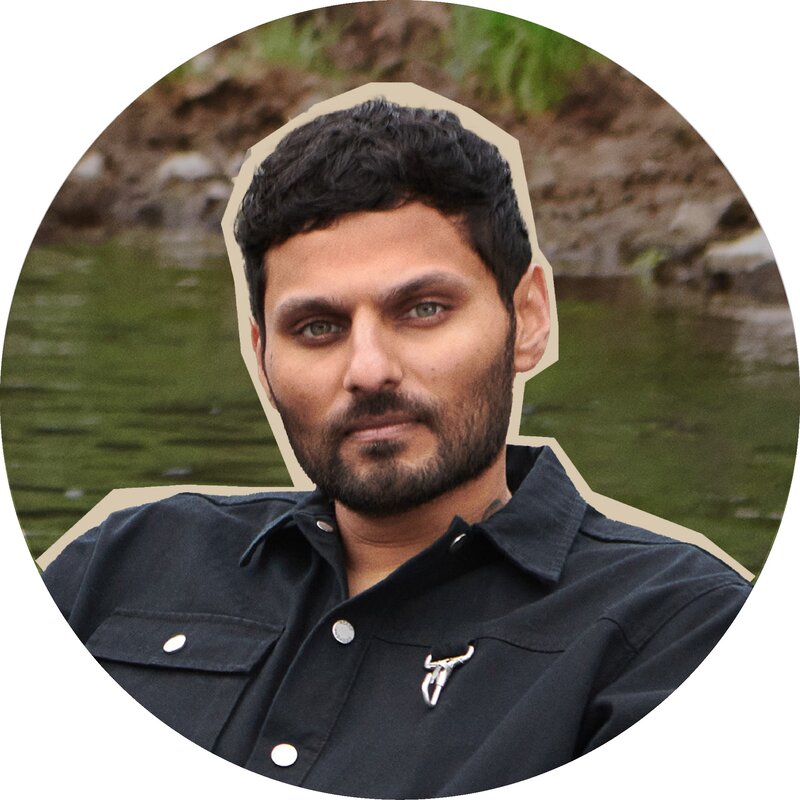
 Jay Shetty Podcast
The #1 Reason Most People Fail at Meditation (And the Simple Fix That Works for Anyone)
Jay Shetty on why meditation fails for most people—and the simplest way forward.
In this episode of Jay Shetty Podcast, featuring Jay Shetty and Big Sean, The #1 Reason Most People Fail at Meditation (And the Simple Fix That Works for Anyone) explores why meditation fails for most people—and the simplest way forward The episode argues most people fail at meditation because they judge themselves, expect a “right” way, and quit before consistency creates results.
At a glance
WHAT IT’S REALLY ABOUT
Why meditation fails for most people—and the simplest way forward
- The episode argues most people fail at meditation because they judge themselves, expect a “right” way, and quit before consistency creates results.
- Dr. Joe Dispenza presents a science-framed model where meditation trains you to shift out of stress/survival mode and into a healing-oriented internal state through repeated practice.
- Big Sean reframes meditation as any intentional, conscious practice (journaling, affirmations, visualization, walking, sound healing) and emphasizes personalization over perfection.
- Michael Acton Smith (Calm) describes how meditation’s reputation has shifted from “robes and hours of silence” to a practical tool that can begin with a single mindful breath.
- Vishen Lakhiani distinguishes “passive” calming practices from “active meditation” used to solve specific problems, emphasizing that the goal is not mastery of meditation but improved performance and wellbeing in life.
IDEAS WORTH REMEMBERING
5 ideasStop trying to do meditation “right”; prioritize showing up.
A core barrier discussed is self-judgment and the belief that a busy mind means failure; the guests argue consistency and intention matter more than a perfect technique.
Use meditation to shift from stress chemistry to healing chemistry.
Dispenza frames meditation as training the nervous system out of chronic stress responses; the repeated internal-state shift is presented as the mechanism behind mental and physical benefits.
Consistency sustains gains; reverting to the “old self” can reverse progress.
Dispenza describes people improving and then returning to old emotional reactions and habits, with symptoms returning—suggesting maintenance depends on continued practice and identity-level change.
Start smaller than you think—one mindful breath counts.
Acton Smith highlights that meditation doesn’t require long sessions or special conditions; reducing the start-point lowers friction and builds a sustainable habit loop.
Make meditation fit your life stage and schedule.
Big Sean notes parenting and real-life constraints; the practical move is to return to the practice later rather than abandoning it because the ideal routine wasn’t possible.
WORDS WORTH SAVING
5 quotesWe have compelling data to suggest that you're greater than you think.
— Dr. Joe Dispenza
If your personality creates your personal reality, and your personality is made up of how you think, how you act, and how you feel, if you keep thinking the same way, you keep acting the same way, you keep feeling the same way, your life is gonna stay the same because you're the same.
— Dr. Joe Dispenza
There's no wrong way to meditate either. That's another misconception. There's no wrong way to do it.
— Big Sean
You can literally start with one mindful breath.
— Michael Acton Smith
The point of meditation, in the words of the great teacher Emily Fletcher, is not to get good at meditation. It is to get good at life.
— Vishen Lakhiani
QUESTIONS ANSWERED IN THIS EPISODE
5 questionsDr. Dispenza mentions very high causality figures and dramatic healings—what specific peer-reviewed studies and protocols support these claims, and what are the key limitations?
The episode argues most people fail at meditation because they judge themselves, expect a “right” way, and quit before consistency creates results.
In Dispenza’s model, what’s the practical difference between “getting beyond the analytical mind” and “disconnecting from body/environment/time,” and how would a beginner train those steps safely?
Dr. Joe Dispenza presents a science-framed model where meditation trains you to shift out of stress/survival mode and into a healing-oriented internal state through repeated practice.
Big Sean describes affirmations, journaling, and visualization as meditation—how do you define the boundary between meditation, prayer, and self-talk, and does it matter for outcomes?
Big Sean reframes meditation as any intentional, conscious practice (journaling, affirmations, visualization, walking, sound healing) and emphasizes personalization over perfection.
Michael Acton Smith says you can start with one mindful breath—what’s the best way to structure a 7-day “one-breath to one-minute” progression for someone who keeps quitting?
Michael Acton Smith (Calm) describes how meditation’s reputation has shifted from “robes and hours of silence” to a practical tool that can begin with a single mindful breath.
Vishen’s “active meditation” treats problems as projects—how do you prevent this approach from turning meditation into constant striving rather than presence?
Vishen Lakhiani distinguishes “passive” calming practices from “active meditation” used to solve specific problems, emphasizing that the goal is not mastery of meditation but improved performance and wellbeing in life.
Chapter Breakdown
Meditation’s measurable benefits—and why most people still struggle to start
Jay Shetty opens with research-backed benefits of mindfulness (stress hormones, brain aging, pain reduction) and contrasts them with the self-doubt many people feel about “doing it right.” He frames meditation as a practical daily reset that supports self-awareness, intuition, and emotional balance.
Dr. Joe Dispenza: A data-driven view of meditation and change
Dr. Joe Dispenza describes large-scale retreat-style studies measuring brainwaves, gene expression, metabolites, and other biomarkers. He argues that meditation is a trainable skill and that understanding the “why” behind the practice makes the “how” easier and less mystical.
From stress mode to healing mode: internal state as “the body’s pharmacy”
Dispenza claims the nervous system can generate powerful internal chemistry—anti-inflammatories, pain relief, and more—when people shift out of survival stress states. He shares dramatic testimonials and lab observations intended to show that changing thoughts, emotions, and behaviors can influence biology.
How much practice is needed—and why results aren’t linear
Jay asks about sustaining benefits beyond retreats, and Dispenza explains that timelines vary widely. He emphasizes consistency: breakthroughs can be immediate for some, but others require months or years, and slipping back into old emotional patterns can bring symptoms back.
Meditation as a daily identity experiment: thoughts, actions, feelings
Dispenza outlines a practical model: personality creates personal reality, so change requires intentional shifts in how you think, act, and feel. Meditation becomes the daily “disconnect” that helps you rehearse the person you intend to be rather than defaulting to unconscious habits.
Big Sean: “There is no wrong way to meditate”—make it personal and consistent
Big Sean reframes meditation as any intentional practice that brings you into conscious connection with yourself. He shares his routine combining affirmations, gratitude journaling, and meditation to set his energy for creativity, productivity, and emotional steadiness.
Visualization, energy work, and body-awareness meditation (Big Sean’s method)
He describes a visualization-based practice: imagining light filling the body, releasing what doesn’t align, and using color associations for healing, power, love, and cleansing. The emphasis is on adapting the practice to what he feels and needs in the moment.
Making intentions concrete: journaling as declaration and commitment
Big Sean explains how he signs his journal entries “like a contract,” adding phrases like “It is done” or “So be it” to reinforce commitment. He also notes that results don’t always arrive on his timeline, framing the practice as cooperation with a larger timing rather than instant control.
Michael Acton Smith (Calm): myths, stigma shifts, and the one-breath start
The founder of Calm describes how meditation’s reputation changed from fringe or religious to mainstream mental wellbeing support. He dismantles the idea that meditation requires robes, long sessions, or special settings—arguing you can begin with a single mindful breath.
Attention as power in a distracted world: meditation to exit autopilot
Acton Smith frames meditation as training attention—helping you notice where focus goes and reclaim it from constant distraction. Awareness interrupts autopilot, enabling more intentional choices about time, energy, and presence.
Vishen Lakhiani: first breakthroughs—healing, visualization, and resilience
Vishen shares his teenage introduction to the Silva Method, motivated by severe acne and low confidence. After years of persistence and learning, he reports a rapid improvement and then applies similar mental training to achieving a major taekwondo goal—cementing his belief in mind-body influence.
Active meditation vs passive meditation: tools for daily state and specific problems
Vishen distinguishes structured “active meditation” (problem-solving, step-by-step methods) from more classic breath-focused “passive” approaches. He uses a tool analogy: daily practices like a coffee maker for consistent baseline state, and tactical methods like a power drill for targeted challenges.
Closing message: the real goal isn’t meditation mastery—it’s a better life
Jay concludes by reinforcing that there’s no perfect practice and no single “meditation type.” The invitation is to start small, choose a method that fits (guided, stillness, walking, nature), and use meditation as a tool to improve everyday life.
EVERY SPOKEN WORD
Install uListen for AI-powered chat & search across the full episode — Get Full Transcript
Get more out of YouTube videos.
High quality summaries for YouTube videos. Accurate transcripts to search & find moments. Powered by ChatGPT & Claude AI.
Add to Chrome