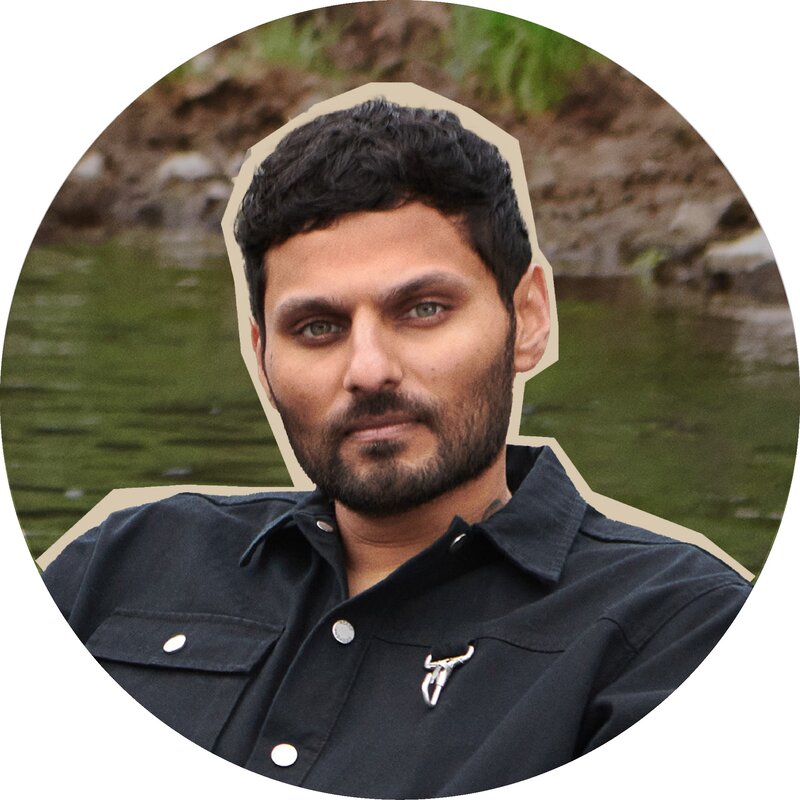
 Jay Shetty Podcast
Robinhood CEO: Stop Trusting Experts if You Really Want to Make Money!
Jay Shetty on vlad Tenev on democratizing investing, skepticism, and building resilient Robinhood.
In this episode of Jay Shetty Podcast, featuring Jay Shetty and Jay Shetty, Robinhood CEO: Stop Trusting Experts if You Really Want to Make Money! explores vlad Tenev on democratizing investing, skepticism, and building resilient Robinhood Tenev traces how childhood upheaval—immigration, separation from his father, and Bulgaria’s hyperinflation—formed a visceral respect for money, saving, and protecting purchasing power.
At a glance
WHAT IT’S REALLY ABOUT
Vlad Tenev on democratizing investing, skepticism, and building resilient Robinhood
- Tenev traces how childhood upheaval—immigration, separation from his father, and Bulgaria’s hyperinflation—formed a visceral respect for money, saving, and protecting purchasing power.
- He explains Robinhood’s founding ethos and key innovations—zero commissions, zero minimums, and fractional shares—as a technology-driven removal of barriers that historically made small-dollar investing irrational.
- For new investors, he argues the biggest errors are blindly following online tips and delaying participation, advocating instead for self-directed thinking, quick habit formation, and learning-by-doing.
- He describes how the 2008 financial crisis and disillusionment with academic bureaucracy nudged him from math/physics toward entrepreneurship, and how later crises (GameStop, outages, 2022 macro reset) forced Robinhood to mature operationally and strategically.
- Tenev details Robinhood’s shift from a “first-time investor” focus to also serving active traders, plus expansion into retirement, credit cards, and AI-augmented advice as part of capturing a coming $72T intergenerational wealth transfer.
IDEAS WORTH REMEMBERING
5 ideasEarly exposure to monetary instability can permanently shape financial behavior.
Seeing Bulgaria’s hyperinflation and his grandparents’ pensions collapse gave Tenev a “visceral” understanding that protecting purchasing power drives everyday choices—an origin for his focus on access and efficiency in finance.
Removing friction (fees and minimums) can unlock entire new markets.
Tenev argues $10-per-trade commissions and $2,000 account minimums effectively excluded small investors; by eliminating both and automating operations, Robinhood made investing viable even with $10 (or less).
The most dangerous investing habit is outsourcing judgment to the internet.
Despite Robinhood’s meme-stock association, he says the biggest mistake is buying because social media says so; use chatter as a signal at most, but make an independent decision.
Starting small matters less than starting early—and staying consistent.
He emphasizes compounding and time-in-market: beginning young gave him years to recover from the dot-com drawdown, and today fractional shares let beginners build the investing habit without needing “a whole share.”
Learning-by-doing beats “perfect knowledge” for most beginners.
Tenev compares investing to learning violin: executing simple trades and building intuition creates motivation and context for deeper reading, whereas demanding mastery upfront becomes an “incomprehensible barrier.”
WORDS WORTH SAVING
5 quotesMy grandparents' pensions were just worthless.
— Vlad Tenev
Compounding over a long period of time corrects a lot of mistakes.
— Vlad Tenev
I think probably the biggest mistake one can make is buying something just because someone on the internet, like, thinks that you should buy it and is posting it.
— Vlad Tenev
I wrote this article back in 2021, uh, investing in the global markets is, is really the new American dream.
— Vlad Tenev
I think in the context of the, of the company, uh, trusting experts who have done it before- ... is bad advice, generally speaking.
— Vlad Tenev
QUESTIONS ANSWERED IN THIS EPISODE
5 questionsYou mention three big Robinhood innovations—besides zero commissions and zero minimums, what’s the third, and why was it critical to adoption?
Tenev traces how childhood upheaval—immigration, separation from his father, and Bulgaria’s hyperinflation—formed a visceral respect for money, saving, and protecting purchasing power.
When you say “don’t buy because someone on the internet posted it,” what specific checks would you want a beginner to do before placing a first trade?
He explains Robinhood’s founding ethos and key innovations—zero commissions, zero minimums, and fractional shares—as a technology-driven removal of barriers that historically made small-dollar investing irrational.
Fractional shares require Robinhood to hold inventory—what are the operational or risk-management downsides of that model in volatile markets?
For new investors, he argues the biggest errors are blindly following online tips and delaying participation, advocating instead for self-directed thinking, quick habit formation, and learning-by-doing.
You argue homeownership can be a highly leveraged, fee-heavy ‘investment’—in what scenarios (if any) do you think buying a primary home still makes strong financial sense?
He describes how the 2008 financial crisis and disillusionment with academic bureaucracy nudged him from math/physics toward entrepreneurship, and how later crises (GameStop, outages, 2022 macro reset) forced Robinhood to mature operationally and strategically.
On GameStop, you say the collusion narrative was disproven—what evidence or milestones most convincingly changed regulators’ or the public’s view, if anything did?
Tenev details Robinhood’s shift from a “first-time investor” focus to also serving active traders, plus expansion into retirement, credit cards, and AI-augmented advice as part of capturing a coming $72T intergenerational wealth transfer.
Chapter Breakdown
Traumatic early memories: leaving Bulgaria and understanding money through hyperinflation
Vlad Tenev recounts formative childhood moments: saying goodbye to his father when he left for the U.S. and later witnessing Bulgaria’s hyperinflation firsthand. These experiences shaped his visceral respect for money, scarcity, and the consequences of unstable financial systems.
Reuniting in America: culture shock, family reset, and finding confidence in school
He describes arriving at JFK as a shy child, feeling like he was meeting strangers, and absorbing the scale of New York for the first time. In school, language barriers were severe at first, but early academic wins helped him identify as “smart,” reinforced by his parents’ advocacy.
Math as an escape hatch: accelerated track, SAT camps, and the path to Stanford
Math becomes both a competitive outlet and a practical strategy for advancement. Vlad explains how his parents’ pressure—scholarships, immigration uncertainty—combined with his aptitude to propel him into advanced programs and ultimately toward Stanford.
From would-be lawyer to theoretical physics: ambition, identity, and intellectual drive
At Stanford, his interests evolve from law to a deep obsession with physics and the nature of the universe. He discusses being surrounded by exceptional peers and how that environment reshaped his self-perception and future direction.
2008 crisis + disillusionment with academia: the pivot into entrepreneurship
Graduate school collides with the bureaucracy of academic life and the shock of the global financial crisis. A friend (Baiju Bhatt) convinces him that the turmoil is the right moment to start building in finance, leading to early startup attempts and the entrepreneurial mindset.
Why it’s called Robinhood: controversy, mission, and a memorable stance
Vlad explains how the name emerged from his (then) girlfriend describing the mission to skeptical friends: helping the “little guy” access financial tools. The name’s polarizing nature became an asset—emotional, memorable, and clearly signaling a values-driven brand.
First investing lessons: dot-com boom, 3Com, and learning by owning
He shares how investing began early—building mock portfolios and then real trades funded by an SAT-based incentive. His first buy (3Com) and the experience of a spinoff taught him shareholder mechanics and long-term resilience after the dot-com crash.
Investing basics for beginners: start small, avoid hype, build the habit
The conversation turns practical: when to start, how little money is enough, and common beginner errors. Vlad argues the biggest barriers were fees and minimums, and that the most important step is starting—thoughtfully—rather than waiting for perfect knowledge.
How Robinhood steers stock selection and where AI fits in financial advice
Vlad explains his philosophy of investing in products you understand and use, and how younger investors gravitate toward innovative consumer tech names. He also outlines Robinhood’s move toward guided portfolios and how AI will likely augment advisory services.
Renting vs buying: liquidity, leverage, and the ‘new American dream’ of markets
Vlad gives a nuanced view of homeownership versus market investing. He highlights the hidden costs and illiquidity of real estate, contrasts it with low-friction access to diversified public markets, and ties it back to his family’s experience with inflation hedges.
The $72T wealth transfer: financial access, retirement rethought, and product expansion
The upcoming generational wealth transfer becomes a strategic lens: Robinhood’s growth with millennials and Gen Z, plus an expansion beyond trading into savings, retirement, and credit. Vlad emphasizes portability of retirement and reduced reliance on employers or government systems.
GameStop, media narratives, and learning to lead under scrutiny
Vlad reflects on portrayal in the GameStop movie, the conspiracy narrative, and the personal toll of becoming a public symbol. He explains how he had to evolve from a builder focused on facts to a leader who communicates with empathy, authenticity, and clarity under legal constraints.
2022 macro ‘reset’: inflation, rate hikes, and refounding Robinhood for resilience
He contrasts the acute crisis of GameStop with the slow burn of 2022’s market downturn. The rate environment forced a strategic rebuild: diversification, profitability focus, and proving Robinhood isn’t only a zero-rate phenomenon.
Fixing the core customer experience: active traders, product focus, and scaling vs optimization
Vlad describes an internal ‘new CEO’ thought experiment that led to tough reversals (like remote-first) and sharper prioritization. A key insight: Robinhood’s most valuable, active traders were least satisfied—prompting rapid product upgrades and a broader lesson on when to scale infrastructure.
Sustaining founder life: health routines, marriage, and reinventing the credit card
He shares how he protects his energy with a ‘barbell’ model—intellectual work balanced by physical discipline—and the ongoing battle with device boundaries. The episode closes with Robinhood’s credit card thesis: simpler rewards, equal access for new credit builders, and privacy-forward digital features.
EVERY SPOKEN WORD
Install uListen for AI-powered chat & search across the full episode — Get Full Transcript
Get more out of YouTube videos.
High quality summaries for YouTube videos. Accurate transcripts to search & find moments. Powered by ChatGPT & Claude AI.
Add to Chrome