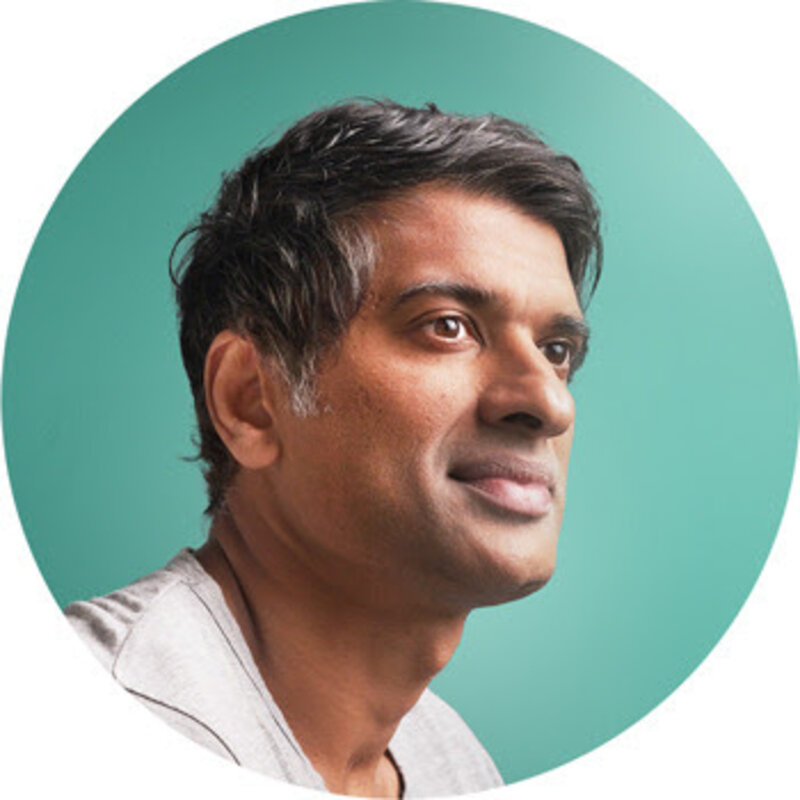
 Dr Rangan Chatterjee
Neuroscientists 7‑Day Habit Reset: Start Today, Feel Different By Next Week
Dr. Rangan Chatterjee on neuroscience-backed habit resets: movement, light, and breath for wellbeing.
In this episode of Dr Rangan Chatterjee, featuring Dr. Rangan Chatterjee and Wendy Suzuki, Neuroscientists 7‑Day Habit Reset: Start Today, Feel Different By Next Week explores neuroscience-backed habit resets: movement, light, and breath for wellbeing Regular movement acts like a “bubble bath” of brain chemicals, boosting mood, energy, focus, and prefrontal cortex performance while supporting habit formation when done consistently.
At a glance
WHAT IT’S REALLY ABOUT
Neuroscience-backed habit resets: movement, light, and breath for wellbeing
- Regular movement acts like a “bubble bath” of brain chemicals, boosting mood, energy, focus, and prefrontal cortex performance while supporting habit formation when done consistently.
- Wendy Suzuki’s personal shift from overwork and unhappiness to daily exercise illustrates how felt experience can catalyze lasting behavior change and even reshape creativity and career direction.
- Short, low-friction “minimum viable” habits (e.g., 10 minutes walking or 4–5 minute movement snacks) reduce the effort barrier, making the reward more accessible and habits more likely to stick.
- Circadian alignment depends heavily on bright morning light, which advances the body clock and can improve sleep, cognition (including in dementia settings), and overall daily functioning.
- Autonomic regulation tools—especially the physiological sigh—can rapidly downshift stress by influencing breathing physiology and adrenaline-related arousal, enabling better thinking and decision-making under pressure.
IDEAS WORTH REMEMBERING
5 ideasExercise is a fast-acting brain intervention, not just a body habit.
Movement releases dopamine, serotonin, noradrenaline, and growth factors—improving mood and sharpening prefrontal cortex functions like focus; Suzuki frames it as a “bubble bath” for the brain.
Consistency beats intensity for habit formation.
Suzuki settled on 30 minutes daily because it was sustainable and reduced soreness/fatigue, making it easier to repeat; repetition builds a stable routine that “does not go away.”
Start with the smallest dose that changes state—then scale.
Evidence cited suggests ~10 minutes of walking can reduce everyday anxiety/depressive mood states; “4-minute hacks” and “movement snacks” are designed to lower activation energy so people actually begin.
Exercise can upgrade cognition and creativity through the hippocampus.
Growth factors support hippocampal function and even new cell growth, which helps not only memory but recombining information into new ideas—linked in Suzuki’s story to improved grant writing and new course creation.
Morning light is a primary lever for better sleep and circadian stability.
For most people with slightly-longer-than-24h clocks, early bright light advances timing and prevents drift; lab and field data support 10–30 minutes soon after waking, or bright light boxes (~10,000 lux/30 min).
WORDS WORTH SAVING
5 quotesIt's like giving your brain a wonderful bubble bath of neurochemicals.
— Wendy Suzuki
Movement, regular movement can be as effective as some of the most commonly used antidepressants.
— Wendy Suzuki
Gee, writing went well today. I had never had that thought ever in my entire career.
— Wendy Suzuki
Morning light advances the clock... whereas dusk light delays the clock.
— Russell Foster
Doing that just once... will immediately reduce your levels of stress and anxiety. Immediately.
— Andrew Huberman
QUESTIONS ANSWERED IN THIS EPISODE
5 questionsSuzuki mentions dopamine/serotonin/noradrenaline and growth factors—what are the clearest human markers (behavioral or biological) that these changes are occurring after a workout?
Regular movement acts like a “bubble bath” of brain chemicals, boosting mood, energy, focus, and prefrontal cortex performance while supporting habit formation when done consistently.
If 10 minutes of walking can shift mood, what’s the best way to structure “movement snacks” across a day for people who can’t do a single longer session?
Wendy Suzuki’s personal shift from overwork and unhappiness to daily exercise illustrates how felt experience can catalyze lasting behavior change and even reshape creativity and career direction.
Suzuki credits exercise with better grant writing—what cognitive domains improve most reliably (working memory, sustained attention, cognitive flexibility), and how soon do changes appear?
Short, low-friction “minimum viable” habits (e.g., 10 minutes walking or 4–5 minute movement snacks) reduce the effort barrier, making the reward more accessible and habits more likely to stick.
Foster says we live in “dim, dark caves” indoors—what practical lux targets should people aim for in winter mornings, and how can they measure it cheaply?
Circadian alignment depends heavily on bright morning light, which advances the body clock and can improve sleep, cognition (including in dementia settings), and overall daily functioning.
How should extreme night owls balance getting enough morning light to shift their clock without worsening sleep debt during the transition week?
Autonomic regulation tools—especially the physiological sigh—can rapidly downshift stress by influencing breathing physiology and adrenaline-related arousal, enabling better thinking and decision-making under pressure.
Chapter Breakdown
30-minute morning exercise: a “bubble bath” of brain chemicals
Wendy Suzuki explains why she prioritizes 30 minutes of daily movement first thing in the morning. She links exercise to immediate neurochemical changes that elevate mood and sharpen focus, especially via the prefrontal cortex.
The wake-up call: stress, tenure pressure, and losing happiness
Suzuki rewinds to a period when she worked constantly while neglecting movement, social life, and wellbeing. She describes how professional success coexisted with unhappiness and declining physical fitness.
Peru rafting to hip-hop dance: how feeling better triggered behavior change
A solo adventure trip highlighted her poor fitness and became the catalyst for change. Starting with a challenging dance class, she noticed an immediate improvement in how she felt—enough to make movement stick.
The research pivot: exercise improved memory, focus, and even grant writing
A surprising shift in cognitive performance—better, smoother writing—made Suzuki connect exercise to higher-level brain function. This becomes a turning point that eventually redirects her research focus toward exercise neuroscience.
Creativity after movement: redesigning teaching, courses, and public outreach
Suzuki describes how exercise didn’t just improve mood—it changed her imagination and creativity. She built novel university courses integrating movement, ran classroom-based studies, and expanded to TED talks and books.
“I can’t do mornings”: four-minute hacks and the minimum effective dose
The conversation shifts to accessibility: not everyone can do 30 minutes in the morning. Suzuki explains why her book uses short “four-minute” entry points and cites evidence that even brief walking improves mood.
Morning light and circadian alignment: why the day starts at sunrise
Sleep scientist Russell Foster explains how morning light anchors the body clock to the real day. Without consistent morning light exposure, many people’s rhythms drift later, affecting sleep timing and quality.
Chronotypes (larks vs owls): genetics, development, and teen sleep shifts
Foster defines chronotype and details why teens naturally shift later, then move earlier with age. He distinguishes innate differences from environmental drivers like light exposure and social schedules.
How much light matters: intensity (lux), duration, and wavelength complexity
Foster explains that circadian photoreception differs from ordinary vision and often requires far brighter light than people expect. He discusses lux ranges, blue-spectrum sensitivity, and why the science is more nuanced than common advice suggests.
Screens at night: circadian shift vs alertness and the “Kindle effect”
The discussion challenges simplistic claims about screens “ruining” sleep by shifting the clock. Foster cites research suggesting small circadian delays under extreme conditions and emphasizes that alerting content/interaction may be the bigger factor.
Practical circadian tools: 10–30 minutes of morning light and brighter days indoors
Foster supports guidance to get outside soon after waking for morning light exposure. He also highlights benefits of improving daytime indoor lighting—especially for older adults and those in care environments.
Huberman on stress: why nervous-system control is the master skill
Andrew Huberman frames stress and anxiety as dysregulated adrenaline release and argues that nervous-system self-regulation underpins performance, health habits, and resilience. He emphasizes flexible control—upregulate when needed, downregulate when needed.
The fastest downshift: the “physiological sigh” breathing protocol
Huberman teaches a rapid technique to reduce stress by improving gas exchange and calming the system. He explains the physiology of carbon dioxide-driven breathing and how double inhales reinflate alveoli, followed by a long exhale.
Action first, feelings second: habit loops, five-minute “movement snacks,” and self-efficacy
Chatterjee and the guest explore why small, repeatable actions can transform identity and motivation—especially in depression. They connect behavior change to cost–benefit calculations, habit circuitry shifts, and the power of enjoyment in sustaining exercise.
Mental health vs wellbeing—and why social connection (and laughter) matters
The conversation broadens to definitions of mental health, the rise in diagnoses, and plausible drivers like pandemic disruption. It closes on social cohesion—especially laughter—as a stress buffer that can improve pain tolerance and conflict recovery.
EVERY SPOKEN WORD
Install uListen for AI-powered chat & search across the full episode — Get Full Transcript
Get more out of YouTube videos.
High quality summaries for YouTube videos. Accurate transcripts to search & find moments. Powered by ChatGPT & Claude AI.
Add to Chrome