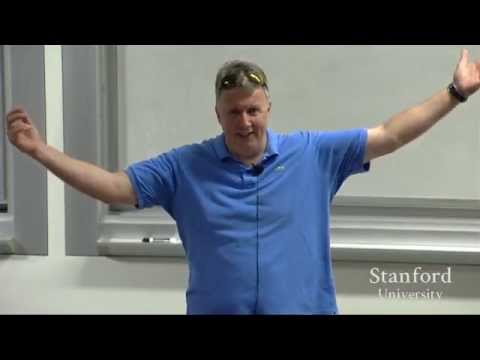
Lecture 3 - Before the Startup (Paul Graham)
Paul Graham (guest)
In this episode of YC Root Access, featuring Paul Graham, Lecture 3 - Before the Startup (Paul Graham) explores paul Graham urges students: learn deeply before founding startups later Startups are counterintuitive, so founders routinely ignore good advice because it conflicts with their instincts and “gaming the system” habits formed in school and big companies.
Paul Graham urges students: learn deeply before founding startups later
Startups are counterintuitive, so founders routinely ignore good advice because it conflicts with their instincts and “gaming the system” habits formed in school and big companies.
The only essential early skill is deep understanding of users and making something people want; fundraising mechanics and “growth hacks” are distractions that can enable “playing house.”
Because startups are all-consuming and irreversibly reshape your life, Graham advises students not to start startups in college and instead use their early 20s for exploration and learning.
You can’t reliably predict who will be tough and ambitious enough for startup life, so uncertainty is normal; the best test is eventually trying—just not while you’re supposed to be a student.
The best startup ideas typically emerge as side projects from people working on genuinely interesting problems (often at the edge of technology) with collaborators they like and respect.
Key Takeaways
Assume your startup instincts will be wrong in key moments.
Like learning to ski, startup success often requires suppressing default reactions; remembering “this is counterintuitive” can create the pause that prevents predictable mistakes.
Trust your gut about people more than your gut about startups.
Your social instincts are well-trained compared to your startup instincts; avoid “impressive but wrong” people and choose collaborators the way you choose friends, after enough time to see how they act under conflict.
User understanding beats startup expertise.
Graham argues the decisive advantage is knowing users deeply (Zuckerberg’s edge), while detailed knowledge of angel rounds, valuations, and other mechanics is optional and can become a dangerous form of procrastination.
Avoid “playing house” and focus on what’s essential.
Many young founders imitate the outward forms—fundraising, offices, hiring—because school trained them to optimize for proxies; the real job is to make something people want and get it into users’ hands.
Ignore “growth hacks” and do the fundamentals.
He frames “growth hacks” as mostly bullshit; sustainable growth comes from building something users love and then telling them about it, often by doing unscalable, manual work early.
Starting a startup is a long, irreversible commitment.
Even successful founders report it “never gets any easier”—problems get more glamorous but the worry load persists—so treat founding like pressing a life-changing button with huge opportunity cost.
If you want to found later, use college to ‘just learn.’
The best preparation is classic education: learn powerful things, pursue genuine curiosity, work on interesting problems with people you like, and get to the frontier where “obvious” needs become future startups.
Notable Quotes
“Startups are so weird that if you follow your instincts, they will lead you astray.”
— Paul Graham
“They have neglected the one thing that's actually essential, which is to make something people want.”
— Paul Graham
“Starting a startup is where gaming the system stops working.”
— Paul Graham
“If you start a startup, you're not a student anymore.”
— Paul Graham
“The way to get startup ideas is not to try to think of startup ideas.”
— Paul Graham
Questions Answered in This Episode
You argue founders should ‘trust instincts about people’—what specific red flags did you see most often in YC that students tend to rationalize away?
Startups are counterintuitive, so founders routinely ignore good advice because it conflicts with their instincts and “gaming the system” habits formed in school and big companies.
Where’s the line between healthy ‘side project’ exploration and the moment you should drop everything to pursue it—what concrete signals beyond ‘it takes over your life’ matter?
The only essential early skill is deep understanding of users and making something people want; fundraising mechanics and “growth hacks” are distractions that can enable “playing house.”
You call ‘growth hacks’ bullshit; what are 3-5 legitimate early-growth tactics you *do* endorse that still fit your “make something people want” principle?
Because startups are all-consuming and irreversibly reshape your life, Graham advises students not to start startups in college and instead use their early 20s for exploration and learning.
If college isn’t the right time to found, what’s your recommended timeline after graduation (jobs, research, travel, bootstrapping) for maximizing later startup odds?
You can’t reliably predict who will be tough and ambitious enough for startup life, so uncertainty is normal; the best test is eventually trying—just not while you’re supposed to be a student.
You say faking can work with investors for 1–2 rounds but is self-defeating—what behaviors constitute ‘faking’ versus reasonable vision-selling when traction is early?
The best startup ideas typically emerge as side projects from people working on genuinely interesting problems (often at the edge of technology) with collaborators they like and respect.
EVERY SPOKEN WORD
Install uListen for AI-powered chat & search across the full episode — Get Full Transcript
Get more out of YouTube videos.
High quality summaries for YouTube videos. Accurate transcripts to search & find moments. Powered by ChatGPT & Claude AI.
Add to Chrome