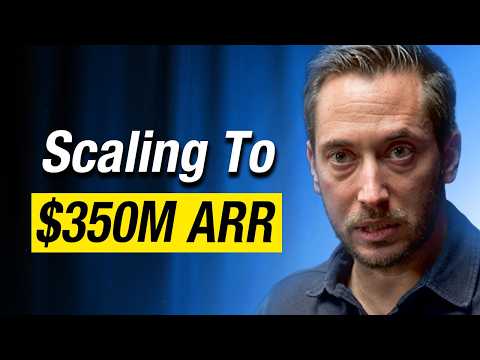
ElevenLabs: Building an AI Sales Machine & Why We Set a 20x Sales Quota
Carles Reina (guest), Harry Stebbings (host)
In this episode of The Twenty Minute VC, featuring Carles Reina and Harry Stebbings, ElevenLabs: Building an AI Sales Machine & Why We Set a 20x Sales Quota explores elevenLabs CRO on AI-driven sales, comp design, and scaling playbooks Reina argues the CRO role has shifted from closing individual deals to architecting distribution systems that embed AI and enable “more with less.”
ElevenLabs CRO on AI-driven sales, comp design, and scaling playbooks
Reina argues the CRO role has shifted from closing individual deals to architecting distribution systems that embed AI and enable “more with less.”
He explains why most AI outbound/SDR tools fail (they’re transactional and spammy) and contrasts that with ElevenLabs’ internally-built AI agents that augment inbound, proposals/RFP work, and customer success.
He details ElevenLabs’ compensation philosophy—high quotas (20x), strong accelerators, and commissions tied to real ARR (not pilots)—to drive elite performance without misaligned behavior.
He frames go-to-market as portfolio construction: run many parallel experiments across markets and channels, accept failures quickly (e.g., India verticalization reset), and place bets for “revenues of tomorrow.”
He highlights practical scaling lessons on brand’s impact on enterprise cycles, disciplined partner ecosystems (including CVC-led distribution), and hiring “obsessed” sellers with transparent performance visibility.
Key Takeaways
Most AI outbound fails because it optimizes transactions, not relationships.
Reina says generic AI SDR outreach treats everyone the same and is now easily detected and ignored, driving reply rates to near-zero; outbound only works “with humans or humanly,” tailored to how each prospect prefers to engage.
Get the full analysis with uListen
Build AI agents that augment workflows with context, not replace judgment.
ElevenLabs’ AI drafts customer-specific emails, scans RFPs/RFIs, and supports inbound handling; humans approve/edit, and outputs are stored for iterative fine-tuning, producing “human” specificity that can close deals.
Get the full analysis with uListen
Plan for a smaller, better-paid sales org by targeting ~50% productivity gains.
Rather than scaling headcount linearly, Reina wants fewer, more elite reps supported by AI—while still paying commissions on AI-assisted closes to keep incentives aligned with outcomes.
Get the full analysis with uListen
Use hard quotas plus accelerators, but avoid comp that creates perverse behavior.
ElevenLabs starts commissions around 5% and adds accelerators above quota, but warns that too many spiffs push reps to “sell the incentive” instead of the right deal; notably, they don’t pay commission on pilots.
Get the full analysis with uListen
Tie variable pay to valuation-driving revenue and expansion, not activity theater.
Reina frames $1M of revenue as massive valuation uplift and pays on signed annual (or longer) contracts and on retention/expansion (including longer windows for strategic accounts), aligning seller behavior with durable ARR.
Get the full analysis with uListen
Treat customer success as a revenue engine in fast-copy AI markets.
Because AI competitors can appear quickly, he rejects CS as merely “happiness,” arguing CS must drive expansion and retention while balancing when services should be paid vs used to build trust and community.
Get the full analysis with uListen
Run go-to-market like portfolio construction: many bets, fast resets, clear theses.
He rejects “one market at a time” as outdated in hyper-competitive AI; ElevenLabs tests multiple markets/channels/products in parallel, kills what fails (e. ...
Get the full analysis with uListen
Don’t segment/verticalize too early—ensure pipeline liquidity before specialization.
In India, early verticalization with a small team hurt revenue and confidence; the fix was returning to horizontal coverage, rebuilding pipeline “liquidity” plus “whales,” then re-segmenting later.
Get the full analysis with uListen
Brand materially shortens enterprise cycles—aim to become the ‘safe’ choice.
Reina says brand impact is undeniable (“whoever tells you no is lying”) and points to OpenAI, Anthropic, and Cursor as procurement-safe examples; brand plus proof reduces perceived career risk for buyers.
Get the full analysis with uListen
Partnerships aren’t a quarter-by-quarter growth hack; they require time and dedicated owners.
He stresses partner ecosystems take a long time, need internal incentives, and should be tracked first via SQOs/SQLs before revenue; a key ElevenLabs tactic is “strategy partners” via CVCs with explicit pipeline/revenue commitments and buyout consequences.
Get the full analysis with uListen
Notable Quotes
“Outbound is dead unless you do it with humans or unless you do it humanly.”
— Carles Reina
“Customer success needs to be a money generation function for the business.”
— Carles Reina
“It’s impossible. It’s just impossible.”
— Carles Reina
“Traditional VCs… ‘one market at a time’… that’s the bullshit advice.”
— Carles Reina
“It takes fucking long time… if you think partners will be 20% of revenue in two quarters, you’re wrong.”
— Carles Reina
Questions Answered in This Episode
What does ElevenLabs’ internally-built “AI SDR for inbound” actually do end-to-end (routing, qualification, scheduling, handoff), and what metrics improved versus a human-only workflow?
Reina argues the CRO role has shifted from closing individual deals to architecting distribution systems that embed AI and enable “more with less.”
Get the full analysis with uListen AI
How do you decide which customer interactions should be fully automated vs draft-assisted (human-in-the-loop), and where have you seen automation backfire?
He explains why most AI outbound/SDR tools fail (they’re transactional and spammy) and contrasts that with ElevenLabs’ internally-built AI agents that augment inbound, proposals/RFP work, and customer success.
Get the full analysis with uListen AI
Your outbound critique implies most AI SDR vendors are structurally flawed—what would a truly effective agentic outbound system need to model (channels, preferences, timing, tone), and how would you validate it?
He details ElevenLabs’ compensation philosophy—high quotas (20x), strong accelerators, and commissions tied to real ARR (not pilots)—to drive elite performance without misaligned behavior.
Get the full analysis with uListen AI
Walk through the math behind a 20x quota: what assumptions about pipeline, ramp, win rates, and market pull make it “fair” rather than a quota miss waiting to happen?
He frames go-to-market as portfolio construction: run many parallel experiments across markets and channels, accept failures quickly (e. ...
Get the full analysis with uListen AI
If you don’t pay commission on pilots, how do you prevent reps from avoiding necessary pilots in complex enterprises—what’s the alternative incentive or governance mechanism?
He highlights practical scaling lessons on brand’s impact on enterprise cycles, disciplined partner ecosystems (including CVC-led distribution), and hiring “obsessed” sellers with transparent performance visibility.
Get the full analysis with uListen AI
Transcript Preview
We had two employees that in February had already achieved the entire full-year quota.
I'm so excited to welcome Carles Reina. Carles is the CRO at ElevenLabs, one of the fastest-growing companies on the planet.
Customer success needs to be a money generation function for the business.
He scaled the revenue org from zero to over three hundred and fifty million in ARR.
The role of a CRO is fundamentally thinking about not the revenues today, but the revenues of tomorrow. Let's do the things that no one is doing. That is what makes me passionate, and that is what a good CRO needs to be doing because we're not here to do easy stuff.
This is a masterclass in scaling sales in an AI-first world.
It's like the fastest product in terms of revenues that we've ever had.
Wow.
It's just insane.
On top of that, Carles is also an incredible investor with his own solo GP fund, Baobab Ventures, which has backed the likes of Revolut and of course ElevenLabs in the early days.
If you want to do something, budget is never going to be a problem.
So what is the problem if you want to do something and you're not allowed to? Why would that be?
Ready to go? [rock music]
Carles, listen, I know a show is successful when I get friends of mine outside of tech be like, "Oh, loved the clip with Carles." [chuckles] And I'm like, "Really?" And they're like, "I never thought that quota and sales comp would be so interesting." And I'm like, "Thank you, Sarah. I had no idea you were interested in it." So it was such a successful show. I thought we had to do a round two. Thank you for joining me, man.
Thank you for inviting me. This is great. I'm happy people were interested in, like, sales.
[laughs]
[laughs]
Sales and sales comp according to that clip, which again, now it's, like, five million-plus views, which is insane. Dude, I actually wanted to start on you have now kind of led the way in a new CRO charge, I think. ElevenLabs is probably one of the most exciting companies on the planet. You as CRO there lead the way. Um, are a generation of CROs being left behind?
Some of them, yes. But I think, I think it's fundamentally that, like, the market has changed. The way that we build companies today has completely evolved. We can do deals much quicker. But also, like, for me, the key item is, like, a deal can be done. You can hire teams that, like, have a ton of experience. But how do you think beyond a single deal and think about, like, distribution entirely, right? And I think that's what we're thinking, like, what we're actually missing in many ways. Like, yes, it's great to do business development. It's great to, like, think about affiliates. How do you think about much more on a strategic level, but also, like, able to execute? Um, and for me, and, and those are the key components. How do you embed AI in your entire distribution component so that, like, you are able to actually do more with less, right?
Install uListen to search the full transcript and get AI-powered insights
Get Full TranscriptGet more from every podcast
AI summaries, searchable transcripts, and fact-checking. Free forever.
Add to Chrome