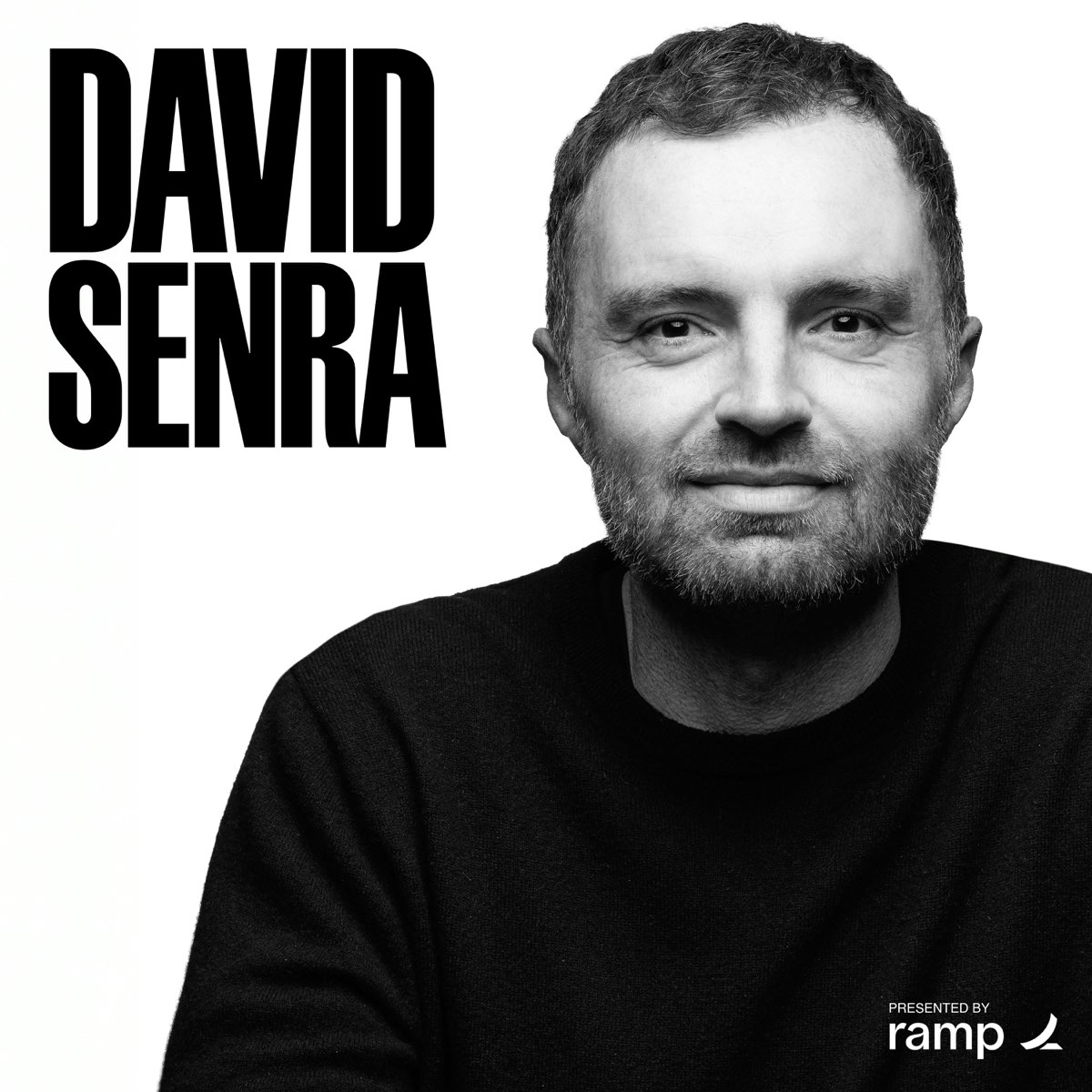
 David Senra
Roblox’s David Baszucki Built the Biggest Playground on Earth
David Senra on roblox’s founder explains flywheels, infrastructure, safety, and creator economy scaling.
In this episode of David Senra, featuring David Senra, Roblox’s David Baszucki Built the Biggest Playground on Earth explores roblox’s founder explains flywheels, infrastructure, safety, and creator economy scaling Baszucki traces Roblox’s roots to his earlier physics-simulation software, arguing that intuition—more than “logical” career optimization—drove the leap to a risky, creator-led 3D multiplayer platform in the early 2000s.
At a glance
WHAT IT’S REALLY ABOUT
Roblox’s founder explains flywheels, infrastructure, safety, and creator economy scaling
- Baszucki traces Roblox’s roots to his earlier physics-simulation software, arguing that intuition—more than “logical” career optimization—drove the leap to a risky, creator-led 3D multiplayer platform in the early 2000s.
- Roblox’s early breakthrough came from launching a closed-loop creation system (Studio → publish → play → discover) that converted users into creators and ignited organic word-of-mouth growth.
- Monetization evolved from a limited subscription (Builders Club) to a scalable virtual economy (Robux) designed to turn hobbyist creators into entrepreneurs and improve content quality via incentives.
- Baszucki frames Roblox as “secretly” an infrastructure company, emphasizing vertically integrated performance, cost efficiency (sub-penny per user-hour), and ambitious goals like photorealism with high single-instance concurrency.
- Safety and civility are treated as core product infrastructure, with long-compounded AI moderation and age-appropriate systems positioned as a durable moat and potential platform others may emulate or license.
IDEAS WORTH REMEMBERING
5 ideasOptimize for your real superpower, not a prestigious job title.
Baszucki describes a sabbatical where he tried to be “logical” by seeking CEO roles, then realized his edge was world-building and invention—leading him back to founding Roblox.
A platform’s breakthrough often comes from closing the loop, not polishing a single product.
Roblox accelerated when Studio allowed anyone to create, publish, and immediately attract players, creating a self-reinforcing system that outpaced paid acquisition.
If you want compounding growth, build flywheels that generate their own inputs.
Roblox’s “perpetual motion machine” idea is that creators continuously generate new content and users recruit other users—reducing reliance on bought traffic over time.
Social co-experience is a different category than content consumption.
Baszucki argues Roblox is more like a communication system (people together inside an experience) than YouTube’s mostly solo consumption, producing an additional “connection” viral loop.
Monetization must match the product’s scale dynamics—subscriptions may cap out.
Builders Club worked early but didn’t scale with broad user growth; the Robux economy created a more elastic system where spending, creator reinvestment, and better experiences reinforce each other.
WORDS WORTH SAVING
5 quotesI would say combining intuition with tenacity and taking the long view, if those things can coexist, it's super, super powerful.
— David Baszucki
It's harder to build a clock, but if you ask me the time every day for the next twenty years, it's probably easier to build the clock than to tell you the time every day for the next twenty years.
— David Baszucki
We used to joke, we wanna start a perpetual motion machine.
— David Baszucki
The content in Roblox is really a, a scaffold for communication and being together.
— David Baszucki
Perf-performance is a, is a growth feature.
— David Baszucki
QUESTIONS ANSWERED IN THIS EPISODE
5 questionsWhat specifically was on the early business-plan slide that ended up “very accurate to today,” and what parts were wrong?
Baszucki traces Roblox’s roots to his earlier physics-simulation software, arguing that intuition—more than “logical” career optimization—drove the leap to a risky, creator-led 3D multiplayer platform in the early 2000s.
When Studio first went live and creators started publishing within hours, what metrics convinced you the loop was real (retention, shares, session length, creator conversion)?
Roblox’s early breakthrough came from launching a closed-loop creation system (Studio → publish → play → discover) that converted users into creators and ignited organic word-of-mouth growth.
How did you decide Robux would be the core currency, and what were the hardest lessons from the early dual-currency experiment (Tickets + Robux)?
Monetization evolved from a limited subscription (Builders Club) to a scalable virtual economy (Robux) designed to turn hobbyist creators into entrepreneurs and improve content quality via incentives.
In the economy hack that forced a shutdown, what exact accounting/ledger changes did you implement afterward (e.g., double-entry, journaling, flow controls)?
Baszucki frames Roblox as “secretly” an infrastructure company, emphasizing vertically integrated performance, cost efficiency (sub-penny per user-hour), and ambitious goals like photorealism with high single-instance concurrency.
Can you map the “nine companies inside Roblox” to concrete outputs and KPIs each group owns, and where the model breaks down (matrixed areas)?
Safety and civility are treated as core product infrastructure, with long-compounded AI moderation and age-appropriate systems positioned as a durable moat and potential platform others may emulate or license.
Chapter Breakdown
From Knowledge Revolution to Roblox: simulation roots and early signals
Baszucki traces Roblox’s “origin story” back to his first company, Knowledge Revolution, where kids used a physics simulator to build and share creations. Seeing that urge to create and socialize hinted at a future market: immersive, multiplayer, creator-led 3D experiences.
The two-year sabbatical: logic vs intuition and getting back on the right path
After selling Knowledge Revolution, Baszucki describes drifting into a “logical” track—optimizing to be a CEO again rather than invent. A vivid moment of clarity pushed him back toward founder mode and building a new world from scratch.
Building a clock: intuition paired with tenacity and long-view systems thinking
Baszucki reconciles “follow intuition” with his reputation as a systems builder (“if you ask the time, he’ll build a clock”). Roblox is framed as building durable systems—like a perpetual machine—where creators and infrastructure compound over decades.
Lifestyle startup phase and the first product failure
Roblox began as a tiny, self-funded team with low expectations and high curiosity. Their first attempt—a single-player puzzle-builder—failed to go viral, prompting a decisive pivot toward the multiplayer platform they believed in.
Buying the first users and launching the closed-loop creator system
Initial growth was seeded by buying roughly 50 users/day via Google ads, forming the early social graph. The breakthrough came when Roblox Studio went live and users immediately started publishing experiences that other users played—activating the creator-driven viral loop.
Roblox vs YouTube: two viral loops (content + connection) and ‘beyond games’
Baszucki argues Roblox is closer to a communications system than a media platform: experiences are scaffolds for being together. Roblox’s growth model includes both a content loop and a social/communication loop, opening the door to concerts, shopping, and broader co-experiences.
Monetization and early safety: Builders Club, moderation, and the responsibility of scale
As Roblox’s organic growth persisted, the team built foundational safety systems early—long before regulation demanded it. Monetization first arrived via Builders Club subscriptions, but it later showed limits as user growth outpaced revenue growth.
Robux economy flywheel: turning creators into entrepreneurs
Roblox’s durable monetization engine became the Robux-based virtual economy, enabling creators to earn real money. Baszucki describes it as another closed-loop system that scales with engagement and aligns incentives: paywalls kill virality, so creators balance fun and monetization.
The ‘Roblox Operating System’: nine companies inside one platform company
Baszucki explains Roblox as a vertically integrated “operating system” for building the platform—and even for running the company itself. Roblox is organized into semi-autonomous groups (like internal companies) with single-threaded leadership and high-frequency coordination.
Infrastructure as strategy: performance is growth and owning the stack
Roblox is described as an infrastructure company disguised as a consumer platform, optimized to run global 3D simulation cheaply. Strategic vertical integration—data centers, engine, performance work—enables low cost per user and fast “time to play,” which Roblox treats as a core growth feature.
Capital efficiency and the imaginary competitor: staying fast without burning cash
Baszucki attributes Roblox’s early success to rapid virality, fast monetization, focus, and long-view iteration—achieving cash-flow breakeven with minimal equity capital. Internally, Roblox maintains urgency by imagining a competitor that will do everything faster and better—and deciding to become that company.
Safety and AI moat: age checks, content monitoring, and compounding trust
Safety is positioned as both responsibility and strategic advantage, built from the earliest days of moderation through modern AI systems. Roblox aims for “gold standard” safety via consistent, scalable AI monitoring across text, voice, assets, and behavior—potentially even offering safety tech externally.
Data ethics, NPC testing, and AI-accelerated creation
Roblox holds uniquely valuable behavioral and 3D simulation data, but Baszucki stresses it will never be sold. Instead, the data can enable better internal tools—like human-like NPCs for automated playtesting—and AI-assisted creation inside Roblox Studio, pushing toward near-automated game development.
Creator earnings, marketplace transparency, and discovery via ads
Creator payouts (DevEx) exceed $1B/year, with top creators earning tens of millions and the long tail expanding. Roblox avoids buying experiences itself, but wants a healthier market via better transparency; meanwhile, sponsored discovery/ads emerge as a tool for creators to bootstrap growth.
Near-death lessons and closing reflections: economy hacks, long view, and why podcasts
Baszucki recounts pivotal existential risks—especially getting the economy right and recovering from an early economy hack that forced shutdowns. He closes by emphasizing Roblox’s values (long view + get stuff done), and explains why long-form podcasts help communicate the depth behind how Roblox operates.
EVERY SPOKEN WORD
Install uListen for AI-powered chat & search across the full episode — Get Full Transcript
Get more out of YouTube videos.
High quality summaries for YouTube videos. Accurate transcripts to search & find moments. Powered by ChatGPT & Claude AI.
Add to Chrome