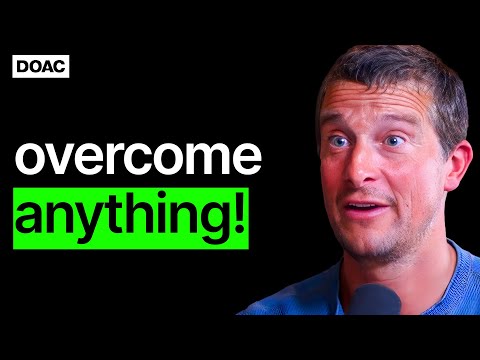
Bear Grylls: Man VS Failure, Anxiety & Imposter Syndrome | E155
Bear Grylls (guest), Steven Bartlett (host)
In this episode of The Diary of a CEO, featuring Bear Grylls and Steven Bartlett, Bear Grylls: Man VS Failure, Anxiety & Imposter Syndrome | E155 explores bear Grylls On Failure, Faith, Fame, And Quiet Inner Resilience Bear Grylls discusses how his life has been shaped less by talent and more by resilience, failure, and a quiet, hard‑won confidence. He reframes success as enduring humility, relationships, and inner values rather than trophies, fame, or physical achievements like Everest. The conversation explores imposter syndrome, anxiety, mental health, when to quit versus when to persist, and how faith and family anchor him through trauma and loss. Throughout, he emphasizes that resilience is a trainable ‘muscle’ available to anyone, and that vulnerability and honesty create true strength.
Bear Grylls On Failure, Faith, Fame, And Quiet Inner Resilience
Bear Grylls discusses how his life has been shaped less by talent and more by resilience, failure, and a quiet, hard‑won confidence. He reframes success as enduring humility, relationships, and inner values rather than trophies, fame, or physical achievements like Everest. The conversation explores imposter syndrome, anxiety, mental health, when to quit versus when to persist, and how faith and family anchor him through trauma and loss. Throughout, he emphasizes that resilience is a trainable ‘muscle’ available to anyone, and that vulnerability and honesty create true strength.
Key Takeaways
Resilience is a trainable muscle, not a fixed gift or talent.
Bear argues that Special Forces selection doesn’t filter for ‘talent’ but for heart and spirit – qualities anyone can build by repeatedly ‘walking through the door of failure’ and getting back up. ...
True confidence is quiet persistence, not loud bravado.
Growing up shy and feeling ‘not the sporty or academic or cool guy,’ Bear learned that school celebrates the wrong currencies. ...
Knowing when to quit is wisdom, not weakness.
Although his book is titled ‘Never Give Up,’ Bear stresses that stubbornly pushing on can be fatal in the mountains and in life. ...
Fame is a distraction; identity must be rooted elsewhere.
Bear describes genuine anxiety when he learned Man vs. ...
Meaning and fulfillment come from relationships, faith, and love—not achievements.
Everest, Emmys, and TV success didn’t answer Bear’s deeper questions about who he is or why he matters. ...
Mental health is maintained through simple, consistent habits and connection.
Bear hasn’t experienced severe depression but is vigilant about signs of anxiety and adjusts his life when they persist. ...
Protecting family and close relationships must eventually outrank work and money.
Bear admits that early TV years and Discovery’s demands led him to be away too much, ‘burning the things that are most valuable. ...
Notable Quotes
“Resilience is a muscle that builds with walking through the door of failure time and time again and keep getting back up.”
— Bear Grylls
“Confidence is the quiet stuff and the honesty to say, ‘This is a struggle, but let’s go.’”
— Bear Grylls
“Just because you’re determined in life doesn’t mean everything’s gonna go well.”
— Bear Grylls
“I’m a really regular guy… I’m not brilliant at any of these things. But I know what I love, and I know the weapons that serve me best: be dogged, be determined, be the most resilient person out there when it’s hard.”
— Bear Grylls
“You don’t have to be the best to do your best.”
— Bear Grylls
Questions Answered in This Episode
You distinguish between ‘never giving up’ and wisely quitting in the mountains; can you recall a specific expedition where turning back almost certainly saved your life?
Bear Grylls discusses how his life has been shaped less by talent and more by resilience, failure, and a quiet, hard‑won confidence. ...
You described fame initially increasing your anxiety and self‑consciousness—what practical mental framework or ritual most quickly centers you now before stepping into a highly public situation?
You said you probably wouldn’t climb Everest today given the one‑in‑six fatality odds; if you were 23 again with your current wisdom, what challenge would you pick instead and why?
Your quiet Christian faith clearly underpins your resilience—how, in a concrete moment of fear or grief, does that faith actually change your decision or behavior compared to if you had none?
You’ve built businesses like Be Military Fit and adventure parks around your ethos of resilience and nature—how do you guard those ventures from drifting into pure commercialism and losing the soul you described in this conversation?
EVERY SPOKEN WORD
Install uListen for AI-powered chat & search across the full episode — Get Full Transcript
Get more out of YouTube videos.
High quality summaries for YouTube videos. Accurate transcripts to search & find moments. Powered by ChatGPT & Claude AI.
Add to Chrome