The Diary of a CEOThe Diary of a CEO

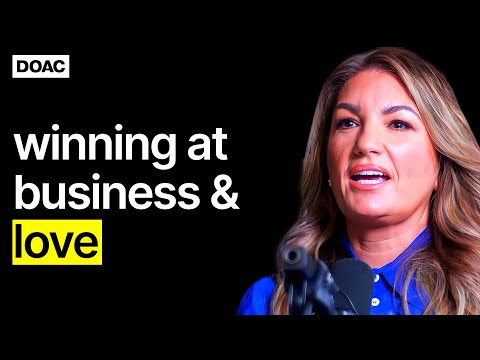
Karren Brady: How To Win At Entrepreneurship & Love (at the same time!)

Steven Bartlett and Karren Brady on defiant Leadership: Karren Brady On Ambition, Equality, Love, Football.

Steven BartletthostKarren Bradyguest
Apr 11, 20221h 17mWatch on YouTube ↗
Early defiance, core values, and drive for independenceSales career, resilience, and the pivotal David Sullivan dealRunning Birmingham City and West Ham: leadership and cultureCandid communication, decision-making, and gut instinct in businessSexism in football and Karren’s approach to feminism and equalityWork, motherhood, and building a long-term partnershipAmbition, contentment, and redefining success later in life
AI-generated summary based on the episode transcript.

In this episode of The Diary of a CEO, featuring Steven Bartlett and Karren Brady, Karren Brady: How To Win At Entrepreneurship & Love (at the same time!) explores defiant Leadership: Karren Brady On Ambition, Equality, Love, Football Karren Brady recounts her journey from an admittedly average, directionless 18-year-old to one of Britain’s most prominent business leaders, shaping football clubs and breaking gender barriers. She attributes her success less to talent and more to core values: ambition, determination, integrity, resilience, and a refusal to hear the word “no.”

At a glance

WHAT IT’S REALLY ABOUT

Defiant Leadership: Karren Brady On Ambition, Equality, Love, Football

  1. Karren Brady recounts her journey from an admittedly average, directionless 18-year-old to one of Britain’s most prominent business leaders, shaping football clubs and breaking gender barriers. She attributes her success less to talent and more to core values: ambition, determination, integrity, resilience, and a refusal to hear the word “no.”
  2. Brady explains how she built a career in sales, persuaded David Sullivan to buy Birmingham City at 23 and let her run it, then later led West Ham while championing a candid, people‑centric culture. She also explores how she’s balanced an intense career with marriage and motherhood, and why independence and the power to say no are her ultimate freedoms.
  3. Throughout, she reflects on leadership as vision, culture-building, decision-making without excessive emotion, and feminism as straightforward equality of opportunity and reward. Her message to young women: grasp every opportunity, don’t fear failure, stand up for yourself, and avoid a life of “I wish I had.”

IDEAS WORTH REMEMBERING

5 ideas

Define your core values early and use them as your compass.

By 18, Brady had consciously identified three core values—ambition, determination, and integrity—and used them to guide all major decisions, despite having only O and A Levels and no clear career direction. She argues that values, not qualifications, underpin your choices, resilience, and the way you navigate work, risk, and relationships over decades.

Treat 'no' as a prompt to find another route, not a wall.

Brady describes herself as someone who “never hears the word no,” instead hearing, “Find another way to get what you want.” This mindset drove her persistence in sales—waiting hours to see David Sullivan, structuring a risk‑reversal radio package, and later persuading him to buy Birmingham—with the attitude that the worst outcome was manageable, but the upside was transformative.

Leadership is vision plus persuasion, supported by candid, diverse input.

She distinguishes management (setting and delivering goals) from leadership (crafting and selling a vision that others can’t yet see). At West Ham, she involves a wide range of stakeholders—commercial teams, disabled supporters’ group, etc.—in decisions such as stadium expansion, and intentionally cultivates a candid culture where people can challenge her without fear of reprisal.

In people-heavy businesses, culture, kindness, and tough personnel calls are non‑negotiable.

Football clubs have no physical product; their assets are people. Brady stresses that turning Birmingham City around required both a strong culture and very tough decisions, including replacing long-serving staff whose skills no longer fit. Her rule: remove emotion from the decision, but never from the way you treat people—never underestimate the power of kindness and respectful exits.

Independence gives you the freedom to say no—after years of saying yes.

Early in a career, Brady says you must say yes to almost everything, including things you don’t want to do. Over time, as she built independence (financial and positional), she gained the “added bonus” of being able to say no without consequence. That autonomy—choosing what to do, when, and with whom—is, for her, the ultimate payoff of hard work and ambition.

WORDS WORTH SAVING

5 quotes

I'm the kind of person that never hears the word no. I hear, 'Find another way to get what you want.'

Karren Brady

Leadership is about vision, and your art as a leader is to persuade people to believe in your vision.

Karren Brady

I remember thinking that it was the very first door I'd kick down, and I was determined that I would keep that door open as wide and as long as possible to get as many other women through as possible.

Karren Brady

Ambition is that spark, it's that fire inside of yourself that won't let you settle for anything other than what you think you deserve and what you want.

Karren Brady

You will always regret the things you don't do more than the things that you do, so go and do stuff.

Karren Brady

QUESTIONS ANSWERED IN THIS EPISODE

5 questions

You talk about identifying your core values at 18—if a young person feels unclear about theirs, what practical exercises or experiences would you recommend to help them discover them?

Karren Brady recounts her journey from an admittedly average, directionless 18-year-old to one of Britain’s most prominent business leaders, shaping football clubs and breaking gender barriers. She attributes her success less to talent and more to core values: ambition, determination, integrity, resilience, and a refusal to hear the word “no.”

When you took over Birmingham City at 23, what was the single toughest personnel decision you had to make, and how did you deliver it in a way that balanced kindness with the club’s needs?

Brady explains how she built a career in sales, persuaded David Sullivan to buy Birmingham City at 23 and let her run it, then later led West Ham while championing a candid, people‑centric culture. She also explores how she’s balanced an intense career with marriage and motherhood, and why independence and the power to say no are her ultimate freedoms.

You’ve said you don’t let social media criticism affect you, but has there ever been a moment when fan or public backlash made you genuinely reconsider a decision at West Ham?

Throughout, she reflects on leadership as vision, culture-building, decision-making without excessive emotion, and feminism as straightforward equality of opportunity and reward. Her message to young women: grasp every opportunity, don’t fear failure, stand up for yourself, and avoid a life of “I wish I had.”

In your marriage, you and Paul seem very comfortable with giving each other space; what would you say to someone whose partner struggles with that level of independence and non‑neediness?

You define feminism as equality in pay and opportunity; in male‑dominated industries like football, what specific structural changes (not just attitudes) do you believe are most urgent to make that equality real?

Chapter Breakdown

Defiance, Independence, and Early Family Influences

Brady recounts childhood anecdotes that reveal a deep streak of defiance and independence, from drinking from the family drinks cabinet at four to claiming her seat on the first day of school. She reflects on how her working‑class background, hardworking father, and nurturing mother shaped her work ethic and self‑esteem, even though she didn’t feel particularly gifted or ambitious at school.

Boarding School, Core Values, and the Hunger for Freedom

Brady explains how a restrictive boarding school experience, marked by boredom and constant hunger, sharpened her desire for independence and control over her own life. By 18 she had defined her core values—ambition, determination, integrity—and understood that true independence required earning her own money, even though she had no idea how to make it yet.

Sales, Resilience, and Meeting David Sullivan

Moving from menial work at Saatchi & Saatchi into sales at London Broadcasting Company, Brady discovers her aptitude for selling and resilience in the face of rejection. She details how her persistence and a creative, low‑risk proposal turned skeptical client David Sullivan into the largest radio advertiser in the country, setting up a long‑term relationship that would define her career.

Philosophy of Entrepreneurship, Relationships, and Candid Culture

Brady articulates her philosophy of entrepreneurship as spotting gaps in the market and backing yourself despite well‑meaning doubters. She then shifts to how long‑term relationships and trust with partners like Sullivan and Gold underpin business success, and why she insists on a candid, open culture where employees’ views are not only welcomed but essential to decision‑making.

Leadership vs Management, Vision, and Gut Instinct

Brady distinguishes between management (goal-setting and oversight) and leadership (vision and persuasion), using West Ham’s stadium expansion as an example of collaborative decision-making. She explains how her 'gut instinct' is built from prior experiences, and why combining it with others’ perspectives creates better, less lonely leadership.

Buying Birmingham City at 23 and Transforming a Club

Brady recounts spotting a 'football club for sale' ad for Birmingham City in administration, persuading Sullivan to buy it, and taking over as managing director at 23. She explains why football is a uniquely people‑driven business, the importance of culture, and the hard personnel decisions needed to turn the club profitable for the first time.

Emotion, Criticism, and Serving a Passionate Fanbase

Brady describes herself as logical rather than emotional in business, focusing on whether a decision is right rather than how it feels personally. Addressing fan culture, she insists every major decision at West Ham is made for supporters, while acknowledging that not all will understand or agree—especially around contentious moves like leaving Upton Park for the Olympic Stadium.

Work Ethic, Work–Life Balance, and Motherhood

Reflecting on stories like her unused fridge in her early 20s, Brady contrasts the extreme work patterns of her early career with today’s discourse on work–life balance. As a 'working mother,' she talks about constant juggling, guilt, and eventually accepting that you can’t be everywhere, while also recognizing the positive lessons her children gained from seeing her work.

Saudi Stage Moment, Sexism in Football, and Feminism

Brady and Bartlett revisit a moment in Saudi Arabia where she calmly reclaimed the floor after being interrupted by a male panelist—an act that drew applause and symbolized her stance on respect. She then shares early experiences of sexism in football, including being mistaken for a director’s wife, and explains why she considers herself a feminist focused on equality, not advantage over men.

Relationships, Non‑Neediness, and Acts of Service

Brady discusses her long marriage to former footballer Paul Peschisolido, emphasizing mutual respect, low neediness, and candid communication. They give each other space to pursue careers (e.g., her intense Apprentice filming schedule) and express love through small acts of service—like daily coffee and walking the dog—rather than grand romantic gestures.

Mental Health, Contentment, and the Role of Ambition

Asked about mental health, Brady doesn’t recall explicit anxiety or depression but acknowledges we all have bad days and jokes about HRT lifting her mood. She describes herself as unusually content: free from financial anxiety, status comparison, or material craving, yet still driven by ambition—the desire not to settle and to keep being successful.

Advice to Young Women and Reflecting on a Full Life

In closing, Brady offers direct advice to young women starting their careers: seize opportunities, don’t fear failure, and stand up for yourself to avoid a life of regret. She also reflects on why she rarely does interviews, seeing them as a chance both to inspire others and to pause long enough to remember the journey from broke 19‑year‑old to Baroness, while wanting to make room for the next generation of women’s voices.

EVERY SPOKEN WORD

Install uListen for AI-powered chat & search across the full episode — Get Full Transcript

Get more out of YouTube videos.

High quality summaries for YouTube videos. Accurate transcripts to search & find moments. Powered by ChatGPT & Claude AI.

Add to Chrome