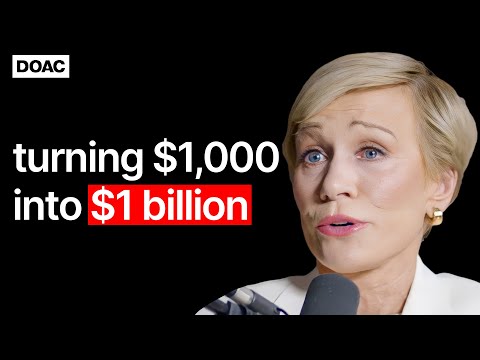
Barbara Corcoran: Turning $1,000 to $1Billion! | E204
Barbara Corcoran (guest), Steven Bartlett (host)
In this episode of The Diary of a CEO, featuring Barbara Corcoran and Steven Bartlett, Barbara Corcoran: Turning $1,000 to $1Billion! | E204 explores from Dyslexic ‘Stupid’ Kid To Billionaire Boss: Barbara Corcoran’s Playbook Barbara Corcoran shares how a chaotic, loving, and poor childhood in a family of 10, plus undiagnosed dyslexia, forged her competitiveness, people skills, and drive to prove she wasn’t “stupid.”
From Dyslexic ‘Stupid’ Kid To Billionaire Boss: Barbara Corcoran’s Playbook
Barbara Corcoran shares how a chaotic, loving, and poor childhood in a family of 10, plus undiagnosed dyslexia, forged her competitiveness, people skills, and drive to prove she wasn’t “stupid.”
She explains how she turned a $1,000 loan and a breakup with her 51% co‑founder boyfriend into New York’s top residential real estate firm by exploiting complacent incumbents, building systems, and obsessing over culture and fun.
Corcoran details her ruthless stance on negativity, her bias for scrappy, damaged entrepreneurs over rich kids, and why she always bets on ambition and resilience rather than business plans or numbers.
Throughout, she’s candid about her own insecurities, her fear of therapy, the strain of out‑earning her husband, and her belief that success comes from relentless getting back up and never wasting a minute of life.
Key Takeaways
Use early pain and labels as fuel, but rewrite the internal tape.
Being called “stupid” by a teacher after struggling with dyslexia crushed Corcoran’s confidence and made her go quiet in school. ...
Treat every job as a lab to discover your real strengths.
Corcoran had 22+ low‑paid jobs—waitress, hot‑dog seller, lifeguard, receptionist—and says none were a waste. ...
Beat incumbents by being the opposite: fast, imaginative, and unencumbered.
In a New York real‑estate industry run by rich, complacent “old boys” obsessed with lineage and contacts, Corcoran exploited their blind spots. ...
Culture is built on fun, individuality, and ruthless protection from negativity.
Corcoran engineered a culture where people “loved each other” by prioritizing fun—mandatory themed parties, cross‑dressing events, wild outings, and spontaneous perks—so employees felt their workplace was an adventure. ...
In business, people and ambition matter more than numbers or ideas.
Corcoran admits she’s bad at math and legal details and believes numbers are “the least important thing in business. ...
Exploit underestimation and bias instead of fighting it head‑on.
Early on, male peers barely noticed Corcoran; she felt “invisible” and realized that meant no one was watching her moves. ...
Resilience is a habit: stop complaining, own the problem, and get up fast.
From her mother punishing all complainers equally to her “hallway of doom” where she flips entrepreneurs’ photos upside‑down if they play the victim, Corcoran has a zero‑tolerance policy for blame. ...
Notable Quotes
“If I wasn’t dyslexic and I didn’t have a hard time in school, I don’t think I would have been successful.”
— Barbara Corcoran
“Everything I’ve done in my life has been one long attempt to show the world that I’m not stupid.”
— Barbara Corcoran
“I think numbers are the least important thing in business, by far… The most successful [founders] are not good at numbers. They’re exceptional at people.”
— Barbara Corcoran
“What I would love to do is call someone into my office on Friday. I love firing people on Friday.”
— Barbara Corcoran
“What did you learn from your greatest failure? I learned that you get back up and all the opportunity is in getting back up.”
— Barbara Corcoran
Questions Answered in This Episode
You’ve said you’re afraid therapy might ‘straighten you out’ and dull your drive. Looking back now, is there any specific behavior or insecurity you actually wish you had addressed earlier, even at the risk of making less money?
Barbara Corcoran shares how a chaotic, loving, and poor childhood in a family of 10, plus undiagnosed dyslexia, forged her competitiveness, people skills, and drive to prove she wasn’t “stupid.”
When you deliberately used charm, appearance, and flattery to win over male developers, did you ever feel you were reinforcing the very gender stereotypes that made you invisible—and would you advise young women today to use those tactics or avoid them?
She explains how she turned a $1,000 loan and a breakup with her 51% co‑founder boyfriend into New York’s top residential real estate firm by exploiting complacent incumbents, building systems, and obsessing over culture and fun.
You fire chronic complainers quickly, yet some toxic behaviors can be subtle and masked by high performance. Can you share a concrete example where you kept someone too long because their results blinded you to their cultural damage—and what it cost you?
Corcoran details her ruthless stance on negativity, her bias for scrappy, damaged entrepreneurs over rich kids, and why she always bets on ambition and resilience rather than business plans or numbers.
You strongly favor poor or ‘damaged’ founders over rich ones on Shark Tank. Is there a point where an entrepreneur’s trauma or anger becomes more of a liability than an asset, and how do you distinguish ‘fuel’ from ‘self‑destruction’ when you’re deciding to invest?
Throughout, she’s candid about her own insecurities, her fear of therapy, the strain of out‑earning her husband, and her belief that success comes from relentless getting back up and never wasting a minute of life.
You built an intentionally wild, fun culture at The Corcoran Group with dress‑up parties and dramatic firing rituals. If you were starting the same firm in today’s climate of remote work, HR compliance, and social media, what specific elements of that culture would you keep, adapt, or completely drop—and why?
EVERY SPOKEN WORD
Install uListen for AI-powered chat & search across the full episode — Get Full Transcript
Get more out of YouTube videos.
High quality summaries for YouTube videos. Accurate transcripts to search & find moments. Powered by ChatGPT & Claude AI.
Add to Chrome