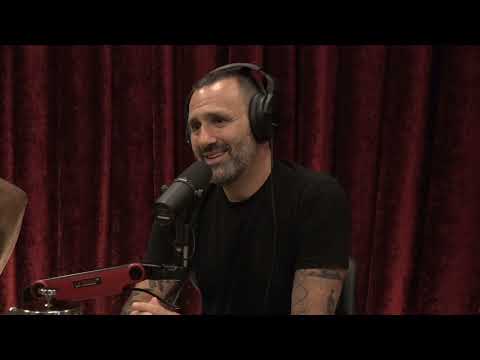
Joe Rogan Experience #1993 - Josh Dubin & Bruce Bryan
Narrator, Joe Rogan (host), Josh Dubin (guest), Bruce Bryan (guest), Guest (guest), Guest (guest), Guest (guest), Narrator
In this episode of The Joe Rogan Experience, featuring Narrator and Joe Rogan, Joe Rogan Experience #1993 - Josh Dubin & Bruce Bryan explores wrongfully Imprisoned 30 Years: Healing, Humanity, And Systemic Injustice Joe Rogan speaks with attorney Josh Dubin and recently freed Bruce Bryan, who spent nearly 30 years in New York maximum‑security prisons for a murder he insists he did not commit. They explore Bruce’s wrongful conviction, the corrupt prosecutor who helped secure it, and the legal fight that led to gubernatorial clemency and a pending innocence review.
Wrongfully Imprisoned 30 Years: Healing, Humanity, And Systemic Injustice
Joe Rogan speaks with attorney Josh Dubin and recently freed Bruce Bryan, who spent nearly 30 years in New York maximum‑security prisons for a murder he insists he did not commit. They explore Bruce’s wrongful conviction, the corrupt prosecutor who helped secure it, and the legal fight that led to gubernatorial clemency and a pending innocence review.
Bruce details the psychological toll and daily brutality of prison life, along with the deliberate choice he made to use incarceration for education, introspection, and service through programs he created from inside. The conversation broadens into a critique of the prison‑industrial complex, over‑sentencing, profit incentives, and how concentrated poverty and bad policy feed mass incarceration.
Dubin and Rogan emphasize the power of public attention and private-sector engagement in correcting wrongful convictions and rebuilding communities, highlighting concrete cases where listener action has helped. The episode closes on themes of redemption, therapy, community, and the urgent need to invest in people rather than cages.
Key Takeaways
Wrongful convictions are common enough to demand structural, not one‑off, fixes.
Bruce’s case—propped up by a prosecutor later convicted of bribing witnesses—is one of many Dubin encounters, often involving over‑sentencing, junk forensics, and unreliable eyewitnesses in poor, minority communities.
Get the full analysis with uListen
Prison conditions are dehumanizing by design, yet some people consciously choose growth.
Bryan describes maximum‑security prisons as violent, racist, and psychologically crushing, but he decided early on to turn his cell into an office and the school building into a university, using meditation, reading, and self‑reflection to protect his humanity.
Get the full analysis with uListen
The prison‑industrial complex economically depends on incarceration and cheap labor.
From Corcraft prison industries paying as little as 10–16 cents an hour, to guard unions lobbying against marijuana legalization, incentives are aligned to keep beds full rather than reduce crime or recidivism.
Get the full analysis with uListen
Concentrated generational poverty is a root driver of crime and imprisonment.
Programs like the Resurrection Study Group helped Bruce see that most New York prisoners came from a handful of impoverished neighborhoods plagued by ‘crime‑generative factors’ such as dyslexia, failing schools, and lack of economic opportunity.
Get the full analysis with uListen
Individual transformation doesn’t excuse the system but shows what’s possible with support.
Despite being innocent, Bruce embraced introspection and community work—founding initiatives like Voices from Within, Youth Assistance Programs, and a prison‑funded gun buyback—illustrating the untapped talent and leadership behind bars.
Get the full analysis with uListen
Public attention and direct citizen action can materially move cases.
Dubin cites the Pierre Rushing case, where a podcast listener in a major law firm took it pro bono, plus letter‑writing campaigns to district attorneys, as examples of how pressure can accelerate reviews and releases.
Get the full analysis with uListen
Real reform must prioritize investing in people and communities over more policing and prisons.
Rogan, Dubin, and Bryan argue that pouring resources into education, community centers, mentorship, and economic opportunity in places like Brownsville and the Bronx would reduce incarceration far more effectively than harsher sentencing or additional law enforcement.
Get the full analysis with uListen
Notable Quotes
“You can either do two things, you could become bitter, or you could become better. I chose the latter.”
— Bruce Bryan
“If you’re spending $80 billion a year on incarceration, these guys can help drive the economy outside of just being incarcerated.”
— Bruce Bryan
“Absolute power corrupts absolutely, but I also think even a little bit of power can be super dangerous.”
— Josh Dubin
“Instead of getting tough on crime, why don’t we get tough on the social conditions that produce crime?”
— Bruce Bryan
“There is no feeling like helping restore somebody’s life and freedom. Nothing comes close to it.”
— Josh Dubin
Questions Answered in This Episode
How can legal systems better balance victim justice with robust safeguards against wrongful conviction and over‑sentencing?
Joe Rogan speaks with attorney Josh Dubin and recently freed Bruce Bryan, who spent nearly 30 years in New York maximum‑security prisons for a murder he insists he did not commit. ...
Get the full analysis with uListen AI
What concrete policies or pilots could cities launch to test large‑scale investment in high‑poverty neighborhoods instead of more policing?
Bruce details the psychological toll and daily brutality of prison life, along with the deliberate choice he made to use incarceration for education, introspection, and service through programs he created from inside. ...
Get the full analysis with uListen AI
How should society compensate and support people like Bruce Bryan after decades of wrongful imprisonment—financially, psychologically, and professionally?
Dubin and Rogan emphasize the power of public attention and private-sector engagement in correcting wrongful convictions and rebuilding communities, highlighting concrete cases where listener action has helped. ...
Get the full analysis with uListen AI
What criteria should govern the use of prison labor, and is it ever ethical to profit from incarcerated workers?
Get the full analysis with uListen AI
How can ordinary citizens sustainably stay involved in criminal‑justice reform beyond one‑off donations or letters, especially at a local level?
Get the full analysis with uListen AI
Transcript Preview
(drumbeats) Joe Rogan podcast, check it out.
The Joe Rogan Experience. Train by day, Joe Rogan podcast by night. All day. (instrumental music plays) What's up?
What's up, man?
Good to see you, my brother.
Great to be here. Thanks for having me.
And thank you for bringing Bruce. And thanks for coming out last night. That was a good time.
I had a great time, man.
For everyone to n- ... Like, guys started realizing while you were there, your story.
Okay.
Like the word started getting around the green room and, uh, it was one of those things where like, "What? He just got out three weeks ago wrongfully accused for 30 years and here he is having a good time." It was, it was a crazy experience to like be sharing the green room with you, because you could see everybody. Like you became like the celebrity of the green room.
(laughs)
You know what I'm saying? Like everybody wanted to hear the story, everybody ...
Yeah.
... wanted to talk to you. Everybody was blown away by it, and by the, the grace that you displayed. Like the fact that you could be wrongfully accused, spend 30 years of your young life in, in a cage, and then come out and just be this wonderful, fun guy having a good time. Everyone's laughing, having conversations. It was beautiful.
It was beautiful. Um, I ... Look, I'm standing next to him last night, you know, worried most of the night because, you know, we had got on a plane and that was his first time flying in over 30 years, um, (smacks lips) there was a lot of stimulation and, you know, I could tell you that I'm still in shock even sitting here now that we're sitting next to each other, because I spent the last several years visiting him at, at Sing Sing, which is, um, you know, not a great place, Sing Sing Prison in New York. Um, but I don't want to throw cold water (clears throat) on anything, but you know, there w- there's a lot of steeling yourself for the moment last night going on that people didn't see. Uh-
From you?
Um, I think from Bruce. I mean, there was one point where we were sitting in the balcony, um, watching Attell. And by the way, congratulations on that amazing club.
Thank you.
It's just an amazing ... The Comedy Mothership is, uh, is really a dream for ... The comedians love it. The crowd was amazing. It was just so awesome to see, so congrats on that but-
Thank you very much. How funny is Dave Attell?
He's ... Oh, my f-
He's a master.
My side hurts.
He's a master. He's a master.
But, um, we were sitting there and some other folks came in and at some point, uh, you know, Bruce kept looking over his shoulder.
Install uListen to search the full transcript and get AI-powered insights
Get Full TranscriptGet more out of YouTube videos.
High quality summaries for YouTube videos. Accurate transcripts to search & find moments. Powered by ChatGPT & Claude AI.
Add to Chrome