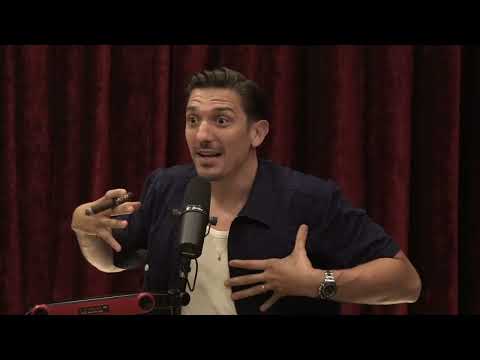
Joe Rogan Experience #1846 - Andrew Schulz
Narrator, Narrator, Joe Rogan (host), Andrew Schulz (guest), Narrator, Narrator, Narrator
In this episode of The Joe Rogan Experience, featuring Narrator and Narrator, Joe Rogan Experience #1846 - Andrew Schulz explores andrew Schulz and Joe Rogan dissect comedy, power, and cultural insanity Joe Rogan and Andrew Schulz spend a sprawling, free‑form conversation jumping from nature, animals, and human vulnerability to cancel culture, trans issues, gender politics, and the erosion of traditional masculinity.
Andrew Schulz and Joe Rogan dissect comedy, power, and cultural insanity
Joe Rogan and Andrew Schulz spend a sprawling, free‑form conversation jumping from nature, animals, and human vulnerability to cancel culture, trans issues, gender politics, and the erosion of traditional masculinity.
They dig into Schulz’s decision to buy back and independently release his comedy special after a streamer demanded cuts, using it to explore censorship, platforms, and how comics now bypass traditional gatekeepers.
The pair riff on hypocrisy in politics and media—from insider trading and propaganda to COVID handling and culture wars over abortion, gay marriage, and wokeness—arguing that institutional narratives often conflict with everyday reality.
Throughout, they return to themes of authenticity, misfit communities (comedy clubs, pool halls), and why audiences flock to people who are unapologetically themselves in a culture increasingly policed by outrage.
Key Takeaways
Owning your work lets you keep the material honest.
Schulz describes a major streamer demanding he remove specific “offensive” jokes; rather than edit, he bought back the special and sold it directly to fans, arguing that once comics start cutting for corporate comfort, the art loses its edge.
Get the full analysis with uListen
Audiences still crave unfiltered, offensive, and risky comedy.
Despite platforms being cautious, Schulz’s pay‑per‑view launch and the viral success of independent specials (Louis C. ...
Get the full analysis with uListen
Nature is a needed ego reset in a curated, online world.
Rogan and Schulz talk about camping, hunting, and stories of animal attacks to highlight how mountains, predators, and wilderness “don’t care about your followers,” offering a humbling counterweight to modern egocentrism.
Get the full analysis with uListen
Culture wars often run on half‑read narratives.
They argue many people protesting Chappelle or labeling comedy “punching down” haven’t watched full specials and instead adopt secondhand outrage, which flattens nuance and obscures intent—especially when sets are, in part, tributes or explorations, not simple attacks.
Get the full analysis with uListen
Urban affluence and career focus are driving falling birthrates.
Drawing on Elon Musk’s arguments and examples from Idiocracy, they note that educated urban couples delay kids for careers and comfort, while less affluent groups or those in harsh conditions tend to have more children—a dynamic that can lead to population decline.
Get the full analysis with uListen
Media and political elites run on different rules than citizens.
Stories about Nancy Pelosi’s stock trades, Hunter Biden’s laptop, Russian propaganda, and Iraq/Kuwait “liberation” are used to show how power structures hide self‑interest behind moral language, while the public is encouraged to fixate on symbolic outrage.
Get the full analysis with uListen
People are drawn to authentic obsession, not just wealth displays.
They contrast Tommy Hilfiger‑style yachts and influencer conspicuous consumption with Jay Leno’s car collection or Italian craftsmen—arguing that audiences forgive extreme wealth when it’s clearly tied to genuine passion and craft rather than status signaling.
Get the full analysis with uListen
Notable Quotes
“I made my bones putting out comedy the exact way I wanted to put it out. The first time I do it on TV, I’m not clipping jokes and watering it down.”
— Andrew Schulz
“We live in cities and drive in cars and go into buildings, and you get confused and think that is the world. The mountains don’t give a fuck about you.”
— Joe Rogan
“Every extreme stinks. Extreme right sucks, extreme left sucks. The reasonable human in the middle never makes a headline.”
— Andrew Schulz
“Comedy movies are fucking dead and buried. It’s hard to make a good comedy movie today, kids.”
— Joe Rogan
“My side is comedy. I’m loyal to the jokes.”
— Andrew Schulz
Questions Answered in This Episode
How does Schulz’s experience with buying back his special change the way comics and creators should think about dealing with streamers and studios?
Joe Rogan and Andrew Schulz spend a sprawling, free‑form conversation jumping from nature, animals, and human vulnerability to cancel culture, trans issues, gender politics, and the erosion of traditional masculinity.
Get the full analysis with uListen AI
Where is the line between legitimate concern about harmful speech and outright censorship of comedy, and who should draw that line?
They dig into Schulz’s decision to buy back and independently release his comedy special after a streamer demanded cuts, using it to explore censorship, platforms, and how comics now bypass traditional gatekeepers.
Get the full analysis with uListen AI
Are current culture‑war battles over trans issues, abortion, and gay marriage primarily moral conflicts, or are they being amplified to distract from deeper structural problems?
The pair riff on hypocrisy in politics and media—from insider trading and propaganda to COVID handling and culture wars over abortion, gay marriage, and wokeness—arguing that institutional narratives often conflict with everyday reality.
Get the full analysis with uListen AI
What makes audiences trust and embrace someone like Leno’s car obsession or Musk’s mission, while resenting other displays of wealth and success?
Throughout, they return to themes of authenticity, misfit communities (comedy clubs, pool halls), and why audiences flock to people who are unapologetically themselves in a culture increasingly policed by outrage.
Get the full analysis with uListen AI
If cities and modern comfort blunt our sense of danger and reality, what practical ways can people reintroduce ‘nature’s perspective’ into their lives without moving off‑grid?
Get the full analysis with uListen AI
Transcript Preview
(drumming music) Joe Rogan podcast. Check it out.
The Joe Rogan Experience.
Train by day, Joe Rogan podcast by night. All day. (rock music) Hello, Andrew Schulz.
Hello, Joe Rogan.
How is the independent comedy production world treating you?
It's good.
(laughs)
(laughs) It's- it's a lot, uh, it's a lot more work.
Yeah, for sure.
Hmm.
But, uh, you, uh, you cut free from the nipple.
Mm-hmm.
Like ...
We did.
Without even mentioning names, tell me what, what happened. Like, how d- how did it ... I went to taping.
(clears throat)
It was excellent.
Thank you.
Looked great.
Thank you for coming.
My pleasure.
And thank you for bringing Cameron.
Yeah, brought Cameron Hanes. My wife came.
Dripped in Gucci, dude.
Yeah, he's hilarious.
Dude, that guy is a legend.
(laughs)
'Cause I've only seen him with his shirt off-
(laughs)
... and like inspirational music in the background.
(laughs)
So when I-
Running up a mountain.
Bro, I thought he was gonna be like Crocodile Dundee when I met him in person, and he was just like dripping-
(laughs)
... in Gucci.
He likes Gucci.
(laughs) He likes Gucci.
(laughs)
And then I remember, I remember calling you, and I was like, I was like, "Dude, this guy's so interesting to me." Like, like, "What does he do? He just takes people on camping trips and stuff like that?" Like, "What's the thing?" And I think you were like, "No, I think he like moderates like pool levels in Oregon, or like moderates like water."
Yeah, he works for the Department of Water and Power.
And I was like, "This is a fucking-"
For now.
"... fashionable."
But he's a New York Times best-selling author, so he's quitting his job.
Let's go, Cameron.
Yeah, he made a lot of money off the book.
I told him I'm, I'm going hunting with him.
Really?
Yeah. He didn't respond to me.
What are you gonna hunt?
He (laughs) I just said, "We're going hunting." He's like, "Okay."
Yeah, that's how ... He's like, "Okay." Like prob- probably people say that to him every day.
Yeah.
You know?
But, uh, but yeah.
What would, what would you hunt?
Oh, fuck, I don't know. I, I'm, I probably ... (sighs) I don't know.
Wild pigs is the best. Because they have to kill them.
Yeah.
You can eat them. They're delicious.
Yeah.
And they're ... It's literally an imperative.
Yeah.
Like, you have to, especially in Texas.
They're helping.
Yeah.
Yeah.
They're everywhere. There's so many of them.
Yeah.
Millions.
Install uListen to search the full transcript and get AI-powered insights
Get Full TranscriptGet more out of YouTube videos.
High quality summaries for YouTube videos. Accurate transcripts to search & find moments. Powered by ChatGPT & Claude AI.
Add to Chrome