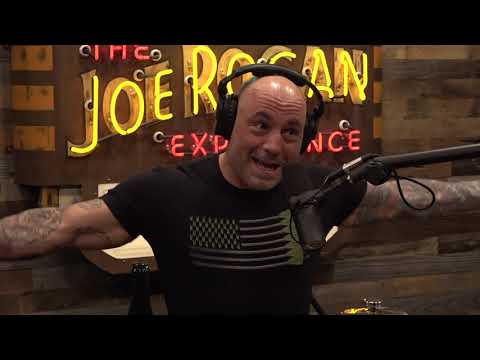
Joe Rogan Experience #1652 - Anthony Cumia
Narrator, Joe Rogan (host), Anthony Cumia (guest), Narrator, Narrator, Narrator, Narrator
In this episode of The Joe Rogan Experience, featuring Narrator and Joe Rogan, Joe Rogan Experience #1652 - Anthony Cumia explores anthony Cumia, Cancel Culture, and How Opie & Anthony Shaped Podcasts Joe Rogan and Anthony Cumia reflect on how Opie & Anthony’s loose, comic‑driven chaos essentially pioneered the modern podcast format, contrasting it with tightly controlled legacy radio and TV.
Anthony Cumia, Cancel Culture, and How Opie & Anthony Shaped Podcasts
Joe Rogan and Anthony Cumia reflect on how Opie & Anthony’s loose, comic‑driven chaos essentially pioneered the modern podcast format, contrasting it with tightly controlled legacy radio and TV.
Cumia explains why he built a subscription-only, paywalled network (Compound Media) to become “uncancelable,” while they both dissect cancel culture, deplatforming, and the power of advertisers and corporate ‘suits.’
They range into wider cultural and political territory—male-oriented comedy, social media mobs, media manipulation, COVID policy, Big Tech censorship, and intelligence-agency ‘wokeness’—arguing that free speech and intent matter more than curated public virtue.
Throughout, they share personal war stories (radio suspensions, arrests, Artie Lange, testosterone, moving out of New York) illustrating how media, law, and culture have shifted against rough, male-centric comedy and independent voices.
Key Takeaways
Unstructured, comic‑driven conversation became the template for modern podcasts.
Opie & Anthony’s format—multiple comics, no rigid segments, hosts getting out of the way of funny guests—directly inspired Rogan’s show and the broader podcast boom, in contrast to tightly scripted legacy radio.
Paywalls can insulate creators from advertiser pressure and cancel campaigns.
Cumia deliberately built Compound Media as a subscriber-only platform so audience revenue—not sponsors or networks—determines what’s allowed, giving him far more freedom than ad‑dependent media.
Corporate ownership and risk aversion have gutted traditional broadcast freedom.
They trace how small, ratings-obsessed station owners were replaced by sprawling conglomerates tied to broader consumer brands, making edgy content a liability across multiple business lines.
Social media and always-on cameras amplify outrage and reshape behavior.
From neighbor disputes to police work, ubiquitous filming plus mob dynamics mean any misstep can be clipped, reframed, and punished, pushing cops, comics, and public figures toward caution or retreat.
News media increasingly sells fear and outrage, not balanced information.
They argue TV news evolved from fulfilling a public-service mandate to chasing clicks and ratings, incentivizing sensational, scary narratives and partisan framing over sober reporting.
Censorship and ‘wrong science’ labels distort public debate on health and policy.
Rogan recounts a doctor’s ivermectin video that couldn’t even be DM’d on social media, and they discuss how platforms and gatekeepers decide which scientific views are allowed to circulate.
Friendship and professional survival increasingly conflict in a punitive climate.
Using examples like Seth Rogen–James Franco and their own careers, they highlight how many entertainers feel forced to distance themselves from ‘problematic’ people or topics to protect work opportunities.
Notable Quotes
“The entire 20‑year history of The Opie and Anthony Show, there was never a punch that got past the 180‑degree mark.”
— Anthony Cumia
“You guys were the birth of podcasts. It was a podcast on the radio.”
— Joe Rogan
“I built this behind a paywall because I saw cancel culture coming a long time ago.”
— Anthony Cumia
“I’m a cage‑fighting commentator and a dirty comedian. I used to make people eat animal dicks on TV. You’re coming to me for advice?”
— Joe Rogan
“They don’t care what you’re actually saying, they care if it fits the narrative.”
— Anthony Cumia
Questions Answered in This Episode
How would the media landscape look today if major platforms hadn’t aggressively deplatformed controversial voices in the 2016–2020 window?
Joe Rogan and Anthony Cumia reflect on how Opie & Anthony’s loose, comic‑driven chaos essentially pioneered the modern podcast format, contrasting it with tightly controlled legacy radio and TV.
Is a paywalled, subscriber-funded model realistically scalable for most creators, or only for those with an existing large audience like Cumia and Rogan?
Cumia explains why he built a subscription-only, paywalled network (Compound Media) to become “uncancelable,” while they both dissect cancel culture, deplatforming, and the power of advertisers and corporate ‘suits.’
Where should platforms draw the line between moderating harmful misinformation and suppressing legitimate dissent or minority scientific views?
They range into wider cultural and political territory—male-oriented comedy, social media mobs, media manipulation, COVID policy, Big Tech censorship, and intelligence-agency ‘wokeness’—arguing that free speech and intent matter more than curated public virtue.
How much responsibility do comedians have to moderate their own speech in an era where every joke can be clipped and recontextualized online?
Throughout, they share personal war stories (radio suspensions, arrests, Artie Lange, testosterone, moving out of New York) illustrating how media, law, and culture have shifted against rough, male-centric comedy and independent voices.
Could a credible centrist political movement like Bret Weinstein’s ‘Unity 2020’ ever survive in a system dominated by two parties and algorithmic outrage?
EVERY SPOKEN WORD
Install uListen for AI-powered chat & search across the full episode — Get Full Transcript
Get more out of YouTube videos.
High quality summaries for YouTube videos. Accurate transcripts to search & find moments. Powered by ChatGPT & Claude AI.
Add to Chrome