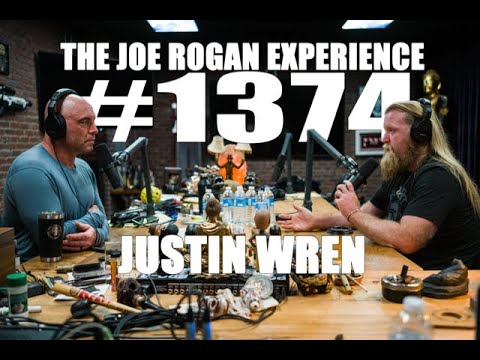
Joe Rogan Experience #1374 - Justin Wren
Joe Rogan (host), Justin Wren (guest), Narrator, Guest (guest)
In this episode of The Joe Rogan Experience, featuring Joe Rogan and Justin Wren, Joe Rogan Experience #1374 - Justin Wren explores mMA Fighter Battles Parasites While Fighting Bullying And Saving Pygmies Joe Rogan talks with MMA heavyweight and humanitarian Justin Wren about his severe health issues from parasites and toxic medications contracted during aid work in African rainforests.
MMA Fighter Battles Parasites While Fighting Bullying And Saving Pygmies
Joe Rogan talks with MMA heavyweight and humanitarian Justin Wren about his severe health issues from parasites and toxic medications contracted during aid work in African rainforests.
Wren explains his ongoing treatment, including cutting‑edge brain scans and hyperbaric oxygen therapy, while detailing how PTSD, Cipro and malaria drugs may have damaged his brain and body.
They pivot into Wren’s Fight for the Forgotten charity, drilling wells and securing land for Pygmy communities, and his new U.S. mission around bullying prevention, highlighted by the story of a brutally bullied special‑needs boy named Raiden.
Throughout, they explore how martial arts builds character, how hyperbarics may reverse brain trauma, and how Wren is trying to get healthy enough to fight again while expanding his global and domestic humanitarian work.
Key Takeaways
Unusual environments can cause long‑term, hard‑to‑diagnose health damage.
Wren’s years in remote African rainforests left him with schistosomiasis, multiple malarias, dengue, and likely drug toxicities (mefloquine, Cipro), creating chronic vomiting, shingles, neurological issues, and systemic inflammation that many doctors initially missed or misattributed.
Get the full analysis with uListen
Hyperbaric oxygen therapy shows promise for brain injury and recovery.
Case examples (a teen car‑crash victim and a drowned child) plus Wren’s own experience suggest that repeated hyperbaric sessions can improve sleep, mood, cognitive function, concussion recovery, and potentially reverse some brain trauma by flooding tissue with oxygen and boosting stem cell activity.
Get the full analysis with uListen
PTSD isn’t just for soldiers; humanitarian and childhood trauma count.
Wren’s brain scans show a “ring of fire” pattern consistent with PTSD, which he traces to armed encounters, fleeing rebel attacks, watching children die, and childhood abuse and bullying—underscoring that severe trauma outside combat can profoundly imprint the brain.
Get the full analysis with uListen
Bullying is directly linked to youth suicide and harms bullies too.
CDC data cited in the conversation show youths who are bullied, youths who bully, and especially those who are both are at highest suicide risk; Wren frames this as “hurt people hurt people,” arguing prevention must cultivate empathy and positive identity, not only punish aggressors.
Get the full analysis with uListen
Structured character education plus practical challenges can shift school culture.
Wren’s Heroes in Waiting program uses 12 weeks of lessons and weekly “hero challenges” (e. ...
Get the full analysis with uListen
Martial arts communities can be powerful anti‑bullying ecosystems.
Rogan and Wren argue that jiu‑jitsu and MMA training builds confidence, humility, and camaraderie, reducing the need to prove oneself by hurting others; they show this in action via scholarships and training support for bullied kids like Raiden.
Get the full analysis with uListen
Targeted philanthropy and storytelling can rapidly scale impact.
High‑visibility allies (Dustin Poirier, Khabib, Dana White, Tyson Ranch, major martial arts brands) and gym‑based fundraising contests have enabled Fight for the Forgotten to move from a passion project to a global nonprofit, funding wells, land purchases, and school water systems for Pygmy and orphan communities.
Get the full analysis with uListen
Notable Quotes
“You’re starting your day reactive instead of proactive.”
— Justin Wren
“I’ve had shingles five times, Joe.”
— Justin Wren
“Hurt people hurt people.”
— Justin Wren
“Learning how to fight is one of the best ways to keep people from being assholes.”
— Joe Rogan
“You’re just trying to be the guy that you needed whenever you were his age.”
— Emily Wren (as quoted by Justin Wren)
Questions Answered in This Episode
How should medicine and sports organizations distinguish between PTSD from trauma and symptoms caused by drug toxicities like mefloquine or Cipro?
Joe Rogan talks with MMA heavyweight and humanitarian Justin Wren about his severe health issues from parasites and toxic medications contracted during aid work in African rainforests.
Get the full analysis with uListen AI
What ethical lines should humanitarian workers draw regarding personal risk when their help can save communities but may destroy their own health?
Wren explains his ongoing treatment, including cutting‑edge brain scans and hyperbaric oxygen therapy, while detailing how PTSD, Cipro and malaria drugs may have damaged his brain and body.
Get the full analysis with uListen AI
How could schools systematically integrate martial arts-based character training or Heroes in Waiting–style curricula to reduce bullying and suicide risk?
They pivot into Wren’s Fight for the Forgotten charity, drilling wells and securing land for Pygmy communities, and his new U. ...
Get the full analysis with uListen AI
What safeguards are needed as hyperbaric oxygen and brain‑scan–based diagnostics expand, to avoid overpromising or misusing these technologies?
Throughout, they explore how martial arts builds character, how hyperbarics may reverse brain trauma, and how Wren is trying to get healthy enough to fight again while expanding his global and domestic humanitarian work.
Get the full analysis with uListen AI
In the long term, how can Fight for the Forgotten move Pygmy communities from charity recipients to full economic self‑sufficiency and political self‑advocacy?
Get the full analysis with uListen AI
Transcript Preview
(snaps fingers) And we're live. Hello, Justin Wren.
Hello.
What's going on, buddy? You got a book in front of you? What's going on?
I do. Oh, I just got a couple of notes.
Look how organized you are with your tabs.
Yeah.
I've never had tabs in my life.
Yeah, this is actually from James Clear. Have you heard of him? Atomic Habits, New York Times best-selling author. I didn't plan on talking about him at all, but, uh-
What? The- the notebook is?
Yeah.
Oh, so you bought one of his notebooks?
Um, yeah. It's, uh, goes along with-
Hmm.
... his New York Times best-selling book called Clear, where you put down your daily habits and then you just kinda can check them off as you do them throughout the day.
Wh- what's your dail- what's your daily habits?
Well, I have a morning routine where I wake up and, um, where I'm at, I have a Peloton. So I jump on that-
Ah.
... for like 30 minutes right in the morning, right when I get outta bed.
Right when you get outta bed?
Well, right when I get outta bed, I do 15 minutes of breathing.
Just breathing?
Yeah. But I do like five minutes, um, by myself for five minutes.
I do that too, it's called laying in bed. (laughs)
There you go. Yeah, drifting away. I kinda drift away for 15, 20 minutes.
(laughs) What do you mean by... Well, what kind of, what kind of breathing you doing?
So just kinda focused where I breathe in six to eight seconds and kinda count the in breath, then count the hold, and then count the exhale. And I just do that-
So it's a meditation?
Mm-hmm.
And you do that for 15 minutes every morning?
15 minutes, three short ones, back to back to back. They're through Headspace.
Ah.
And I actually just got a new phone.
Interesting.
I don't have the new Headspace, um, downloaded, but I have three five-minute breathing techniques that are really three to five minutes each. So sometimes it's only like nine minutes.
And what do you get outta that?
Uh, for me, I think I'm just kinda setting the tone for the day.
Hmm.
Um, and just kinda clearing my mind. Instead of first thing... I, I used to be bad about this. First thing waking up, I'd grab my phone.
Everybody does that.
And then there would be emails, text messages-
Yeah. Yeah.
... notifications.
Yeah.
Um, and then you're starting your day reactive instead of proactive.
Ooh.
And so-
I like what you're saying, Justin Wren.
Yeah, I like that.
I like his thinking.
Yeah, wake up-
Install uListen to search the full transcript and get AI-powered insights
Get Full TranscriptGet more from every podcast
AI summaries, searchable transcripts, and fact-checking. Free forever.
Add to Chrome