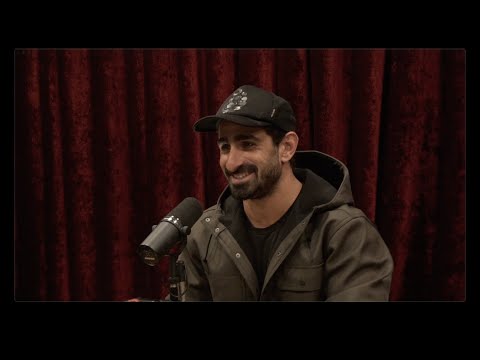
Joe Rogan Experience #2441 - Paul Rosolie
Joe Rogan (host), Paul Rosolie (guest), Paul Rosolie (guest)
In this episode of The Joe Rogan Experience, featuring Joe Rogan and Paul Rosolie, Joe Rogan Experience #2441 - Paul Rosolie explores amazon conservation, uncontacted tribes, and jungle survival with Paul Rosolie Paul Rosolie returns from the Amazon to describe a recent, tense encounter with the Mashco-Piro (an uncontacted/isolated group) who approached a river community seeking food and demanding an end to tree cutting.
Amazon conservation, uncontacted tribes, and jungle survival with Paul Rosolie
Paul Rosolie returns from the Amazon to describe a recent, tense encounter with the Mashco-Piro (an uncontacted/isolated group) who approached a river community seeking food and demanding an end to tree cutting.
He outlines Junglekeepers’ strategy to secure a protected corridor that can become a national park, while facing escalating pushback from loggers, gold miners, and coca-growing groups—sometimes involving direct threats and attempted ambushes.
The conversation blends conservation policy with vivid field stories: mercury-based gold mining scars, wildlife suffering from fires, indigenous governance and bureaucracy hurdles, and survival episodes where traditional plant medicine outperforms hospitals.
Rogan and Rosolie also debate claims that the Amazon is “man-made,” discuss biodiversity’s pharmaceutical value, and reflect on modern society’s psychological disconnection from nature and meaning.
Key Takeaways
Uncontacted groups are being pressured into contact by resource destruction.
Rosolie describes the Mashco-Piro approaching a community demanding food and asking who is cutting down their largest trees—suggesting displacement, scarcity, and rising conflict from encroaching logging/mining.
Get the full analysis with uListen
Cattle ranching remains the dominant deforestation engine, but roads and global trade amplify it.
He cites cattle as ~60% of deforestation, with roads, ports, and potential rail links expanding access for extractive expansion and export markets.
Get the full analysis with uListen
Protecting land increasingly triggers organized retaliation.
As Junglekeepers nears “the finish line” of a corridor/national park, Rosolie says pressure escalates: narcos and logging networks push back with threats, surveillance, and attempted attacks.
Get the full analysis with uListen
Illegal gold mining creates a toxic cascade beyond the mine site.
Rosolie details forest clearing and sediment suction, with mercury used to bind gold; burning mercury releases it into air and rain, contaminating fish and causing health damage in miners and downstream communities.
Get the full analysis with uListen
Conservation often succeeds by offering better livelihoods, not only enforcement.
Rosolie describes flipping loggers/miners from ~$20/day into ranger jobs with pay, benefits, team identity, and purpose—reducing incentive to destroy forest while improving local stability.
Get the full analysis with uListen
Bureaucracy can be as threatening as chainsaws when communities lack access.
He recounts helping an indigenous community secure formal title after 15 years of delays due to travel distance, fear of cities/traffic, and inability to navigate forms—solved via legal support and advocacy.
Get the full analysis with uListen
Indigenous medicine can outperform modern care in remote injury response.
After a severe stingray injury with extreme pain risk, locals prepared a heated tree-based poultice that reduced venom effects; Rosolie contrasts this with a prior victim who went to a hospital and suffered months-long complications.
Get the full analysis with uListen
Notable Quotes
“They came out 1,000 years late to society… holding up their hands saying, ‘Nomore, we are the brothers.’”
— Paul Rosolie
“We’re the generation that’s gonna decide… do we keep the Amazon rainforest functioning, or are we gonna break that cycle? And once we lose it, it’s not gonna come back.”
— Paul Rosolie
“Amazon forest felled to build road for climate summit… You’re chopping down trees to protest chopping down trees.”
— Joe Rogan
“If you see JJ or that shithead gringo that flies the drone… If you kill them, we’ll reward you.”
— Paul Rosolie
“The ecosystem regulates it. And when you ruin that… you have puddles sitting in the sun… twitching with mosquito larva.”
— Paul Rosolie
Questions Answered in This Episode
In the Mashco-Piro encounter, what signals convinced you there was “desperation” versus opportunistic trading—and how should outside groups respond without accelerating dependency?
Paul Rosolie returns from the Amazon to describe a recent, tense encounter with the Mashco-Piro (an uncontacted/isolated group) who approached a river community seeking food and demanding an end to tree cutting.
Get the full analysis with uListen AI
You said the Mashco-Piro asked, “Who are the bad ones?” How do local communities distinguish loggers/miners from conservation teams, and what protocols reduce the chance of violence or disease transmission?
He outlines Junglekeepers’ strategy to secure a protected corridor that can become a national park, while facing escalating pushback from loggers, gold miners, and coca-growing groups—sometimes involving direct threats and attempted ambushes.
Get the full analysis with uListen AI
What specific legal or political steps remain to convert your corridor into a national park—and what is the timeline risk if roads or coca plots expand first?
The conversation blends conservation policy with vivid field stories: mercury-based gold mining scars, wildlife suffering from fires, indigenous governance and bureaucracy hurdles, and survival episodes where traditional plant medicine outperforms hospitals.
Get the full analysis with uListen AI
You described “artisanal” coca growers as different from cartel structures. Where does that model break down—at what point do larger networks take over and enforcement becomes far more dangerous?
Rogan and Rosolie also debate claims that the Amazon is “man-made,” discuss biodiversity’s pharmaceutical value, and reflect on modern society’s psychological disconnection from nature and meaning.
Get the full analysis with uListen AI
Can you quantify Junglekeepers’ job-conversion approach (cost per defector, retention rate, acres saved) and what funding scale would be needed to replicate it elsewhere in the Amazon?
Get the full analysis with uListen AI
Transcript Preview
[upbeat music] Joe Rogan Podcast, check it out!
The Joe Rogan Experience.
Train by day, Joe Rogan Podcast by night, all day. [upbeat music] Hello, jungle man.
What's happening?
Good to see you, my brother.
It's been a while.
What's going on? You got books, you got notes.
I got books. I got the-
Marshall's here with us.
I got this for you.
Ooh.
Yeah, a little, little note in there-
Oh
... you can read later.
Junglekeeper, buddy.
Yeah, the brand new... That's what- back from the Amazon with that.
Nice. Marshall, say hi to everybody. Come up here.
I love that you bring Marshall. Have you- has Marshall gone on other podcasts, or is it just-
Yes, he's been on a couple.
You're a good boy. You're a good boy. We should-
I just have to keep him from, uh, going under the wire. Hello, buddy.
Yeah.
I gotta keep him from, uh, getting under the... Come on up. Come on up here. Say hi to everybody.
Yeah, yeah, yeah, yeah. [chuckles]
Aw. He's the best.
He is the best.
He's a good sweetie.
He's soft, man. He's got-
Yeah
... he's got amazing coat.
Big sweetie. Well, he gets groomed. Oh, thank you. Thank you for the kisses. Okay. [kisses] Okay, lie, lie down, please.
Lie down.
Lie down, please. So, uh-
Oh, my God.
You re- you released that video. I saw the video of, uh-
Yes
... the uncontacted tribe.
Yeah, hitting send on that was scary, 'cause-
Ooh!
Yeah.
Wild.
I sent you, I sent you a message that day-
Yeah
... when that, [chuckles] when that happened.
Yeah, you did.
Yeah.
That is crazy. I've shown it to a few people, but we've never showed it live-
Yeah
... but it is... So Marshall, you gotta lie down, buddy. You can't be, uh-
Come here
... climbing under the wires.
Come here.
Lie down, bubba.
Sit, sit, sit. Come here. Good boy, good boy, good boy.
Um, that experience has to be so insane to-
Yeah
... to contact, like, legitimately uncontacted people. There they are.
Yeah. Yeah, and so-
Ladies and gentlemen, do not look at their dongs.
Do not. Well, I mean, you know, but also maybe take a style tip from them and tie them up.
Weird how they got their waist wrapped up, but they don't have their dongs wrapped up or their butthole.
Well, the, it, it seems like they're-
Strange choice
... they're trying to protect or they're trying to keep lots of rope. I think rope is, like, their main-
Oh!
... things. That's how they carry all their rope.
Interesting.
And, and, and-
They carry the rope around their waist.
They carry their rope around their waist, and they just want rope. They want rope and bananas.
Is- do bananas grow in the Amazon?
So bananas don't grow unless people plant them, so there's certain human settlements where, you know, you can find old bananas growing. But these, you know, plantains really is what this is.
Install uListen to search the full transcript and get AI-powered insights
Get Full TranscriptGet more from every podcast
AI summaries, searchable transcripts, and fact-checking. Free forever.
Add to Chrome