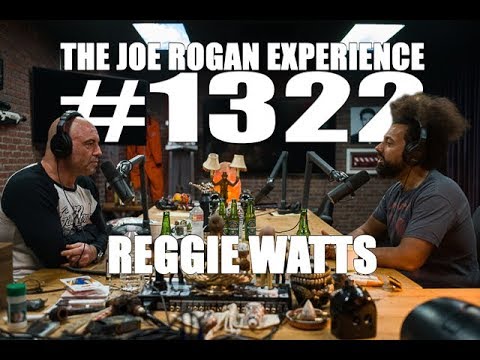
Joe Rogan Experience #1322 - Reggie Watts
Reggie Watts (guest), Joe Rogan (host), Narrator, Narrator, Narrator, Narrator
In this episode of The Joe Rogan Experience, featuring Reggie Watts and Joe Rogan, Joe Rogan Experience #1322 - Reggie Watts explores joe Rogan and Reggie Watts Blaze Through Drugs, Art, and Existence Joe Rogan and Reggie Watts share a long, meandering conversation that starts with weed, cocaine, and addiction, and expands into music, creativity, food as art, and the nature of consciousness.
Joe Rogan and Reggie Watts Blaze Through Drugs, Art, and Existence
Joe Rogan and Reggie Watts share a long, meandering conversation that starts with weed, cocaine, and addiction, and expands into music, creativity, food as art, and the nature of consciousness.
They debate hip‑hop lyrics, high‑end audio gear, cars, and the economics of streaming, while frequently looping back to how altered states (weed, psychedelics, LSD) change perception of art and reality.
The discussion also touches on environmental destruction, capitalism’s externalities, poverty, basic income, and how social systems shape people’s lives and opportunities.
Underlying the whole episode is a recurring theme: there’s an “art” to everything—from comedy and personality to cooking, flirting, and even how we structure society—and our tools, drugs, and technologies deeply influence that art.
Key Takeaways
Addiction is often a symptom of deeper life problems, not just weak willpower.
They argue that severe addictions usually sit on top of emptiness, trauma, or life imbalance; when people have meaningful work, creativity, and relationships, they’re less driven to self‑destruct.
Get the full analysis with uListen
Psychedelics radically reframe how we perceive art, self, and spirituality.
Rogan and Watts emphasize that many critics of psychedelics have never tried them; for users, mushrooms, LSD, and DMT can feel like tools that expand empathy, creativity, and even hint at the roots of religion or consciousness.
Get the full analysis with uListen
There’s an ‘art’ to everyday human behavior—being funny, sexy, or charismatic isn’t accidental.
They use John Witherspoon, Miss Pat, and flirtation as examples of people who’ve unconsciously refined how they talk, move, and react into a repeatable, compelling ‘performance’ that still feels natural.
Get the full analysis with uListen
Food and sound can be as high an art as painting or sculpture.
Tom Papa’s handmade bread, Bourdain’s shows, and ultra‑hi‑fi listening sessions are described as temporary but powerful artworks; when the creator is passionate and kind, you feel it in the experience.
Get the full analysis with uListen
Technology platforms often extract more value than the creators who feed them.
From YouTube strikes to music streaming payouts, they compare platforms to stores selling farmers’ tomatoes: the platforms keep most of the money even though all the value comes from artists’ work.
Get the full analysis with uListen
Environmental damage is priced far too low compared to the harm it causes.
They question how fracking, oil sands, and poisoned water can be justified economically when the true cost—destroyed fisheries, sick communities, climate impact, and psychological angst—is effectively dumped on the public.
Get the full analysis with uListen
A healthier society would invest in reducing poverty and broadening opportunity for all.
They frame support for poor communities and ideas like universal basic income as deeply patriotic and economically rational: fewer ‘losers’ means less crime, addiction, and drag on the whole system.
Get the full analysis with uListen
Notable Quotes
“If you haven’t had it, you might want to shut the fuck up.”
— Joe Rogan (on people dismissing psychedelics without trying them)
“He’s doing a kind of art—the art of being him.”
— Joe Rogan (on John Witherspoon’s natural funniness)
“The engineering should get the fuck out of the way.”
— Reggie Watts (on great audio gear disappearing into the listening experience)
“There is no deficit. We don’t have a deficit in what it would take to just make good decisions that’d make life really nice for most people on the planet.”
— Reggie Watts (on solving environmental and social problems)
“If you’re really patriotic, you’d want to fix all of the impoverished neighborhoods.”
— Joe Rogan (on poverty as a national team problem, not someone else’s issue)
Questions Answered in This Episode
How would your perception of your favorite music or art change if you experienced it on a psychedelic—and does that possibility change how you judge those substances now?
Joe Rogan and Reggie Watts share a long, meandering conversation that starts with weed, cocaine, and addiction, and expands into music, creativity, food as art, and the nature of consciousness.
Get the full analysis with uListen AI
In what ways do you ‘perform’ a version of yourself at work or socially, and how is that different from who you are when you’re alone?
They debate hip‑hop lyrics, high‑end audio gear, cars, and the economics of streaming, while frequently looping back to how altered states (weed, psychedelics, LSD) change perception of art and reality.
Get the full analysis with uListen AI
If streaming platforms and tech companies capture most of the value from creative work, what new models or tools could give artists more direct control and income?
The discussion also touches on environmental destruction, capitalism’s externalities, poverty, basic income, and how social systems shape people’s lives and opportunities.
Get the full analysis with uListen AI
How should we calculate the true cost of environmental damage from things like fracking or oil sands—and who should be legally and financially responsible for repairing that damage?
Underlying the whole episode is a recurring theme: there’s an “art” to everything—from comedy and personality to cooking, flirting, and even how we structure society—and our tools, drugs, and technologies deeply influence that art.
Get the full analysis with uListen AI
Would you support a universal basic income if it meant far fewer poor neighborhoods and less crime, even if it required changing how natural resource profits and taxes are distributed?
Get the full analysis with uListen AI
Transcript Preview
Oh, yeah. That's all he is. (laughs)
Boom. And we're live. That's it.
Hi.
Hello, Reggie.
Yeah, this stuff, purple venom. Um-
That's what he calls it?
That, that's what his friend calls it. And, uh, yeah, his friend's like, you know, pretty skeptical, uh, skeptical about other people's stuff, but then he tried it.
Did you have a coke nail? Was that a coke nail?
No.
The left one?
No, I know. People think-
They're super long.
People think that they're coke nails, they're not.
Are they fake?
No. They're real.
They're real.
Yeah.
You g- but y- you don't do coke?
I don't do coke.
Ever? Have you ever done coke?
I mean, I do Coke Zero.
(laughs)
I have done, I, I have done, uh, (laughs) it's like Coke Light. It's like, it looks like coke, you can snort it, it feels like coke, but it doesn't give you high. Um, no, uh, I, I have. I've tried it, I would say, honestly, maybe four times.
Mm-hmm.
And I've never ... It's always, it just felt like I just took three shots of espresso, and I'm not r- it's not really, it doesn't do anything for me that I'm like, "Ah, I'd better g- I'd better invest in that."
I need to try it one day, because I just, I need to know what's going on.
I mean-
I'm 51 years old. How do I n- I don't know what coke is.
I, you know, I think it's worth, I mean, if you don't, if you, you know, if you don't have a predisposition for being a hyper-addictive personality type-
Oh, I definitely do, but-
Oh, gotcha.
But I'm also wise enough to know-
Yeah, I mean-
... I can quit things.
Yeah, I mean-
I'm good at quitting stuff.
... you've got experience. You can control yourself. But, like, I, I-
Allegedly.
I was never, I was never, like, I've, I guess I've just never been someone who's like, "Oh, shit. Gotta have that forever." Like, I've never-
Yeah.
... been that way. The only thing that I'm reduced to now is just weed. That's it.
W- well, me too, but I also think that it's one of those things if your, if your life is healthy, if you have a good balance and you're enjoying your time and you're being creative and you have good friends and you're having fun, you're not looking for something to fuck your life up. I think many of the times when you're-
Yeah.
... dealing with people that have, like, severe debilitating addictions that are really just taking over their life, there's something else going on. Almost always.
Yeah.
It's just, like, problems. You know?
Install uListen to search the full transcript and get AI-powered insights
Get Full TranscriptGet more from every podcast
AI summaries, searchable transcripts, and fact-checking. Free forever.
Add to Chrome