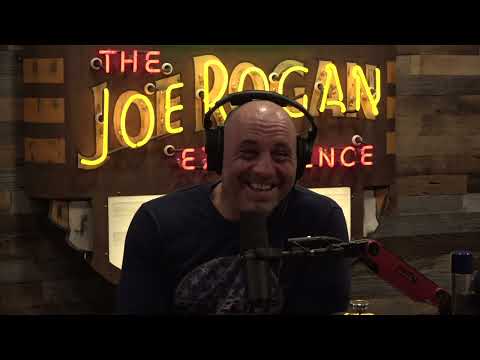
JRE MMA Show #122 with Jake Shields
Narrator, Narrator, Joe Rogan (host), Jake Shields (guest), Guest (guest), Guest (guest)
In this episode of The Joe Rogan Experience, featuring Narrator and Narrator, JRE MMA Show #122 with Jake Shields explores jake Shields and Joe Rogan Revisit MMA’s Wild Past and Present Joe Rogan and Jake Shields spend the episode bouncing between MMA war stories, fighter careers, and the evolution of the sport from the early no-rules days to today’s more regulated era.
Jake Shields and Joe Rogan Revisit MMA’s Wild Past and Present
Joe Rogan and Jake Shields spend the episode bouncing between MMA war stories, fighter careers, and the evolution of the sport from the early no-rules days to today’s more regulated era.
They discuss performance-enhancing drugs, weight cutting, concussion risks, and how judging, promotions, and fighter pay shape career decisions and late-stage comebacks.
Beyond fighting, they delve into COVID narratives, censorship, homelessness, crime, social media polarization, and how cities like San Francisco and LA have deteriorated through lax policies.
The conversation also covers lifestyle choices—vegetarianism, hunting ethics, training while high, overtraining vs. undertraining, and the looming impact of future tech like Neuralink and the metaverse on human life.
Key Takeaways
Career decisions in MMA are often trade-offs between money, legacy, and personal motivation.
Shields describes taking a pay cut to fight GSP for legacy, later chasing higher-paying but lower-profile promotions, and ultimately realizing that once motivation dips, continuing to fight becomes dangerous.
Get the full analysis with uListen
PED use has never fully disappeared; it has evolved alongside testing.
They note that early MMA was saturated with open steroid use, and while USADA reduced blatant abuse, well-funded teams still likely employ chemists, micro-dosing, and novel compounds to stay ahead of tests.
Get the full analysis with uListen
Weight cutting remains one of MMA’s biggest unsolved health problems.
They recount extreme cuts where fighters can barely walk to the scale, arguing that radically reducing cuts through hydration testing and narrower weight classes would improve safety and performance.
Get the full analysis with uListen
Technical development in grappling now relies heavily on intelligent, varied training intensity.
Shields highlights training with John Danaher’s team, where some sessions are hard, others are playful or focused on putting yourself in bad positions, showing that constant max-effort sparring is less effective than structured variation.
Get the full analysis with uListen
Urban policy that tolerates open drug markets fuels homelessness and crime spirals.
Using San Francisco and LA as examples, they argue that permissive policies, defunding police rhetoric, and poorly incentivized homeless bureaucracies have turned core areas into unsafe encampments without solving addiction.
Get the full analysis with uListen
Censorship around COVID narratives increased distrust and conspiracy thinking.
They point to banned content and de-platformed commentators whose early criticisms of masking and transmission were later validated, contending that suppressing debate made institutions appear captured by pharma and political interests.
Get the full analysis with uListen
Future tech like Neuralink and the metaverse could be irresistible yet dangerously controlling.
Rogan and Shields speculate that once virtual experiences become better than real life—and centrally controlled like social media platforms—people may abandon physical life for curated digital identities governed by corporate rules.
Get the full analysis with uListen
Notable Quotes
“In fighting, you have to have 100% enthusiasm and motivation. Once you lose that, being in there gets dangerous.”
— Jake Shields
“When USADA came along, a lot of people melted… and now some of them are blown back up. They figured it out.”
— Joe Rogan
“Most people are scared of overtraining, but way more fighters actually under-train. All the champions I know grind their ass off.”
— Jake Shields
“Whatever San Francisco is doing with homelessness, just do the opposite.”
— Joe Rogan
“If the metaverse lets you be Indiana Jones or Nick Rodriguez with no consequences, why would a lot of people choose real life?”
— Joe Rogan
Questions Answered in This Episode
How realistic is it to meaningfully restrict or eliminate extreme weight cutting in modern MMA, and what specific system would actually work?
Joe Rogan and Jake Shields spend the episode bouncing between MMA war stories, fighter careers, and the evolution of the sport from the early no-rules days to today’s more regulated era.
Get the full analysis with uListen AI
To what extent should promotions and athletic commissions be responsible for long-term brain health and post-career support for fighters?
They discuss performance-enhancing drugs, weight cutting, concussion risks, and how judging, promotions, and fighter pay shape career decisions and late-stage comebacks.
Get the full analysis with uListen AI
Are current approaches to homelessness and addiction in major U.S. cities fixable within existing political and bureaucratic structures, or does it require a completely new model?
Beyond fighting, they delve into COVID narratives, censorship, homelessness, crime, social media polarization, and how cities like San Francisco and LA have deteriorated through lax policies.
Get the full analysis with uListen AI
How can society balance the benefits of open debate about public health with the need to limit genuinely dangerous misinformation without fueling more distrust?
The conversation also covers lifestyle choices—vegetarianism, hunting ethics, training while high, overtraining vs. ...
Get the full analysis with uListen AI
If immersive metaverse experiences become more attractive than reality, what safeguards—ethical or regulatory—should exist to prevent large-scale social and psychological harm?
Get the full analysis with uListen AI
Transcript Preview
(drumming music plays) Joe Rogan podcast. Check it out.
The Joe Rogan Experience.
Train by day, Joe Rogan podcast by night, all day. (rock music plays) So, do you know- (laughs)
(laughs)
We just ... Everybody keeps j- ... Hello, Jake Shields. Good to see you, bro.
How's it going, Joe? Great to be on your show.
Great to have you.
Known you for, like, what? 15 years?
Long fucking time, brother.
And then, uh-
Maybe more. It might be like 20.
Yeah, right, 20.
Yeah.
I remember seeing your podcast, um, when it first started. You were like a small little-
I know.
... fringe show-
Yeah.
... for like, uh, potheads, fight people, comedians.
Well, I waited until it got real big to bring you on.
Yeah, so now-
(laughs)
Oh, no, no, no pressure now. (laughs)
So, we were talking about this, uh, what is it called? This C-OVID documentary-
Watch-
... that I think is made by the Russians.
Watch the water.
It's definitely true, by the way.
Watch the water.
(laughs)
Definitely true. So, what are they trying to say? There's snake venom?
All right. Well, the-
(laughs)
(laughs)
I don't know.
They say ... I- I've just heard this one, by the way. Joe just broke this one to me.
Yeah, just-
I mean, someone was saying that it was the mark of the beast. Let's ... Let me read you the byline.
Okay. Okay.
And you tell me, uh, what you think-
Hit me with it.
... we're gonna get-
Okay.
... and what you're gonna watch.
Okay.
"The plandemic continues-"
Hmm.
"... but its origins are still a nefarious mystery."
Oh.
"How did the world get sick? How did COVID really spread? How did the Satanic elite tell the world about this bioweapon ahead of time?
Oh.
"Watch. This doctor has unveiled a shocking connection between this pandemic and the eternal battle of good and evil, which began in the Garden of Eden."
Oh, Jesus.
(laughs)
So, that's what it is. They were saying that the s- the snake venom-
Snake venom. And so there's this ... their picture-
And it-
... there's like a snake-
Oh, boy. So, it's the mark-
... that's under the-
They're saying it's the mark of the beast.
Yeah, 'cause Sat- 'cause the snake is like, you know, represents Satan, so literally Satan blood.
The crazy thing is they've banned this from YouTube. Like-
Really?
I-
Yeah.
(laughs)
At what, at what point in time ... Come on.
(laughs)
What, what, what about fun?
Yeah, we should be able to watch things about-
Install uListen to search the full transcript and get AI-powered insights
Get Full TranscriptGet more out of YouTube videos.
High quality summaries for YouTube videos. Accurate transcripts to search & find moments. Powered by ChatGPT & Claude AI.
Add to Chrome