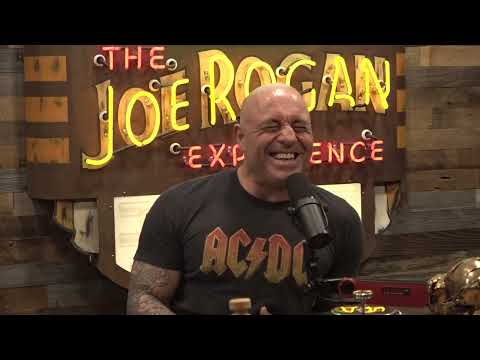
Joe Rogan Experience #1960 - Andrew Schulz
Andrew Schulz (guest), Joe Rogan (host), Narrator, Narrator, Narrator
In this episode of The Joe Rogan Experience, featuring Andrew Schulz and Joe Rogan, Joe Rogan Experience #1960 - Andrew Schulz explores joe Rogan and Andrew Schulz Deconstruct Power, Comedy, History, Technology, Morality Joe Rogan and Andrew Schulz jump from ancient warfare and empire collapse to modern geopolitics, technology, and social media influence, constantly linking past patterns to present vulnerabilities. They unpack how civilizations gain and lose power—from Mongol horseback archers and Roman engineering to America’s military dominance and fragility in a nuclear age.
Joe Rogan and Andrew Schulz Deconstruct Power, Comedy, History, Technology, Morality
Joe Rogan and Andrew Schulz jump from ancient warfare and empire collapse to modern geopolitics, technology, and social media influence, constantly linking past patterns to present vulnerabilities. They unpack how civilizations gain and lose power—from Mongol horseback archers and Roman engineering to America’s military dominance and fragility in a nuclear age.
A big portion of the conversation centers on modern culture: TikTok, data warfare, the culture-war power of Hollywood and social media, and how comedy functions as both resistance and truth-telling in an age of censorship and outrage. They also dive deep into stand-up craft, the purpose of Rogan’s new club, and how scenes, mentors, and standards create great comedians.
Throughout, they wrestle with uncomfortable moral questions: slave labor in cobalt mining, addiction and responsibility, the ethics of wealth and consumption, religious meaning, and whether technological progress is outpacing our wisdom. The episode is a sprawling mix of history lesson, comedy theory, social critique, and philosophical musing, all grounded in humor and personal anecdotes.
Key Takeaways
Empires fall, no matter how invincible they feel in the moment.
Rogan uses the Mongol and Roman empires to argue that U. ...
Get the full analysis with uListen
Modern conflict is likely to be slow, subtle, and digital—not cinematic.
Rather than a dramatic first nuclear strike, Rogan suggests a clever adversary would slowly degrade U. ...
Get the full analysis with uListen
Media platforms are weapons in a global culture war.
They frame TikTok not just as a data-harvesting app but as a tool for shaping youth behavior and norms, arguing that whoever controls the cultural feed (films, memes, trends) wields immense soft power over future generations.
Get the full analysis with uListen
Great comedy scenes need high standards, honest peers, and ‘standard-bearers.’
They credit places like Boston and New York with producing elite comics because of harsh crowds, cold-weather impatience, and mentors like Barry Crimmins or Keith Robinson who enforce quality and ruthlessly call out hack behavior.
Get the full analysis with uListen
Authenticity in stand-up comes from knowing how you really feel, not chasing trends.
Schulz explains that his best material starts with raw feelings, not manufactured punchlines; Rogan adds that writing, riffing, and stage time are all ways to discover those truths—and audiences can sense when you're faking a persona.
Get the full analysis with uListen
Our tech convenience rests on morally ugly supply chains most people ignore.
They highlight cobalt mining in the Congo and harsh Chinese factory conditions as the hidden cost of smartphones, EV batteries, and electronics, arguing that we are all complicit but rarely willing to pay more for ethical alternatives.
Get the full analysis with uListen
Voluntary discomfort builds resilience in a comfort-saturated world.
Rogan defends cold plunges, hard training, and other self-imposed challenges as modern ‘rituals’ that burn off anxiety, test willpower, and replace some of what religion or harsh environments used to provide in shaping strong character.
Get the full analysis with uListen
Notable Quotes
“Every single civilization that has been in control has gone under. They all go under.”
— Joe Rogan
“I don’t think I’ve created any comedy. I think it’s there and I just kind of find it—like constellations.”
— Andrew Schulz
“If you make drugs illegal, then illegal people sell drugs, you fucking asshole.”
— Joe Rogan
“You need enough ego to try. That’s it. And then you substitute ego for willpower.”
— Andrew Schulz
“I think you need life to get through medication, not medication to get through life.”
— Joe Rogan
Questions Answered in This Episode
How much should individual consumers feel morally responsible for supply chains like cobalt mining and Foxconn-style factories?
Joe Rogan and Andrew Schulz jump from ancient warfare and empire collapse to modern geopolitics, technology, and social media influence, constantly linking past patterns to present vulnerabilities. ...
Get the full analysis with uListen AI
If authenticity is so crucial in stand-up, how can a young comic distinguish between ‘their voice’ and simply imitating what currently works online?
A big portion of the conversation centers on modern culture: TikTok, data warfare, the culture-war power of Hollywood and social media, and how comedy functions as both resistance and truth-telling in an age of censorship and outrage. ...
Get the full analysis with uListen AI
Are we underestimating the long-term impact of TikTok-style platforms on national security, culture, and youth psychology?
Throughout, they wrestle with uncomfortable moral questions: slave labor in cobalt mining, addiction and responsibility, the ethics of wealth and consumption, religious meaning, and whether technological progress is outpacing our wisdom. ...
Get the full analysis with uListen AI
Could a ‘morally clean’ tech ecosystem—ethical mining, fair labor, domestic manufacturing—ever compete at scale, or is cheap convenience too powerful?
Get the full analysis with uListen AI
To what extent can voluntary discomfort (cold plunges, hard training, etc.) really replace the character-building pressures that religion, war, or harsh environments once imposed?
Get the full analysis with uListen AI
Transcript Preview
(drumbeats) Joe Rogan podcast, check it out. The Joe Rogan Experience.
Train by day, Joe Rogan podcast by night, all day. (rock music) What's happening, big dog?
Mm. What's up, my man?
Hey. First archery shot ever.
Oh, that was cool.
40 yards with an 80-pound compound bow. You got it right in the fucking vitals.
It was cool.
That's an amazing thing. You should probably quit now.
Yeah. Yeah.
I mean, to take ... First of all, the bow's not even set up for you.
Yeah. (laughs)
The way the bow is set up is, for me, I have shorter arms than you.
Correct.
You would have a longer draw length, so you have to kind of, like, move your body a little, and you center that peep sight. Bro, that's a long shot for a first shot ever in a bow, 40 yards in an indoor range.
And what were you-
And you got it right in the vitals.
Yeah. Now, what were you thinking when I struggled to pull it back?
Uh, normal. It's weird. It's-
Oh, that is a-
It's awkward.
... common thing that happened?
Yeah. Oh, you didn't have any excuses at least. Bryan Callahan had a fucking ...
Wait, what did he say?
Just reading a scroll of excuses.
(laughs) Wait, what did he say? (laughs) "My labrum-"
"It's tech- probably technique," you know something. Like, no, it's, it's a strength thing.
Yeah.
I mean, it is technique, but it's just ... 80 pounds is 80 pounds.
Yeah.
It's, it's a lot of weight.
I have a new respect for, uh, for bow and arrow folks.
It's hard.
Yeah.
It's very hard.
Yeah.
But it's really satisfying.
Like, it puts in perspective, like, the people who can do it on horseback. You know, you see it in the movies and shit like that, and like, I don't know why I didn't think it was that hard, but ...
Yeah, that's a next level thing. The horseback thing is crazy.
Yeah.
The Mongols would time their shot when the horse was in the air.
Yeah.
So when the horse was in the air, then they would release it.
Oh, mid-gallop.
Yes, so there would be less disturbance, less jolt on their body.
So was that ... Yeah, we always talk about, like, Genghis Khan and how he was able to take over the world. Was the competitive advantage horseback weaponry?
They had a lot of things going for them. They had strategy, first of all.
Mm.
They, they had devious, wild strategies. Like, they would set people up. Like, they would, they would send a small party out, and those people-
I heard of it.
Install uListen to search the full transcript and get AI-powered insights
Get Full TranscriptGet more from every podcast
AI summaries, searchable transcripts, and fact-checking. Free forever.
Add to Chrome