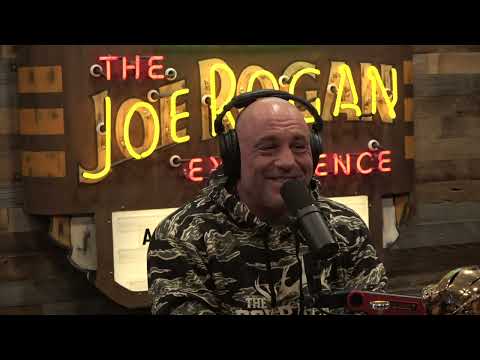
Joe Rogan Experience #1912 - Steven Rinella
Narrator, Joe Rogan (host), Steven Rinella (guest), Narrator, Narrator, Narrator, Narrator
In this episode of The Joe Rogan Experience, featuring Narrator and Joe Rogan, Joe Rogan Experience #1912 - Steven Rinella explores joe Rogan and Steven Rinella Confront Scams, Decay, and Wild Nature Joe Rogan and Steven Rinella range widely from financial and street-level scams to crime, policing, and political dysfunction in American cities, using personal anecdotes and current events as entry points.
Joe Rogan and Steven Rinella Confront Scams, Decay, and Wild Nature
Joe Rogan and Steven Rinella range widely from financial and street-level scams to crime, policing, and political dysfunction in American cities, using personal anecdotes and current events as entry points.
They examine institutional breakdown during COVID, government–tech collusion in censorship, and the cultural dynamics of outrage, mandates, and media narratives, often contrasting official stories with lived experience.
The conversation shifts into war, AI, China’s military tech, and the ethics of animal experimentation, then grounds itself in hunting, wildlife behavior, and human-animal relationships as a counterweight to societal chaos.
Throughout, they return to themes of personal responsibility, skepticism toward authority, and the stabilizing role of nature, hunting, and long-form conversation in a noisy, polarized information environment.
Key Takeaways
Scam culture spans from crypto to street hustles and always ends badly.
Rogan links FTX to earlier scams he saw in pool halls and credit-card fraud, arguing dirty money tends to self-destruct and that scammers often can’t ‘win’ in the long run despite temporary riches.
Policy experiments without grounding in reality can quickly destroy urban order.
They cite Target’s huge organized retail theft losses and permissive theft laws as examples of ‘governance by theory’—well‑intentioned ideology that ignores human behavior and cripples basic services.
Institutional systems can collapse fast but take decades to rebuild.
From a 10-minute 911 hold in Austin to war‑torn Ukrainian cities, they stress how quickly functionality erodes compared to the slow, generational work of reconstruction and trust‑building.
U.S. military and government tech lag in integration and adaptability.
Discussing *The Kill Chain*, Rogan notes that Chinese systems are built for continuous software updates and AI integration, while U. ...
Censorship and government–platform collusion ultimately kill trust and truth.
They argue that suppressing stories like the Hunter Biden laptop and punishing COVID dissenters via Twitter/Facebook undermines any side’s claims to moral authority and creates a path toward soft authoritarianism.
Outrage culture drives corporations to irrational, performative punishment.
The Apple executive fired for quoting a bawdy movie line demonstrates, in their view, how companies now incentivize the harshest disciplinary moves to avoid online backlash, regardless of context or intent.
Hunting reveals humans as animals and offers a powerful antidote to modern anxiety.
Rinella and Rogan describe hunting and observing wildlife—deer frozen for 22 minutes, jaguars, mega‑bucks—as activating ancient reward systems and perspectives on time, mortality, and individuality that you can’t access through screens.
Media accounts of people are shallow shadows compared to long-form conversation.
Rogan explains why he avoids participating in profiles: his podcast reaches far more people than any article, and reacting to every hit piece or narrative is bad for mental health and self-perception.
Notable Quotes
“There’s never been a time in my life where I’ve felt like things have broken down as much as they have over the last three years.”
— Joe Rogan
“Of bias, there’s the least amount of bias here, there, or wherever—then you hear NPR soft‑pedal people throwing soup at paintings and you’re like, they don’t even see it.”
— Steven Rinella
“The truth dies with censorship… if you ultimately believe in censoring people that disagree with your own opinions, that’s where this goes. This goes to fascism.”
— Joe Rogan
“You can live with a deer that way. At any point in time you could walk out your door and sweep your hand and be like, ‘He’s there somewhere right now.’”
— Steven Rinella
“Hunting is probably one of the most anxiety‑ridden things I’ve ever done… you have to wrestle with your nervous system and tell yourself, ‘No, no, no, stay calm.’”
— Joe Rogan
Questions Answered in This Episode
How should societies balance free speech with concerns about misinformation when governments and platforms clearly have their own biases?
Joe Rogan and Steven Rinella range widely from financial and street-level scams to crime, policing, and political dysfunction in American cities, using personal anecdotes and current events as entry points.
If urban ‘governance by theory’ is failing, what would a truly pragmatic, results‑driven model of city leadership look like in practice?
They examine institutional breakdown during COVID, government–tech collusion in censorship, and the cultural dynamics of outrage, mandates, and media narratives, often contrasting official stories with lived experience.
Given the history of pharmaceutical misconduct, what kind of oversight and transparency would be required to restore public trust after COVID?
The conversation shifts into war, AI, China’s military tech, and the ethics of animal experimentation, then grounds itself in hunting, wildlife behavior, and human-animal relationships as a counterweight to societal chaos.
Are intensive deer‑management and big‑buck cultures (food plots, trail cams, named deer) enhancing conservation or subtly turning wild hunting into farming?
Throughout, they return to themes of personal responsibility, skepticism toward authority, and the stabilizing role of nature, hunting, and long-form conversation in a noisy, polarized information environment.
How far should we be willing to go with animal research and neural implants if they can cure paralysis and disease, and who decides where the ethical line is?
EVERY SPOKEN WORD
Install uListen for AI-powered chat & search across the full episode — Get Full Transcript
Get more out of YouTube videos.
High quality summaries for YouTube videos. Accurate transcripts to search & find moments. Powered by ChatGPT & Claude AI.
Add to Chrome