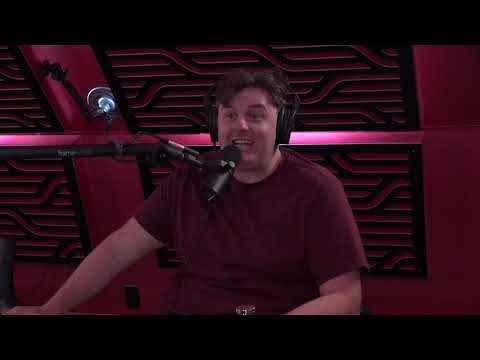
Joe Rogan Experience #1610 - Snowpacalypse with Tim Dillon
Joe Rogan (host), Narrator, Tim Dillon (guest), Narrator, Narrator, Joe Rogan (host), Narrator, Narrator
In this episode of The Joe Rogan Experience, featuring Joe Rogan and Narrator, Joe Rogan Experience #1610 - Snowpacalypse with Tim Dillon explores rogan and Dillon Roast Politics, Tech Censorship, and Comedy Itself Joe Rogan and Tim Dillon riff on the Texas snowstorm, political hypocrisy, tech censorship, media dysfunction, and the state of stand-up comedy, mixing serious critique with heavy sarcasm. They skewer figures like Ted Cruz, Andrew Cuomo, Bill de Blasio, Gavin Newsom, and Caitlyn Jenner while debating the limits of free speech and the growing power of tech elites. The conversation circles repeatedly back to how media incentives, social media outrage, and ideological rigidity distort public life and comedy. They close by talking about building a new, freer stand‑up scene in Austin and what it takes to actually succeed in comedy versus just complaining online.
Rogan and Dillon Roast Politics, Tech Censorship, and Comedy Itself
Joe Rogan and Tim Dillon riff on the Texas snowstorm, political hypocrisy, tech censorship, media dysfunction, and the state of stand-up comedy, mixing serious critique with heavy sarcasm. They skewer figures like Ted Cruz, Andrew Cuomo, Bill de Blasio, Gavin Newsom, and Caitlyn Jenner while debating the limits of free speech and the growing power of tech elites. The conversation circles repeatedly back to how media incentives, social media outrage, and ideological rigidity distort public life and comedy. They close by talking about building a new, freer stand‑up scene in Austin and what it takes to actually succeed in comedy versus just complaining online.
Key Takeaways
Political optics often matter more than actual capability.
Rogan and Dillon mock the outrage over Ted Cruz fleeing to Cancun during the Texas storm, noting he couldn’t literally make the weather warmer, yet optics now dominate public judgment more than concrete responsibility or competence.
Tech “guardrails” can easily slide into broad speech control.
They describe a billionaire tech founder on Clubhouse calling for “guardrails” online; Rogan and Dillon warn that while it might start with QAnon and harassment, such controls predictably expand into policing jokes, dissent, and legitimate debate.
Audiences underestimate how much media is driven by incentive and fear.
From Cuomo’s alleged nursing‑home cover‑up to CNN’s dependence on Trump for ratings, they argue that news organizations and politicians are guided by self‑preservation and financial incentives as much as public service or truth.
Comedy is one of the few real meritocracies—but only if you’re honest with yourself.
They insist stand‑up rewards people who are undeniably funny and relentless workers; those who don’t “make it” often blame others instead of examining their own laziness, lack of output, or refusal to evolve.
Mocking sacred cows is essential to a healthy culture.
Their bits on Caitlyn Jenner, QAnon, nurses, and high‑status intellectuals (Weinsteins, Chelsea Handler, etc. ...
Online platforms shape conversation through visibility and feedback loops.
Rogan defends YouTube‑style comment sections as crucial for audience interaction and notes how Google’s curation can bury uncomfortable stories, while DuckDuckGo surfaces them—showing how platforms subtly gate what people see and discuss.
Building new creative communities requires both infrastructure and generosity.
Rogan talks about using his reach, wealth, and Austin base to create a “stand‑up haven” with multiple clubs, safe experimentation, and cross‑promotion—arguing established comics have a responsibility to lift up newer, truly funny voices.
Notable Quotes
“You can’t say, ‘You’re not right, so you can’t talk.’ Because then the people that have the power to hit that switch will hit it whenever they disagree.”
— Joe Rogan
“Most people go, ‘Well, fuck it then.’ I like to do both—I work very hard and still blame others.”
— Tim Dillon
“Comedy is kind of a meritocracy. If you are undeniably funny and you keep going, the odds are in your favor.”
— Joe Rogan
“If you want a society where it’s only the targets that you approve, you sound a lot like those people on the left that you criticize.”
— Tim Dillon
“We don’t live that long. There’s room for everybody. If you abandon mocking things, we are fucked.”
— Joe Rogan
Questions Answered in This Episode
Where should platforms draw the line between preventing real‑world harm (e.g., QAnon violence) and preserving open, messy conversations online?
Joe Rogan and Tim Dillon riff on the Texas snowstorm, political hypocrisy, tech censorship, media dysfunction, and the state of stand-up comedy, mixing serious critique with heavy sarcasm. ...
How much responsibility do comedians have for the downstream effects of their jokes in a hyper‑clipped, outrage‑driven media environment?
Is comedy truly a meritocracy, or do structural advantages (connections, geography, algorithms) still skew who breaks through?
What would a healthier news and social media ecosystem look like if it weren’t built around anger, fear, and partisan loyalty?
Can a place like Austin realistically become a long‑term alternative to LA/NY for stand‑up without eventually absorbing the same industry pressures?
EVERY SPOKEN WORD
Install uListen for AI-powered chat & search across the full episode — Get Full Transcript
Get more out of YouTube videos.
High quality summaries for YouTube videos. Accurate transcripts to search & find moments. Powered by ChatGPT & Claude AI.
Add to Chrome