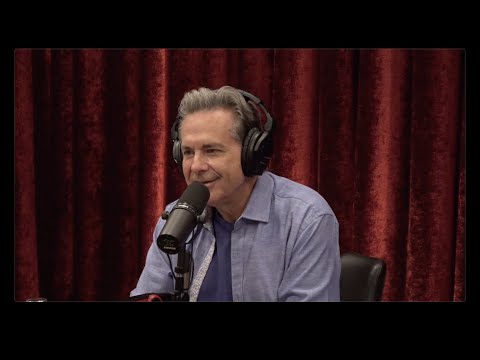
Joe Rogan Experience #2173 - Jimmy Dore
Narrator, Joe Rogan (host), Jimmy Dore (guest)
In this episode of The Joe Rogan Experience, featuring Narrator and Joe Rogan, Joe Rogan Experience #2173 - Jimmy Dore explores jimmy Dore and Joe Rogan Torch Media, War, Covid Narratives, Power Joe Rogan and Jimmy Dore spend a long, free‑wheeling conversation attacking establishment narratives around media, politics, foreign policy, and COVID, while weaving in comedy, music, and personal stories.
Jimmy Dore and Joe Rogan Torch Media, War, Covid Narratives, Power
Joe Rogan and Jimmy Dore spend a long, free‑wheeling conversation attacking establishment narratives around media, politics, foreign policy, and COVID, while weaving in comedy, music, and personal stories.
They argue that corporate media and intelligence agencies systematically lie, propagandize, and criminalize dissent, citing examples like Russiagate, Ukraine, COVID policies, and the treatment of figures such as Julian Assange, RFK Jr., and Donald Trump.
Dore describes his own political evolution, deep skepticism of both parties, and recent spiritual/psychological journey through Jungian dream analysis, which he says changed how he sees himself, his critics, and the nature of consciousness.
Throughout, they position independent media and long‑form podcasts as the primary counterweight to captured institutions, while warning about censorship, oligarchic control, and a population increasingly aware but still heavily divided.
Key Takeaways
Corporate media function more as narrative enforcers than truth‑seekers.
Rogan and Dore argue that outlets like MSNBC, CNN, and major newspapers are funded by the same corporate and military interests they should scrutinize, leading them to sell wars, medical narratives, and partisan talking points rather than investigate power.
Get the full analysis with uListen
Both major US parties serve oligarchic interests, especially on war and economics.
They describe Democrats and Republicans as converging on endless foreign interventions, corporate bailouts (e. ...
Get the full analysis with uListen
Key recent “consensus” stories were either distorted or outright false.
Examples cited include Russiagate, the public portrayal of Kyle Rittenhouse, the Syria chemical attacks, and COVID orthodoxy on vaccines and treatments; in each, they say initial media framing created deep, often permanent misperceptions.
Get the full analysis with uListen
There is a growing global backlash against captured institutions and censorship.
Dore reports audiences across Europe expressing the same anger at media, tech, and political elites as in the US, and both hosts see COVID and Ukraine coverage as accelerants in a wider awakening about how tightly narratives are controlled.
Get the full analysis with uListen
Independent platforms are increasingly the only space for honest, nuanced debate.
They credit YouTube, podcasts, Rumble, Substack, and independent journalists (e. ...
Get the full analysis with uListen
Psychological and spiritual work can change how you relate to politics and conflict.
Dore’s deep dive into Carl Jung, dream analysis, and the idea of a “transpersonal self” has shifted him from pure outrage to more empathy—even for critics—while reinforcing his sense that much of mass politics operates through projection and cult dynamics.
Get the full analysis with uListen
War and crisis are reliably used as tools for wealth transfer and control.
From Libya and Ukraine to COVID stimulus, they contend that emergencies are framed as humanitarian or safety imperatives but function primarily as mechanisms to funnel trillions upward and justify expansions of surveillance and state power.
Get the full analysis with uListen
Notable Quotes
“You don’t live in a democracy, you live in an oligarchy.”
— Jimmy Dore
“Imagine if the news was skeptical about the vaccine and podcasters were the ones saying ‘safe and effective’—we’d all be shut down and sued.”
— Joe Rogan
“I’m not defending Kyle Rittenhouse. I’m defending the truth—and I’m asking why you’re not mad the corporate media lied about a 16‑year‑old kid to divide the country.”
— Jimmy Dore
“We’re in a Coen brothers movie. If you put that Scarborough clip in a film, people wouldn’t believe it.”
— Joe Rogan
“The biggest problems in your life can never be solved; they can only be outgrown.”
— Jimmy Dore (quoting Carl Jung and applying it to his own life)
Questions Answered in This Episode
How can an average person realistically verify claims when both governments and major media repeatedly mislead the public?
Joe Rogan and Jimmy Dore spend a long, free‑wheeling conversation attacking establishment narratives around media, politics, foreign policy, and COVID, while weaving in comedy, music, and personal stories.
Get the full analysis with uListen AI
If both major US parties are structurally captured by oligarchic interests, what would meaningful political reform or resistance actually look like?
They argue that corporate media and intelligence agencies systematically lie, propagandize, and criminalize dissent, citing examples like Russiagate, Ukraine, COVID policies, and the treatment of figures such as Julian Assange, RFK Jr. ...
Get the full analysis with uListen AI
Where is the line between healthy skepticism of official narratives and falling into unfounded or weaponized conspiracy theories?
Dore describes his own political evolution, deep skepticism of both parties, and recent spiritual/psychological journey through Jungian dream analysis, which he says changed how he sees himself, his critics, and the nature of consciousness.
Get the full analysis with uListen AI
How should societies balance the benefits of independent platforms (Rumble, Substack, podcasts) with concerns about misinformation and lack of editorial standards?
Throughout, they position independent media and long‑form podcasts as the primary counterweight to captured institutions, while warning about censorship, oligarchic control, and a population increasingly aware but still heavily divided.
Get the full analysis with uListen AI
What role could individual psychological work—like confronting projections or ego attachment—play in reducing polarization and cult‑like political behavior?
Get the full analysis with uListen AI
Transcript Preview
(drumming) Joe Rogan podcast, check it out. The Joe Rogan Experience.
Train by day, Joe Rogan podcast by night, all day. (rock music) What's Yom Kippur?
His Zo- his Zionism. You know, if he didn't have that, he c- I think he could be president, but it's...
You mean RFK Jr.?
Yeah.
Oh.
I didn't, I didn't...
I was confused. I was like, "What?"
I meant, I meant figuratively. (laughs)
I was like, "How does this have anything to do with the boycott of Starbucks and McDonald's and Sirhan Sirhan? Like, what?"
(laughs)
"Some rabbit hole shit I didn't know about? Is that possible?"
You know, Sirhan Sirhan, uh, his house was in Pasadena, which was close to where I used to live.
Really?
Yeah. I didn't... Uh, one day my wife was like, "Yeah, this Sirhan Sirhan lives over here." I'm like, "Get out of here." I didn't know.
Have you ever read into the MKUltra connection between Sirhan Sirhan, Jack Ruby, and Jolly West?
So, no, I haven't, but I am now I'm working with Kurt Metzger, and he knows all that shit.
(laughs) He knows. He knows too much.
He know... I'm like, well, he could just go off.
You ruined him. You've ruined him.
(laughs)
'Cause he didn't... I don't think he's aware of so many legitimate, actual conspiracies, meaning, like, where governments and corporations conspire against the American people, lie, twist facts to distort things. But Kurt is one of those guys that once he finds out something, that, you know, because he had, grew up in a cult, right?
Yeah.
So, he was in a Jehovah's Witness cult when he was young.
Yeah. Yeah.
Sorry, Jehovah's Witnesses. But, and then becomes-
(laughs)
... a comedian, and, you know, like, he's so averse to bullshit. He's like, "Oh, no, no, no, no, no, no." He goes like, "You fucking ruined my childhood. I know what this is. I've seen this before. I've seen this in another form."
Mm-hmm.
"I know what this is."
Yeah, that's, that's his, like, superpower-
Yeah.
... because he's been through it.
You ruined him.
(laughs)
His show, you ruined him. He's so- he's so crazy now.
He gets so upset.
Oh, he's so mad now.
He's, you see him get upset on the show. He ge- gets legit angry.
Here it is, other controversial cases West was assigned to, including evaluating Sirhan Sirhan, who assassinated Robert F. Kennedy, uh, Jun- uh, excuse me, at the Ambassador Hotel in Los Angeles June 5th, 1968. West claimed Sirhan was a subject of psychic driving, a mind-altering technique involving hypnosis or paralytic drugs. Psychiatrists often use barbiturates for this. Sh- settle the fuck down. You used acid.
(laughs)
Stop lying. What is this? "Oh, maybe possibly barbiturates or something legal." No. They were using acid.
Install uListen to search the full transcript and get AI-powered insights
Get Full TranscriptGet more from every podcast
AI summaries, searchable transcripts, and fact-checking. Free forever.
Add to Chrome