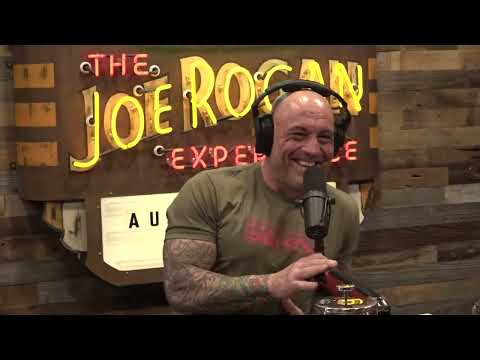
JRE MMA Show #142 with Matt Serra, Din Thomas & John Rallo
Matt Serra (guest), Din Thomas (guest), Narrator, Joe Rogan (host), John Rallo (guest), Matt Serra (guest), John Rallo (guest), Din Thomas (guest), Matt Serra (guest), John Rallo (guest), Matt Serra (guest), Din Thomas (guest), John Rallo (guest), Matt Serra (guest), Matt Serra (guest), Din Thomas (guest), Matt Serra (guest), John Rallo (guest), Din Thomas (guest), Matt Serra (guest), Narrator
In this episode of The Joe Rogan Experience, featuring Matt Serra and Din Thomas, JRE MMA Show #142 with Matt Serra, Din Thomas & John Rallo explores mMA veterans relive wild careers, friendships, and fight game realities Joe Rogan hosts Matt Serra, Din Thomas, and John Rallo in a long-form, freewheeling reunion covering early UFC days, brutal weight cuts, injuries, and the evolution of MMA training. They swap stories about living like “Spartans” in gyms, near‑death street and cage moments, and how jiu-jitsu and wrestling shaped their lives and coaching. The group dives into fighter health topics like TRT, chronic injuries, cold plunges, saunas, and bad weight cuts, while also criticizing things like win bonuses and dubious chiropractic origins. Throughout, they celebrate old-school fighters, share hilarious road and bar stories, and reflect on quality of life, retirement, and why many great talents never fully realize their potential.
MMA veterans relive wild careers, friendships, and fight game realities
Joe Rogan hosts Matt Serra, Din Thomas, and John Rallo in a long-form, freewheeling reunion covering early UFC days, brutal weight cuts, injuries, and the evolution of MMA training. They swap stories about living like “Spartans” in gyms, near‑death street and cage moments, and how jiu-jitsu and wrestling shaped their lives and coaching. The group dives into fighter health topics like TRT, chronic injuries, cold plunges, saunas, and bad weight cuts, while also criticizing things like win bonuses and dubious chiropractic origins. Throughout, they celebrate old-school fighters, share hilarious road and bar stories, and reflect on quality of life, retirement, and why many great talents never fully realize their potential.
Key Takeaways
Being elite in MMA once required extreme, all‑in sacrifice.
Serra and Thomas describe sleeping in gyms, living in cars, and being perpetually broke in the early 2000s when MMA was fringe and fighters assumed the sport might die at any moment. ...
Get the full analysis with uListen
Long-term health demands smarter training, not just more grind.
Stories of blown backs from overtraining, herniated discs, and knee replacements highlight how training “like a young guy” into your late 30s/40s is dangerous. ...
Get the full analysis with uListen
Jiu-jitsu remains a “superpower” for real-world self-defense.
Serra’s famous Red Rock Casino incident and breakdowns of crucifix control, rear‑naked choke mechanics, and subway self-defense scenarios show how grappling lets a smaller, trained person dominate or neutralize untrained aggressors with minimal damage and legal risk compared to striking.
Get the full analysis with uListen
The win-bonus system and inconsistent judging can distort careers.
They argue fighters should be paid a flat contracted purse rather than half “to show” and half “to win,” because close or bad decisions can arbitrarily cut a fighter’s income and change their career trajectory despite full effort and performance.
Get the full analysis with uListen
Weight cutting and dehydration are still dangerously misunderstood.
All three point out that extreme cuts without IVs compromise chin, cardio, and long‑term health—fighters often misinterpret size advantage as worth the risk. ...
Get the full analysis with uListen
TRT/PED eras fundamentally changed how we view past performances.
Rogan, Serra, and Thomas openly discuss “TRT Vitor,” Pride’s open steroid culture, pre‑USADA physiques, and suspect nicknames like “The Natural,” making clear that comparing eras or fighters without acknowledging PED access is misleading.
Get the full analysis with uListen
Quality of life and balance should define “retirement,” not quitting work.
Drawing on Jordan Peterson’s ideas, Serra and Rallo argue that retirement isn’t endless margaritas but building a life where your work (coaching, commentary, small shows) is meaningful, sustainable, and compatible with family and personal peace, instead of chasing endless expansion.
Get the full analysis with uListen
Notable Quotes
“"Jiu-jitsu is like a superpower. If the other person don’t know, they’re done."”
— Matt Serra
“"The way to not think about money is to make enough so you don't have to think about it."”
— Din Thomas
“"Negativity should be treated like a cancer. You gotta get rid of it—out of your gym and out of your life."”
— Matt Serra
“"I’m opposed to win bonuses. You should get paid to fight, not based on whether the judges get it right."”
— Joe Rogan
“"We’re the last generation that knows what it’s like to call people on a real phone."”
— Joe Rogan
Questions Answered in This Episode
How would MMA and fighter health look today if drastic weight cutting were banned and more weight classes were added?
Joe Rogan hosts Matt Serra, Din Thomas, and John Rallo in a long-form, freewheeling reunion covering early UFC days, brutal weight cuts, injuries, and the evolution of MMA training. ...
Get the full analysis with uListen AI
What is the right balance between rewarding exciting fights and ensuring fair, stable pay structures for fighters?
Get the full analysis with uListen AI
In a fully USADA-regulated world, how should fans reevaluate the legacies of stars from the Pride/TRT eras?
Get the full analysis with uListen AI
How can coaches better protect young fighters from overtraining and long-term damage while still preparing them for elite competition?
Get the full analysis with uListen AI
What role should grappling-based self-defense (versus striking) play in how regular people prepare for real-world violence and legal consequences?
Get the full analysis with uListen AI
Transcript Preview
(drum roll) Joe Rogan podcast, check it out.
The Joe Rogan Experience.
Train by day, Joe Rogan podcast by night, all day. (energetic music) We're up. We're up.
Boys, what's happening?
It's a reunion.
What a- what a beautiful moment to get you guys-
Look at this.
... together in a room.
Yeah.
This is awesome.
This is badass.
This is fucking awesome. I've known all you guys for fucking ever. Uh, I think I've known you the longest. I've known you for at least 20 years.
2001, I believe.
Wow.
2001.
I remember you were sleeping in your dojo.
(laughs) Yeah.
You were... He- he had a bucket, like a- a- a thing you would piss in-
Yeah. (laughs)
... 'cause he drank so much water. So he had this jug next to his bed. He's like, "I'm tired. I wanna get up."
(laughs)
"I wanna get up and go to the bathroom. I gotta piss. I just piss right there and go back to sleep."
(laughs) I- I lived in my first Storefront Academy in East Meadow, my hometown, and Joe and Eddie Bravo were in town for some reason. I think you were doing a- a gig or something.
Yeah. I was doing a gig, and you came and picked us up.
Yeah, at the- at the- at the-
Really?
... at the Hicksville.
What? At the Hicksville. Yeah, we took the train.
What?
And he picked us up at the train station.
(laughs)
Took us to his academy. It was awesome.
Yeah, the-
Yeah.
... Hicksville Train Station. And, uh, it was literally... Uh, not to make everybody feel old, it was 21 years ago.
Yeah.
I was twen- I was 28. You know why I remember? Because I was gonna fight BJ Penn at Mohegan Sun.
Wow.
So I'm like, "Are you going?" You're like, "Oh, I got this gig." And- and you came, you trained at my place, and I showed you the basement. I'll never forget what you said to me down there. And I think I said the last time I was here, I go, "Yo, man, this is where I s- this is where I sleep. This is where I stay." And you looked at it, you go, "Dude, you live like a fucking Spartan." (laughs)
Yeah.
(laughs)
I go... I go...
Yeah.
Hey, man, I remember it like it was yesterday.
Well, you were living that life.
Uh-huh.
I mean, and I think that's what you have to do to be elite at MMA when you're starting out, especially back then. You had to be all in.
All in.
All in.
All in. And you're, you know, you're a coach of high-level people. You can speak to this.
Install uListen to search the full transcript and get AI-powered insights
Get Full TranscriptGet more out of YouTube videos.
High quality summaries for YouTube videos. Accurate transcripts to search & find moments. Powered by ChatGPT & Claude AI.
Add to Chrome