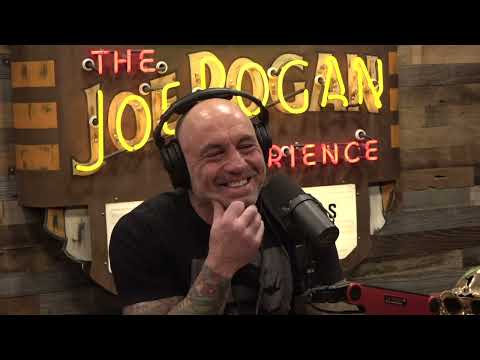
Joe Rogan Experience #1877 - Jann Wenner
Narrator, Joe Rogan (host), Jann Wenner (guest), Narrator, Narrator, Narrator
In this episode of The Joe Rogan Experience, featuring Narrator and Joe Rogan, Joe Rogan Experience #1877 - Jann Wenner explores rolling Stone’s Legacy: Counterculture, Gonzo Journalism, Politics, and Power Joe Rogan and Jann Wenner trace the rise of the baby boom generation, the 1960s counterculture, and how music, psychedelics, and political disillusionment led Wenner to create Rolling Stone in 1967.
Rolling Stone’s Legacy: Counterculture, Gonzo Journalism, Politics, and Power
Joe Rogan and Jann Wenner trace the rise of the baby boom generation, the 1960s counterculture, and how music, psychedelics, and political disillusionment led Wenner to create Rolling Stone in 1967.
They explore Rolling Stone’s role as the primary voice of that new culture, especially through figures like Hunter S. Thompson and Annie Leibovitz, and how the magazine bridged rock music, politics, and serious investigative journalism.
A large portion of the conversation centers on Hunter S. Thompson—his genius, excesses, fame, and decline—and how gonzo journalism reshaped political coverage and youth engagement.
They also debate drugs, the war on drugs, economic inequality, climate change, the internet, and political corruption, contrasting idealistic goals with the structural limits of government and media today.
Key Takeaways
Cultural movements need their own media to survive and grow.
In 1967, mainstream outlets dismissed rock and youth politics; Rolling Stone stepped into that vacuum, becoming the ‘tribal telegraph’ that connected a scattered generation and legitimized its music, ideals, and anger.
Psychedelics profoundly shaped both personal outlooks and cultural change.
Wenner credits LSD with deepening his sense of interconnectedness, wonder, and commitment to rock music, arguing that psychedelics helped many young people rethink authority, war, and social norms.
Gonzo journalism can be “least factual, most accurate.”
Hunter S. ...
Fame and drugs reinforce each other and can destroy talent.
From Hunter S. ...
The war on drugs was structurally racist and strategically dishonest.
They highlight harsher crack vs. ...
Economic inequality and underfunded public goods are policy choices.
Wenner argues for steeply progressive taxation on extreme wealth to fund education, healthcare, and climate transition, insisting that today’s concentration of capital is historically unprecedented and socially unproductive.
Unregulated internet platforms amplify manipulation and disinformation.
They discuss troll farms, orchestrated narratives, and the lack of vetting online; Wenner wants the internet treated like a regulated public utility, while Rogan questions whether a money-driven government can be trusted to do that fairly.
Notable Quotes
“Music was the only medium that young people could speak to each other and share values and ideas.”
— Jann Wenner
“Hunter became just the DNA of Rolling Stone… his spirit, his thinking, his sense of adventure.”
— Jann Wenner
“The problem with the Partnership for a Drug-Free America is you can’t tell the truth about pot. Until you can tell the truth, nobody’s going to trust you about anything else.”
— Jann Wenner
“Fame is a drug. It’s also a drug that most people don’t understand; there’s not a roadmap of how to navigate this correctly.”
— Joe Rogan
“Don’t let perfect be the enemy of the good.”
— Jann Wenner
Questions Answered in This Episode
How would the 1960s counterculture and anti-war movement have evolved without Rolling Stone acting as its primary media conduit?
Joe Rogan and Jann Wenner trace the rise of the baby boom generation, the 1960s counterculture, and how music, psychedelics, and political disillusionment led Wenner to create Rolling Stone in 1967.
Where should journalists today draw the ethical line between gonzo-style subjective truth and outright fabrication?
They explore Rolling Stone’s role as the primary voice of that new culture, especially through figures like Hunter S. ...
Can psychedelics be mainstreamed in a way that promotes empathy and social responsibility without repeating the excesses of the 1960s and 1970s?
A large portion of the conversation centers on Hunter S. ...
What practical mechanisms could realistically prevent progressive taxation and climate spending from being captured by the same interests that profit from war and inequality?
They also debate drugs, the war on drugs, economic inequality, climate change, the internet, and political corruption, contrasting idealistic goals with the structural limits of government and media today.
Is it possible to design an internet governance model that preserves independent investigative voices while meaningfully curbing orchestrated disinformation and malicious campaigns?
EVERY SPOKEN WORD
Install uListen for AI-powered chat & search across the full episode — Get Full Transcript
Get more out of YouTube videos.
High quality summaries for YouTube videos. Accurate transcripts to search & find moments. Powered by ChatGPT & Claude AI.
Add to Chrome