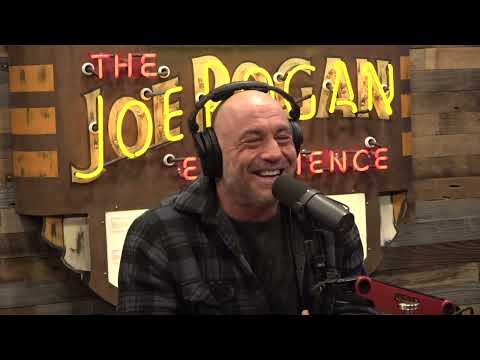
Joe Rogan Experience #2090 - Bobby Lee
Joe Rogan (host), Narrator, Bobby Lee (guest), Narrator
In this episode of The Joe Rogan Experience, featuring Joe Rogan and Narrator, Joe Rogan Experience #2090 - Bobby Lee explores bobby Lee Opens Up On Sobriety, Comedy, Hollywood Trauma, And Politics Joe Rogan and Bobby Lee have a long, free‑flowing conversation that jumps between deeply personal stories, comedy culture, and broader social and political issues.
Bobby Lee Opens Up On Sobriety, Comedy, Hollywood Trauma, And Politics
Joe Rogan and Bobby Lee have a long, free‑flowing conversation that jumps between deeply personal stories, comedy culture, and broader social and political issues.
Bobby shares candid details about addiction, relapse, health scares, and how podcasting transformed his career and relationship with audiences.
They reminisce about the “dark ages” of The Comedy Store, abusive Hollywood experiences, and the evolution of stand‑up into a podcast‑driven meritocracy.
Rogan repeatedly pivots into worries about biolabs, COVID origins, censorship, culture wars, and the fragility of modern society, while encouraging Bobby to focus on writing, creativity, and potentially moving to Austin.
Key Takeaways
Sobriety requires brutal self‑honesty and a support network.
Bobby describes relapsing after 17 years sober, escalating into 24/7 weed and alcohol, coughing up blood, and friends like Andrew Santino and Duncan Trussell literally cleaning him up and removing drugs from his home.
Abusive behavior in Hollywood was normalized, but it’s no longer untouchable.
Bobby recounts a director calling him a racist slur and humiliating him in front of a crew, and Michael Bay physically grabbing his face—illustrating how power imbalances and fear kept actors silent for decades.
Podcasting turned stand‑up from scarcity to abundance.
Rogan and Bobby contrast the ‘90s, when a few TV slots created jealousy, with today’s ecosystem where podcasts let comics build direct audiences, sell tickets, and support each other instead of competing for one network show.
Writing discipline can be structured to “earn” distractions.
Rogan advises Bobby to require himself to write a set amount (e. ...
Comedy clubs work best as true meritocracies.
They criticize arbitrary “bumping” by marginally famous comics and describe the Mothership’s ethos: no one cares about identity labels—only whether you’re funny—while still respecting legends who’ve clearly earned their place.
Rogan sees modern politics as cult‑like and algorithm‑driven.
He argues that social media algorithms and foreign actors amplify extremes, pushing former left‑leaning people away, and likens current ideological enforcement (on COVID, trans issues, Israel/Palestine, Ukraine) to a cult that punishes dissent.
Ignoring online hate is essential for mental health.
Rogan urges Bobby to stop reading comments and articles about himself, noting that one negative remark will outweigh a hundred positives in a comedian’s mind and often comes from unhappy, mentally unwell people.
Notable Quotes
“Some of the bullying that I received was necessary for me to get to where I am now.”
— Bobby Lee
“At the Comedy Mothership we have a very clear mandate: no one gives a fuck who you are—are you funny?”
— Joe Rogan
“I was a survivor. I thought, ‘Oh, this is the culture.’”
— Bobby Lee (on enduring abusive directors and radio appearances)
“Evil is profit over human life. That’s real. It’s not some abstract devil—it’s cobalt mines, it’s pharma, it’s war.”
— Joe Rogan
“From this day forth, I’m gonna wake up, write for an hour, hike, and then play video games.”
— Bobby Lee
Questions Answered in This Episode
How has podcasting changed your relationship with fans compared to your MADtv days, and does that change how you perform on stage?
Joe Rogan and Bobby Lee have a long, free‑flowing conversation that jumps between deeply personal stories, comedy culture, and broader social and political issues.
Looking back, would you confront or publicly name the abusive director now, or do you think leaving it in the past is healthier?
Bobby shares candid details about addiction, relapse, health scares, and how podcasting transformed his career and relationship with audiences.
For comics struggling with addiction and procrastination, what practical routines have actually worked for you since this conversation?
They reminisce about the “dark ages” of The Comedy Store, abusive Hollywood experiences, and the evolution of stand‑up into a podcast‑driven meritocracy.
Joe, where do you personally draw the line between legitimate concern about biolabs/COVID and falling into constant anxiety about global catastrophe?
Rogan repeatedly pivots into worries about biolabs, COVID origins, censorship, culture wars, and the fragility of modern society, while encouraging Bobby to focus on writing, creativity, and potentially moving to Austin.
Do you worry that describing modern politics as a ‘cult’ might itself push some people further into defensive, tribal thinking rather than open dialogue?
EVERY SPOKEN WORD
Install uListen for AI-powered chat & search across the full episode — Get Full Transcript
Get more out of YouTube videos.
High quality summaries for YouTube videos. Accurate transcripts to search & find moments. Powered by ChatGPT & Claude AI.
Add to Chrome