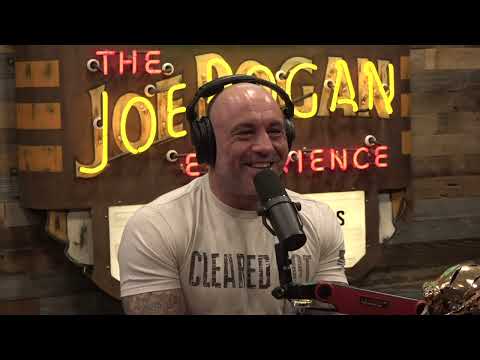
Joe Rogan Experience #1938 - Mariana van Zeller
Narrator, Mariana van Zeller (guest), Joe Rogan (host), Narrator, Narrator, Narrator, Narrator, Narrator, Narrator, Narrator, Narrator
In this episode of The Joe Rogan Experience, featuring Narrator and Mariana van Zeller, Joe Rogan Experience #1938 - Mariana van Zeller explores inside Global Black Markets: Guns, Drugs, Organs, Oil, and Apes Joe Rogan interviews investigative journalist Mariana van Zeller about her National Geographic series “Trafficked,” covering a wide range of global black markets and illicit trades.
Inside Global Black Markets: Guns, Drugs, Organs, Oil, and Apes
Joe Rogan interviews investigative journalist Mariana van Zeller about her National Geographic series “Trafficked,” covering a wide range of global black markets and illicit trades.
She describes firsthand reporting on U.S. guns flowing to Mexican cartels, ghost guns, LSD and MDMA networks, opioid and fentanyl fraud, organ trafficking, illegal wildlife and ape trafficking, oil theft funding terrorism, fight clubs, gambling, and surrogate motherhood in war-torn Ukraine.
Throughout, van Zeller emphasizes how inequality, lack of opportunity, and human desire for community and profit fuel these underground economies, while also highlighting the surprising humanity and relatability of many people involved.
The conversation repeatedly returns to the moral gray areas where desperate demand (for drugs, organs, safety, income, or children) collides with predatory systems and criminal structures that exploit that demand.
Key Takeaways
Black markets thrive where inequality and desperation are highest.
Van Zeller repeatedly finds that most low-level actors in illegal trades—whether in drugs, guns, or wildlife—are driven by poverty and lack of opportunities rather than inherent criminality, making economic and social inequality a root driver.
U.S. policy failures can create or supercharge criminal markets.
Loose U. ...
Technology has reshaped crime, from ghost guns to crypto scams.
3D printing enables untraceable ghost guns and cheap automatic conversion parts; DeFi tokens and rug-pulls let young scammers make millions; and dark-web marketplaces sell stolen credit data that fuels everyday fraud.
Illicit trades are interconnected across borders and sectors.
Oil stolen in Nigeria can finance Boko Haram, Iranian oil shipped into Lebanon supports Hezbollah, Congo’s cobalt underpins global electronics, and ape trafficking links Congolese hunters to luxury private zoos in the Gulf.
Human demand often sustains the very exploitation we condemn.
Western demand for cheap drugs, exotic pets, black-market organs, and even Instagrammable selfies with wild animals directly funds violent supply chains, showing consumers are not separate from the harms they decry.
Legalization and regulation can reduce harm but must be well-designed.
Portugal’s decriminalization model cut addiction and HIV rates, while poorly structured cannabis legalization in California left a larger illegal market; similarly, legalized surrogacy in Ukraine offered structure, but its collapse pushed people to riskier markets in Kenya.
Understanding perpetrators as human is key to effective solutions.
Even in extreme contexts—from cartels to white supremacists—van Zeller finds lost, manipulated, or opportunity-starved people seeking community or meaning, suggesting that moral outrage without empathy won’t dismantle these networks.
Notable Quotes
““No matter how far I travel to the edges of our society, I can still find people who are relatable and redeemable.””
— Mariana van Zeller
““The war on drugs hasn’t worked. The billions of dollars spent have had the reverse effect.””
— Mariana van Zeller
““Black markets exist because there is demand. If people want something badly enough, they will find a way to get it.””
— Mariana van Zeller
““Everything’s open for abuse. Gambling, food, sex—anything. People have a hard time keeping it together.””
— Joe Rogan
““Understanding is not condoning. But without understanding their motivations, we will never prevent these black markets from existing.””
— Mariana van Zeller
Questions Answered in This Episode
If a loved one needed a life-saving organ and couldn’t get one legally, would you consider the black market—and what ethical lines, if any, would you refuse to cross?
Joe Rogan interviews investigative journalist Mariana van Zeller about her National Geographic series “Trafficked,” covering a wide range of global black markets and illicit trades.
To what extent are everyday consumer choices—phones, cheap drugs, exotic content—making us complicit in the violence and exploitation embedded in global supply chains?
She describes firsthand reporting on U. ...
What practical elements of Portugal’s drug policy or Ukraine’s (pre-war) surrogacy framework could realistically be adopted in the U.S. without creating new forms of abuse?
Throughout, van Zeller emphasizes how inequality, lack of opportunity, and human desire for community and profit fuel these underground economies, while also highlighting the surprising humanity and relatability of many people involved.
How should societies balance personal freedom (e.g., gambling, psychedelics, bare-knuckle fighting) with the need to protect vulnerable people from addiction, coercion, or irreversible harm?
The conversation repeatedly returns to the moral gray areas where desperate demand (for drugs, organs, safety, income, or children) collides with predatory systems and criminal structures that exploit that demand.
Given that many low-level criminals are driven by lack of opportunity, what kinds of targeted economic or social programs might actually reduce recruitment into cartels, militias, or trafficking rings?
EVERY SPOKEN WORD
Install uListen for AI-powered chat & search across the full episode — Get Full Transcript
Get more out of YouTube videos.
High quality summaries for YouTube videos. Accurate transcripts to search & find moments. Powered by ChatGPT & Claude AI.
Add to Chrome