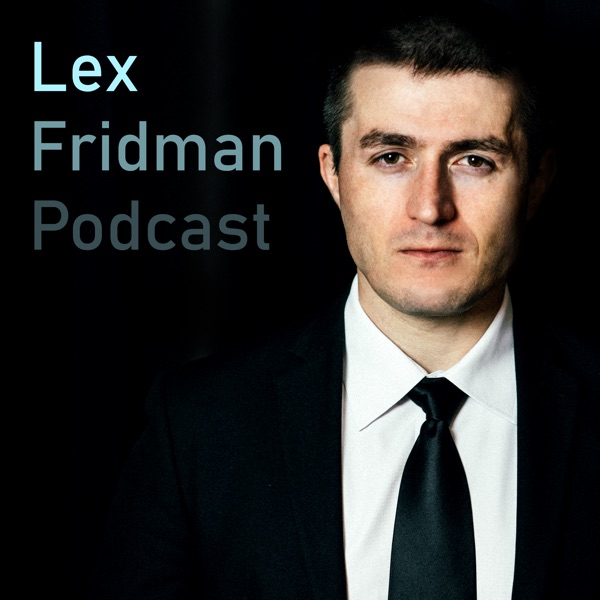
 Lex Fridman Podcast
Mark Zuckerberg: Meta, Facebook, Instagram, and the Metaverse | Lex Fridman Podcast #267
Lex Fridman and Mark Zuckerberg on mark Zuckerberg defends Meta, free speech, and builds the metaverse.
In this episode of Lex Fridman Podcast, featuring Lex Fridman and Mark Zuckerberg, Mark Zuckerberg: Meta, Facebook, Instagram, and the Metaverse | Lex Fridman Podcast #267 explores mark Zuckerberg defends Meta, free speech, and builds the metaverse Lex Fridman interviews Mark Zuckerberg about Meta’s vision for the metaverse, the psychology of presence in virtual worlds, and how avatars, identity, and translation can deepen human connection. They discuss the responsibility of running global social networks, including bullying, teen mental health, polarization, misinformation, and COVID-era content moderation. Zuckerberg pushes back on accusations of systematic harm, arguing most research shows modest or positive effects and that Meta leans toward free expression while still policing clear harms. The conversation closes with personal reflections on leadership, public dislike, philanthropy, parenting, mortality, and what gives life meaning.
At a glance
WHAT IT’S REALLY ABOUT
Mark Zuckerberg defends Meta, free speech, and builds the metaverse
- Lex Fridman interviews Mark Zuckerberg about Meta’s vision for the metaverse, the psychology of presence in virtual worlds, and how avatars, identity, and translation can deepen human connection. They discuss the responsibility of running global social networks, including bullying, teen mental health, polarization, misinformation, and COVID-era content moderation. Zuckerberg pushes back on accusations of systematic harm, arguing most research shows modest or positive effects and that Meta leans toward free expression while still policing clear harms. The conversation closes with personal reflections on leadership, public dislike, philanthropy, parenting, mortality, and what gives life meaning.
IDEAS WORTH REMEMBERING
7 ideasPresence and subtle social cues are central to Meta’s metaverse strategy.
Zuckerberg argues the real differentiator of VR/AR over past platforms is a convincing sense of “being there,” which hinges on spatial audio, hand/face/eye tracking, and micro-expressions more than perfect graphics.
Identity in the metaverse will be plural, not singular or fixed.
He expects people to maintain multiple avatars along spectrums of realism and fantasy, switching contextually between photoreal “work selves” and playful or anonymous characters, while still needing strong biometric protections against impersonation.
Meta is betting on a massive virtual goods and creator economy.
Digital fashion, styles, and assets that travel across avatars and experiences—potentially powered by AI style-transfer—are seen as a major future market, with interoperability (beyond one platform) increasing their value.
Zuckerberg claims data shows social media is not the main driver of polarization.
He cites cross-country and post‑2016 studies (e.g., Gentzkow) suggesting polarization trends differ across nations despite similar social media penetration, and that heavy internet users can be *less* polarized on some measures than non-users.
Meta’s moderation has shifted from technical limits to philosophical trade-offs.
Once AI could proactively remove large volumes of harmful content, the hard questions became where to draw policy lines—especially around misinformation and hate speech—and how to balance false negatives versus false positives.
COVID forced Meta into an uncomfortable role as arbiter of acute harm.
Zuckerberg says his free-speech stance hasn’t changed, but a deadly pandemic qualified as an “emergency” where the platform restricted more speech, relying on evolving public health guidance that itself was often contested.
Bullying and self-harm weigh heavily and drive concrete AI and product work.
Meta uses AI to detect self‑harm signals in many languages, links to local first responders (reportedly saving thousands), and gives users tools like comment limits and silent muting—while acknowledging bullying is highly contextual and hard to automate.
WORDS WORTH SAVING
5 quotesYou don't build a company like this unless you believe that people expressing themselves is a good thing.
— Mark Zuckerberg
What if playing with your friends is the point?
— Mark Zuckerberg
I care a lot about how people feel when they use our products, and I don't want to build products that make people angry.
— Mark Zuckerberg
I believe that criticism is essential, but cynicism is not.
— Lex Fridman
The real world is a combination of the virtual world and the physical world, but over time the physical world is becoming less of a percent of the real world.
— Mark Zuckerberg
QUESTIONS ANSWERED IN THIS EPISODE
5 questionsHow should platforms decide what counts as real, acute harm that justifies limiting speech, especially when expert institutions disagree or change guidance?
Lex Fridman interviews Mark Zuckerberg about Meta’s vision for the metaverse, the psychology of presence in virtual worlds, and how avatars, identity, and translation can deepen human connection. They discuss the responsibility of running global social networks, including bullying, teen mental health, polarization, misinformation, and COVID-era content moderation. Zuckerberg pushes back on accusations of systematic harm, arguing most research shows modest or positive effects and that Meta leans toward free expression while still policing clear harms. The conversation closes with personal reflections on leadership, public dislike, philanthropy, parenting, mortality, and what gives life meaning.
In a world of photorealistic avatars and biometric locks, who should control identity infrastructure, and how do we prevent large-scale impersonation or abuse?
If research suggests social media isn’t the main driver of polarization, what *is*—and what specific responsibilities still fall on companies like Meta?
How can we reliably study the impact of Instagram and other apps on teen mental health when internal research, media incentives, and public narratives diverge so sharply?
What governance and economic models could ensure the metaverse’s virtual goods economy benefits independent creators rather than concentrating power in a few large platforms?
EVERY SPOKEN WORD
Install uListen for AI-powered chat & search across the full episode — Get Full Transcript
Get more out of YouTube videos.
High quality summaries for YouTube videos. Accurate transcripts to search & find moments. Powered by ChatGPT & Claude AI.
Add to Chrome