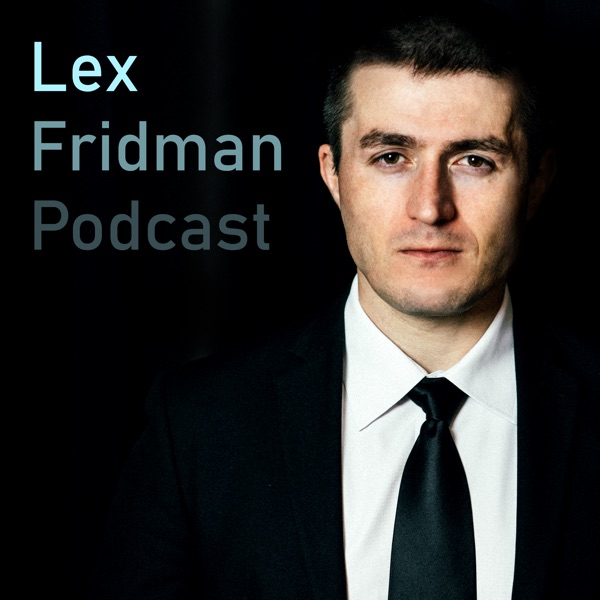
 Lex Fridman Podcast
Dave Plummer: Programming, Autism, and Old-School Microsoft Stories | Lex Fridman Podcast #479
Lex Fridman and Dave Plummer on dave Plummer on Microsoft, Task Manager, Autism, and Coding’s Future.
In this episode of Lex Fridman Podcast, featuring Lex Fridman and Dave Plummer, Dave Plummer: Programming, Autism, and Old-School Microsoft Stories | Lex Fridman Podcast #479 explores dave Plummer on Microsoft, Task Manager, Autism, and Coding’s Future Lex Fridman interviews Dave Plummer, a legendary ex-Microsoft engineer behind Windows Task Manager, Windows zip-support, and the Space Cadet Pinball port, tracing his journey from tinkering with 8‑bit machines to shaping core parts of Windows. Dave recounts his unconventional path: dropping out of high school, working night shifts at 7‑Eleven, returning to school, and eventually landing at Microsoft through clever networking using his Amiga shareware. He offers rich insider stories on MS‑DOS, Windows 95 and NT, debugging at the assembly level, and building small, robust utilities that billions still use. Throughout, he reflects on living with autism and ADHD, masking and meltdowns, relationships, and how neurodivergent focus, when matched to the right problems, can produce exceptional software.
At a glance
WHAT IT’S REALLY ABOUT
Dave Plummer on Microsoft, Task Manager, Autism, and Coding’s Future
- Lex Fridman interviews Dave Plummer, a legendary ex-Microsoft engineer behind Windows Task Manager, Windows zip-support, and the Space Cadet Pinball port, tracing his journey from tinkering with 8‑bit machines to shaping core parts of Windows. Dave recounts his unconventional path: dropping out of high school, working night shifts at 7‑Eleven, returning to school, and eventually landing at Microsoft through clever networking using his Amiga shareware. He offers rich insider stories on MS‑DOS, Windows 95 and NT, debugging at the assembly level, and building small, robust utilities that billions still use. Throughout, he reflects on living with autism and ADHD, masking and meltdowns, relationships, and how neurodivergent focus, when matched to the right problems, can produce exceptional software.
IDEAS WORTH REMEMBERING
7 ideasSmall, focused tools can have massive, long-term impact.
Plummer wrote Task Manager and built-in zip support as side projects with an emphasis on robustness and small binaries; decades later, largely the same code still underpins tools used by billions, proving that well-crafted utilities can outlast flashier software.
Debugging skill often matters more than ‘greenfield’ creativity in real-world engineering.
At Microsoft, Plummer spent about 80% of his time porting and fixing others’ code, frequently at the raw assembly level across four architectures; becoming world-class at diagnosis, not just invention, made him indispensable.
Autistic traits can be a superpower when aligned with the right work.
His monotropism (deep single-focus) and compulsion for precision fueled the patience to reverse-engineer systems, optimize for bytes and cycles, and build tightly engineered tools—while also requiring explicit strategies to handle social nuance and communication.
Early life setbacks don’t preclude elite technical careers.
Plummer drifted out of high school, worked physically and emotionally difficult jobs, then proactively returned to school at 21 and leveraged his Amiga shareware and cold emails to get a Microsoft internship, illustrating that deliberate course-correction can overcome a poor start.
Clear constraints and tooling are crucial for large-scale software success.
Windows NT’s high standards under Dave Cutler, rigorous code review culture, and strong architectural boundaries contrasted with the more ad-hoc 95-era userland code; Plummer notes they lacked modern tools like Git, making disciplined engineering and leadership even more decisive.
UX decisions can trade off power-user flexibility for maintainability and security.
He explains why features like moving the taskbar or maintaining complex Start-menu layouts are expensive in code and bug surface, even if power users see them as “obvious”; organizations weigh those costs against serving a much larger mainstream audience.
AI will augment, not erase, strong programmers—for now.
Using LLMs heavily for Python in his Tempest RL project, Plummer sees AI as a force multiplier that writes idiomatic code and teaches APIs, but still requires a solid mental model, design sense, and human oversight; future developers may act more like system architects than line-by-line coders.
WORDS WORTH SAVING
5 quotesI wasn’t worried about the features. I wanted [Task Manager] to be really robust and small.
— Dave Plummer
About 20% of my professional life has been creating and 80% has been debugging and fixing.
— Dave Plummer
You don’t want your operating system to be an adversary.
— Dave Plummer
My brain does one thing, it does it very intensely… I’m a serial single‑tasker.
— Dave Plummer
For me, the meaning of life is making cool stuff.
— Dave Plummer
QUESTIONS ANSWERED IN THIS EPISODE
5 questionsHow should modern OS and product teams balance power-user customization against code complexity, security, and schedule pressure?
Lex Fridman interviews Dave Plummer, a legendary ex-Microsoft engineer behind Windows Task Manager, Windows zip-support, and the Space Cadet Pinball port, tracing his journey from tinkering with 8‑bit machines to shaping core parts of Windows. Dave recounts his unconventional path: dropping out of high school, working night shifts at 7‑Eleven, returning to school, and eventually landing at Microsoft through clever networking using his Amiga shareware. He offers rich insider stories on MS‑DOS, Windows 95 and NT, debugging at the assembly level, and building small, robust utilities that billions still use. Throughout, he reflects on living with autism and ADHD, masking and meltdowns, relationships, and how neurodivergent focus, when matched to the right problems, can produce exceptional software.
What practical steps can neurotypical managers take to work more effectively with autistic engineers without forcing them to mask constantly?
Given AI’s rapid progress, which parts of systems programming will still demand deep human expertise in 10–20 years?
If you were redesigning Windows Task Manager today from scratch, what would you change, add, or remove?
How can young developers replicate the deep, bottom-up understanding of systems that previous generations gained from 8‑bit and 16‑bit hardware?
EVERY SPOKEN WORD
Install uListen for AI-powered chat & search across the full episode — Get Full Transcript
Get more out of YouTube videos.
High quality summaries for YouTube videos. Accurate transcripts to search & find moments. Powered by ChatGPT & Claude AI.
Add to Chrome