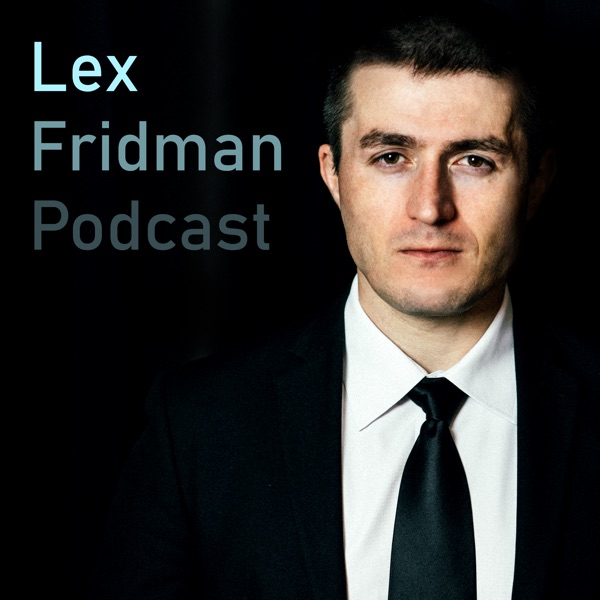
 Lex Fridman Podcast
Dmitri Dolgov: Waymo and the Future of Self-Driving Cars | Lex Fridman Podcast #147
Lex Fridman and Dmitri Dolgov on waymo CTO reveals hard-won lessons building fully driverless cars.
In this episode of Lex Fridman Podcast, featuring Lex Fridman and Dmitri Dolgov, Dmitri Dolgov: Waymo and the Future of Self-Driving Cars | Lex Fridman Podcast #147 explores waymo CTO reveals hard-won lessons building fully driverless cars Dmitri Dolgov, CTO of Waymo, walks through the technical, historical, and product journey from the DARPA Urban Challenge to Waymo’s fully driverless ride-hailing service in Phoenix. He explains why Waymo pivoted from driver-assist to building a full replacement “driver,” and how custom hardware (LIDAR, radar, cameras) and large-scale machine learning underpin the system. Dolgov details the challenges of safety, perception, prediction, and mapping, plus the operational realities of running a commercial driverless service and trucking program. The conversation also touches on regulation, ethics (including the trolley problem), user experience design, and how advances like transformers in AI are reshaping autonomous driving.
At a glance
WHAT IT’S REALLY ABOUT
Waymo CTO reveals hard-won lessons building fully driverless cars
- Dmitri Dolgov, CTO of Waymo, walks through the technical, historical, and product journey from the DARPA Urban Challenge to Waymo’s fully driverless ride-hailing service in Phoenix. He explains why Waymo pivoted from driver-assist to building a full replacement “driver,” and how custom hardware (LIDAR, radar, cameras) and large-scale machine learning underpin the system. Dolgov details the challenges of safety, perception, prediction, and mapping, plus the operational realities of running a commercial driverless service and trucking program. The conversation also touches on regulation, ethics (including the trolley problem), user experience design, and how advances like transformers in AI are reshaping autonomous driving.
IDEAS WORTH REMEMBERING
7 ideasProving full autonomy once is far easier than productizing it.
Dolgov contrasts early Google milestones—like 10 challenging 100‑mile routes with zero interventions—with the much harder task of engineering a reliable, repeatable, safety‑validated product that can run continuously for paying customers.
Waymo’s core bet is a full replacement driver, not driver assist.
Around 2013, the team deliberately pivoted away from freeway driver‑assist systems to focus on vehicles that can operate with no human in the loop, which fundamentally changes system design, safety requirements, and business model.
Sensor diversity (LIDAR, radar, cameras) is treated as a safety and capability multiplier.
Dolgov rejects the idea that LIDAR is a “crutch,” arguing that active sensors plus cameras offer complementary physics and richer raw data, improving robustness in low light, complex scenes, and rare edge cases.
Machine learning now permeates the entire stack, not just object detection.
While ConvNets handle classic perception tasks, Waymo increasingly uses data‑hungry models and ideas from language transformers for semantic scene understanding, behavior prediction, planning, mapping, and simulation.
Phoenix is a full-stack template for scaling, not just a demo city.
Waymo uses Phoenix to learn end‑to‑end: hardware/software performance, evaluation and release processes, rider UX, mapping, operations, and regulatory engagement, with the goal of making this pipeline copy‑and‑pasteable to new cities.
Fleet connectivity improves performance, but each car must stand alone.
Vehicles can share information about crashes, construction, and changing road conditions, but all safety‑critical decisions are made onboard without relying on connectivity or teleoperation, which Waymo explicitly avoids.
Real-world rider feedback deeply shapes product and behavior design.
From pickup/drop‑off locations and grocery workflows to biking with a disassembled bike, user studies and in‑ride feedback inform mapping details, UI, and driving style—aiming for an experience that is safe, efficient, predictable, and comfortable.
WORDS WORTH SAVING
5 quotesThere’s something magical about there being nobody in the driver’s seat.
— Lex Fridman
The most important lesson was that we believed it’s doable.
— Dmitri Dolgov
Why would you handicap yourself and not use one or more of those sensing modalities when they undoubtedly make your system more capable and safer?
— Dmitri Dolgov
Truly good driving gives you both efficiency and assertiveness, but also comfort, predictability, and safety.
— Dmitri Dolgov
There’s no substitute for actually doing the real thing—having a fully driverless product out there with users paying you money to get from point A to point B.
— Dmitri Dolgov
QUESTIONS ANSWERED IN THIS EPISODE
5 questionsHow will advances in large language models and transformers concretely change prediction and planning for autonomous vehicles over the next decade?
Dmitri Dolgov, CTO of Waymo, walks through the technical, historical, and product journey from the DARPA Urban Challenge to Waymo’s fully driverless ride-hailing service in Phoenix. He explains why Waymo pivoted from driver-assist to building a full replacement “driver,” and how custom hardware (LIDAR, radar, cameras) and large-scale machine learning underpin the system. Dolgov details the challenges of safety, perception, prediction, and mapping, plus the operational realities of running a commercial driverless service and trucking program. The conversation also touches on regulation, ethics (including the trolley problem), user experience design, and how advances like transformers in AI are reshaping autonomous driving.
What are the hardest remaining edge cases that prevent Waymo from rapidly deploying in dense, chaotic cities worldwide?
How should regulators evaluate and certify driverless systems when their behavior emerges from complex machine learning rather than simple, auditable rules?
In a future where fleets of driverless cars coordinate, how might traffic patterns, city design, and personal car ownership change?
What ethics framework should guide autonomous vehicles in ambiguous situations where human drivers today behave inconsistently or illegally?
EVERY SPOKEN WORD
Install uListen for AI-powered chat & search across the full episode — Get Full Transcript
Get more out of YouTube videos.
High quality summaries for YouTube videos. Accurate transcripts to search & find moments. Powered by ChatGPT & Claude AI.
Add to Chrome