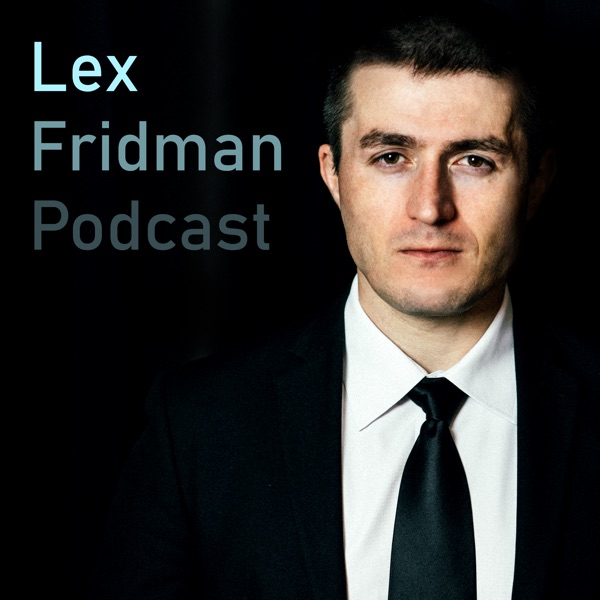
 Lex Fridman Podcast
Rick Spence: CIA, KGB, Illuminati, Secret Societies, Cults & Conspiracies | Lex Fridman Podcast #451
Lex Fridman and Rick Spence on secret Power: Spies, Cults, Killers, and Occult Politics Explained.
In this episode of Lex Fridman Podcast, featuring Rick Spence and Lex Fridman, Rick Spence: CIA, KGB, Illuminati, Secret Societies, Cults & Conspiracies | Lex Fridman Podcast #451 explores secret Power: Spies, Cults, Killers, and Occult Politics Explained Historian Rick Spence and Lex Fridman trace the hidden history of power, from Russian intelligence and Western agencies to secret societies, cults, and modern conspiracies.
At a glance
WHAT IT’S REALLY ABOUT
Secret Power: Spies, Cults, Killers, and Occult Politics Explained
- Historian Rick Spence and Lex Fridman trace the hidden history of power, from Russian intelligence and Western agencies to secret societies, cults, and modern conspiracies.
- They examine how organizations like the Okhrana, KGB, CIA, and FBI operate, especially through infiltration, blackmail, and psychological manipulation, and how these methods echo in scandals like Epstein and programs like MKUltra.
- Spence connects esoteric groups (Thule Society, Illuminati, Freemasons, Bohemian Grove) to political movements and ideologies, showing how occult and conspiratorial thinking helped shape Nazism and modern antisemitism.
- The conversation closes by probing human nature—our appetite for belonging, ritual, and simple stories—and how those drives make us vulnerable to cults, demagogues, and viral conspiracy narratives.
IDEAS WORTH REMEMBERING
7 ideasIntelligence agencies thrive on infiltration and controlled chaos, not just information gathering.
From the Okhrana’s deep penetration of revolutionary groups to Soviet moles in Western services, Spence shows that placing agent-provocateurs and turncoats inside target organizations often matters more than pure surveillance.
Most spies—and many traitors—are recruited through a mix of money, belief, pressure, and ego (MICE).
Cases like Kim Philby (ego and ideology) and Aldrich Ames (money and resentment) illustrate how overlapping motives are engineered and monitored, often with multiple agents in the same cell to keep each other honest.
Borderline-criminal experimentation (e.g., MKUltra) is less a Cold War aberration than a structural temptation.
Once agencies believe mind control or personality-splitting might be possible, they will fund attempts—then push such work into deniable private or academic channels when scrutiny rises and records must be destroyed.
Blackmail via sex and kompromat is a timeless tool of power, not a fringe conspiracy trope.
From 1930s occultist Erik Jan Hanussen to Epstein’s filmed encounters and Hoover’s political dossiers, compromising elites for leverage is historically documented—and intelligence services are predisposed to exploit such situations.
Secret societies are usually visible but opaque: the secrecy is in actions and aims, not existence.
Groups like the Bohemian Club, Bilderberg, or historical Illuminati are self-selecting, oath-bound networks that cultivate ritual, exclusivity, and ego; they may not literally ‘rule the world’ but do shape who gets heard, vetted, and funded.
Occult and ‘magical’ thinking routinely bleed into politics and mass movements, often invisibly.
Spence argues that rituals—from pep rallies to cremation-of-care ceremonies—focus collective will, and that movements like the Thule Society infused early Nazism with mystical nationalism, racial destiny, and esoteric myth-making.
Antisemitic mega-narratives like the Protocols endure because they offer simple villains for complex anxieties.
Forged in a milieu of French political scandals, anti-Masonic panic, and Russian right-wing agitation, the Protocols prospered after WWI by providing a ‘turd on a plate’ story many wanted to believe: that a hidden cabal explains all upheaval.
WORDS WORTH SAVING
5 quotesMost people, most of the time, are polite, cooperative, and kind, until they're not.
— Rick Spence
The basic job of an intelligence agency is to safeguard your secrets and steal the other guy's, and then hide those away.
— Rick Spence
Don't become overly bothered trying to figure out whether you actually can bend reality. Become bothered by the fact that there are people who believe that they can and will go to great efforts to do so.
— Rick Spence
One of the most important distinctions in life is between what you know and what you believe.
— Rick Spence
A turd on a plate is a turd on a plate… and that’s what the Protocols are. They’re just there.
— Rick Spence
QUESTIONS ANSWERED IN THIS EPISODE
5 questionsTo what extent do you think modern intelligence agencies still cultivate MKUltra-style research indirectly through private or academic fronts, and how could the public ever verify that?
Historian Rick Spence and Lex Fridman trace the hidden history of power, from Russian intelligence and Western agencies to secret societies, cults, and modern conspiracies.
Are elite networks like Bohemian Grove and Bilderberg better understood as informal ‘candidate-vetting’ mechanisms rather than literal shadow governments, and what risks does that informal power pose to democratic choice?
They examine how organizations like the Okhrana, KGB, CIA, and FBI operate, especially through infiltration, blackmail, and psychological manipulation, and how these methods echo in scandals like Epstein and programs like MKUltra.
How can societies distinguish between legitimate concern about covert power structures and destructive conspiracy thinking that scapegoats entire groups (e.g., Jews, Freemasons) with fabricated narratives?
Spence connects esoteric groups (Thule Society, Illuminati, Freemasons, Bohemian Grove) to political movements and ideologies, showing how occult and conspiratorial thinking helped shape Nazism and modern antisemitism.
Given how central ego and belonging are to recruitment in both espionage and cults, what concrete cultural or educational strategies might reduce people’s vulnerability to manipulation by charismatic leaders?
The conversation closes by probing human nature—our appetite for belonging, ritual, and simple stories—and how those drives make us vulnerable to cults, demagogues, and viral conspiracy narratives.
Do patterns across cases like Manson, Zodiac, Son of Sam, and the Monster of Florence suggest an organized occult underworld—or are we seeing lone psychopaths retrofitting their crimes to shared myths and media narratives?
EVERY SPOKEN WORD
Install uListen for AI-powered chat & search across the full episode — Get Full Transcript
Get more out of YouTube videos.
High quality summaries for YouTube videos. Accurate transcripts to search & find moments. Powered by ChatGPT & Claude AI.
Add to Chrome