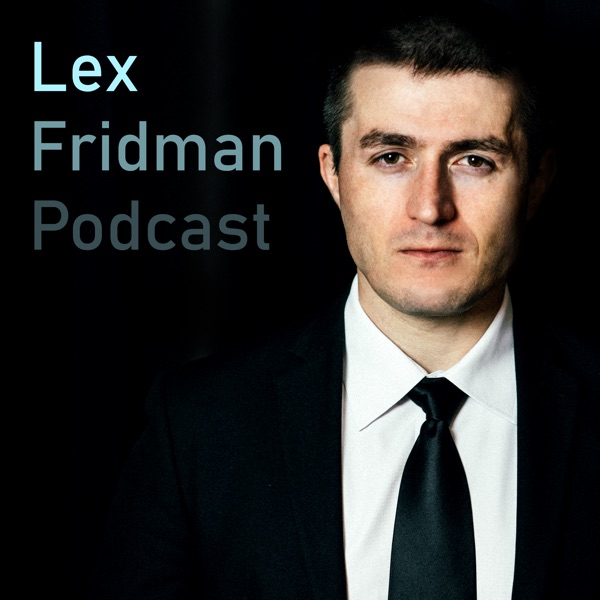
 Lex Fridman Podcast
Jimmy Wales: Wikipedia | Lex Fridman Podcast #385
Lex Fridman and Jimmy Wales on jimmy Wales Defends Wikipedia’s Neutrality, Future, And Human-Centric Mission.
In this episode of Lex Fridman Podcast, featuring Jimmy Wales and Lex Fridman, Jimmy Wales: Wikipedia | Lex Fridman Podcast #385 explores jimmy Wales Defends Wikipedia’s Neutrality, Future, And Human-Centric Mission Lex Fridman and Wikipedia co‑founder Jimmy Wales trace the evolution from Nupedia’s failed, over-academic model to Wikipedia’s open, collaborative success, highlighting how community norms and free licensing shaped the site. They dig into neutrality, notability, biographies of living people, and how Wikipedia resists both government pressure and media bias while still relying on external sources. The conversation explores the impact of social media algorithms on polarization, the promise and risks of large language models for both Wikipedia and society, and the importance of community health in any knowledge project. Wales also explains Wikipedia’s donation-driven business model, global language expansion, and why he sees the site as a long-term, trust-centric institution rather than an ad-funded tech platform.
At a glance
WHAT IT’S REALLY ABOUT
Jimmy Wales Defends Wikipedia’s Neutrality, Future, And Human-Centric Mission
- Lex Fridman and Wikipedia co‑founder Jimmy Wales trace the evolution from Nupedia’s failed, over-academic model to Wikipedia’s open, collaborative success, highlighting how community norms and free licensing shaped the site. They dig into neutrality, notability, biographies of living people, and how Wikipedia resists both government pressure and media bias while still relying on external sources. The conversation explores the impact of social media algorithms on polarization, the promise and risks of large language models for both Wikipedia and society, and the importance of community health in any knowledge project. Wales also explains Wikipedia’s donation-driven business model, global language expansion, and why he sees the site as a long-term, trust-centric institution rather than an ad-funded tech platform.
IDEAS WORTH REMEMBERING
7 ideasLoose, open collaboration beat rigid academic gatekeeping for building Wikipedia.
Nupedia’s seven-stage expert review process produced very little content and even allowed low-quality, plagiarized work through; opening editing to the public via a simple wiki immediately accelerated growth and engagement.
Neutrality is treated as a process, not an outcome, guided by clear norms.
Editors aim to summarize all significant, well-sourced viewpoints without false balance, using tools like talk pages, dispute tags, and attention to “undue weight” rather than declaring a single authoritative truth.
Notability is really about verifiability and harm, especially for living people.
Wikipedia avoids standalone pages on private individuals or people known only for one traumatic event (e.g., crime victims) and scrutinizes controversial sections to prevent disproportionate focus on scandals.
Wikipedia refuses government content control and accepts being blocked if necessary.
Wales states they have never altered content under government pressure and won’t start; the Foundation will talk to agencies (CDC, WHO, etc.) to understand issues but does not let them dictate articles.
Source quality and media incentives are a constant challenge for accuracy.
Because journalism can be clickbait-driven or partisan, Wikipedia communities deprecate unreliable outlets (e.g., Mail Online), scrutinize hit pieces, and sometimes mark sections as disputed or poorly sourced.
AI can strengthen Wikipedia if used as a tool, not an oracle.
Wales sees promise in using LLMs to flag biased language, check article-source alignment, suggest warnings, or assist translation, but insists humans must verify content because models still hallucinate plausible falsehoods.
A donation-funded, ad-free model underpins trust and avoids clickbait dynamics.
By rejecting ads and big-platform funding, Wikipedia sidesteps pressures to maximize engagement or please advertisers, allowing it to prioritize reader value, neutrality, and long-term resilience (including an independent endowment).
WORDS WORTH SAVING
5 quotesWe’ve never bowed down to government pressure anywhere in the world, and we never will.
— Jimmy Wales
An encyclopedia, or what our goal is, is the sum of all human knowledge, but sum meaning summary.
— Jimmy Wales
The problem with notability is it can feel insulting… it’s more like verifiability.
— Jimmy Wales
One of the things we should always be vigilant about is community health.
— Jimmy Wales
If your standard of success is ‘I’m not as rich as Elon Musk,’ that’s heavy. That’s probably not good.
— Jimmy Wales
QUESTIONS ANSWERED IN THIS EPISODE
5 questionsHow should Wikipedia evolve its neutrality policy as AI-generated text and images flood the information ecosystem?
Lex Fridman and Wikipedia co‑founder Jimmy Wales trace the evolution from Nupedia’s failed, over-academic model to Wikipedia’s open, collaborative success, highlighting how community norms and free licensing shaped the site. They dig into neutrality, notability, biographies of living people, and how Wikipedia resists both government pressure and media bias while still relying on external sources. The conversation explores the impact of social media algorithms on polarization, the promise and risks of large language models for both Wikipedia and society, and the importance of community health in any knowledge project. Wales also explains Wikipedia’s donation-driven business model, global language expansion, and why he sees the site as a long-term, trust-centric institution rather than an ad-funded tech platform.
Where exactly should the line be drawn between representing fringe views and amplifying pseudoscience?
What technical and social tools could best protect biographies of living people from coordinated smear campaigns?
How can large language models be safely integrated into Wikipedia workflows without undermining human editorial judgment?
If ad-driven platforms structurally incentivize outrage and clickbait, what realistic business models can support healthier large-scale social networks?
EVERY SPOKEN WORD
Install uListen for AI-powered chat & search across the full episode — Get Full Transcript
Get more out of YouTube videos.
High quality summaries for YouTube videos. Accurate transcripts to search & find moments. Powered by ChatGPT & Claude AI.
Add to Chrome