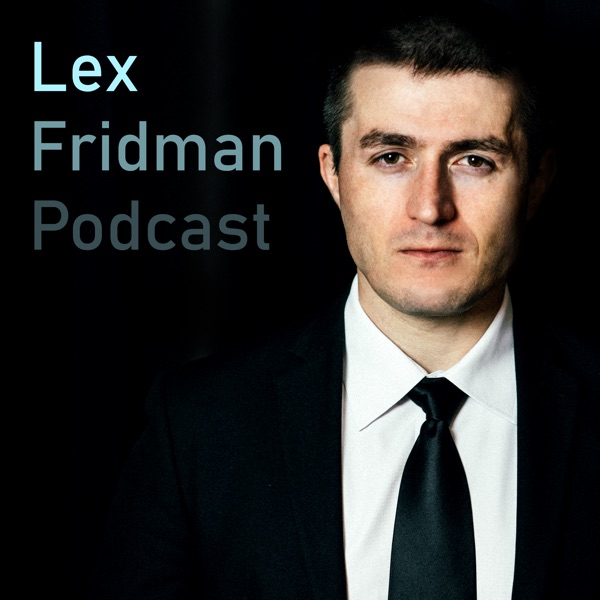
 Lex Fridman Podcast
Eric Schmidt: Google | Lex Fridman Podcast #8
Lex Fridman and Eric Schmidt on eric Schmidt on Scale, AI, and Building World-Changing Tech Platforms.
In this episode of Lex Fridman Podcast, featuring Lex Fridman and Eric Schmidt, Eric Schmidt: Google | Lex Fridman Podcast #8 explores eric Schmidt on Scale, AI, and Building World-Changing Tech Platforms Eric Schmidt reflects on his early fascination with technology, the joy of building software, and lessons from leading Google through massive scale. He emphasizes thinking in terms of platforms that can reach billions, balancing pragmatic execution with bold bets on the “impossible,” and structuring companies to support both. Schmidt argues that near-term AI should focus on transformative benefits in healthcare and education while treating long-term existential concerns with measured skepticism. He also discusses diverse leadership styles in tech, the unpredictable nature of innovation, and why meaning, impact, and service—not wealth—ultimately drive happiness.
At a glance
WHAT IT’S REALLY ABOUT
Eric Schmidt on Scale, AI, and Building World-Changing Tech Platforms
- Eric Schmidt reflects on his early fascination with technology, the joy of building software, and lessons from leading Google through massive scale. He emphasizes thinking in terms of platforms that can reach billions, balancing pragmatic execution with bold bets on the “impossible,” and structuring companies to support both. Schmidt argues that near-term AI should focus on transformative benefits in healthcare and education while treating long-term existential concerns with measured skepticism. He also discusses diverse leadership styles in tech, the unpredictable nature of innovation, and why meaning, impact, and service—not wealth—ultimately drive happiness.
IDEAS WORTH REMEMBERING
7 ideasDesign technology with scale to billions in mind from the start.
Schmidt stresses that in a hyper-competitive market, products that cannot plausibly reach millions or billions of users are easily marginalized by broader platforms, so founders should target common problems and broad applicability even if they begin in niche or luxury segments.
Combine predictable core business with structured, high-upside bets.
Google’s 70-20-10 model and Alphabet’s structure exemplify how a company can rely on stable revenue while formally allocating resources to speculative projects in AI, health, connectivity, and other moonshots to sustain long-term growth.
Cultivate both bottom‑up creativity and top‑down technical vision.
Mechanisms like 20% time enable grassroots innovation, while technically sophisticated founders and leaders review and champion promising ideas; this dual approach raises the odds that radical ideas become real products.
Focus AI efforts on near-term, high-impact domains like healthcare and education.
Schmidt argues that over the next 5–10 years, the biggest gains from AI will come from saving lives, improving diagnosis, and providing personalized tutoring, which can make populations healthier and smarter at global scale.
Don’t over-index on far-future AI doomsday scenarios.
He distinguishes Hollywood-style killer-robot fears and speculative 50‑year forecasts from current realities, advocating for sensible AI safety principles while prioritizing deployment of today’s beneficial systems.
Great founders share high intelligence and start accumulating experience very young.
Regardless of style—calm planner or ‘slightly insane’ visionary—leaders like Jobs, Gates, and Zuckerberg processed information faster than peers and had a decade of intense operating experience by age 30, which sharpened their judgment.
Optimize your life and career for meaning, service, and impact, not money.
Schmidt notes research showing happiness plateaus beyond a modest income level; deeper fulfillment comes from purpose, serving others, and working on problems you truly care about, especially when you have the resources to help society.
WORDS WORTH SAVING
5 quotesWe overestimate what can be done in one year and we underestimate what can be done in a decade.
— Eric Schmidt
If you can't figure out a way for something to have a million users or a billion users, it probably is not gonna be successful.
— Eric Schmidt
The killer robots are not arriving this year, and they're not even being built.
— Eric Schmidt
There’s no single formula to success. The thing that characterizes all of them is that they saw the world quicker, faster.
— Eric Schmidt
Happiness is correlated with meaning and purpose... people are happiest when they're serving others and not themselves.
— Eric Schmidt
QUESTIONS ANSWERED IN THIS EPISODE
5 questionsHow can an early-stage startup realistically design for eventual billion-user scale without overextending itself?
Eric Schmidt reflects on his early fascination with technology, the joy of building software, and lessons from leading Google through massive scale. He emphasizes thinking in terms of platforms that can reach billions, balancing pragmatic execution with bold bets on the “impossible,” and structuring companies to support both. Schmidt argues that near-term AI should focus on transformative benefits in healthcare and education while treating long-term existential concerns with measured skepticism. He also discusses diverse leadership styles in tech, the unpredictable nature of innovation, and why meaning, impact, and service—not wealth—ultimately drive happiness.
What concrete organizational practices most effectively protect and nurture ‘impossible’ ideas inside a profitable core business?
Where should we draw the line between healthy skepticism and necessary caution in discussions about long-term AI risk?
How can AI-driven education and healthcare be deployed in a way that reduces, rather than amplifies, global inequality?
For an individual engineer or researcher, how do you balance following your passion with making strategically smart career bets in AI?
EVERY SPOKEN WORD
Install uListen for AI-powered chat & search across the full episode — Get Full Transcript
Get more out of YouTube videos.
High quality summaries for YouTube videos. Accurate transcripts to search & find moments. Powered by ChatGPT & Claude AI.
Add to Chrome