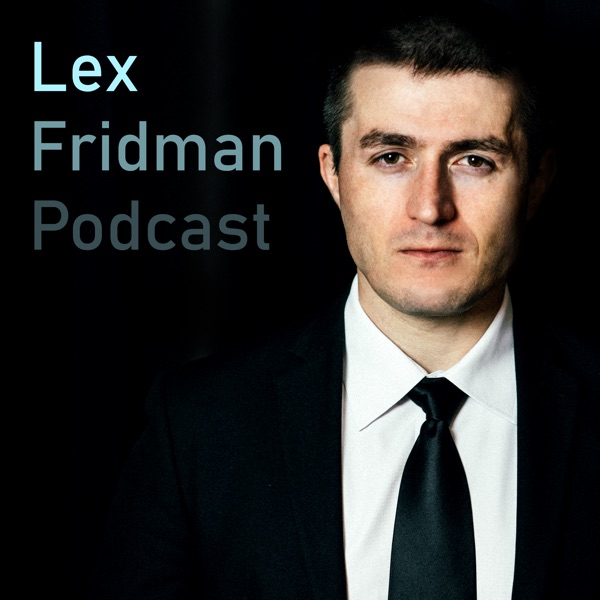
 Lex Fridman Podcast
Cristos Goodrow: YouTube Algorithm | Lex Fridman Podcast #68
Lex Fridman and Cristos Goodrow on inside YouTube’s Algorithm: Personalization, Responsibility, and Creator Well‑Being.
In this episode of Lex Fridman Podcast, featuring Lex Fridman and Cristos Goodrow, Cristos Goodrow: YouTube Algorithm | Lex Fridman Podcast #68 explores inside YouTube’s Algorithm: Personalization, Responsibility, and Creator Well‑Being Lex Fridman interviews Christos Goodrow, YouTube’s VP of Engineering for Search and Discovery, about how the recommendation and search systems work at massive scale. They discuss the technical foundations of YouTube’s algorithm, especially collaborative filtering, embeddings, and user feedback signals such as watch time, likes, and satisfaction surveys. A major portion of the conversation focuses on YouTube’s societal responsibilities around politics, misinformation, bias, and toxicity, and how human policy, human reviewers, and machine learning interact. They also explore creator-related issues like discoverability, burnout, clickbait, and the long‑term goal of making every recommended video both personally enriching and socially responsible.
Inside YouTube’s Algorithm: Personalization, Responsibility, and Creator Well‑Being
Lex Fridman interviews Christos Goodrow, YouTube’s VP of Engineering for Search and Discovery, about how the recommendation and search systems work at massive scale. They discuss the technical foundations of YouTube’s algorithm, especially collaborative filtering, embeddings, and user feedback signals such as watch time, likes, and satisfaction surveys. A major portion of the conversation focuses on YouTube’s societal responsibilities around politics, misinformation, bias, and toxicity, and how human policy, human reviewers, and machine learning interact. They also explore creator-related issues like discoverability, burnout, clickbait, and the long‑term goal of making every recommended video both personally enriching and socially responsible.
Key Takeaways
YouTube’s recommendations are heavily personalized and built on collaborative filtering.
The system builds a large related‑video graph from what people watch in sequence, clusters videos in an embedding space, and then recommends items that similar users have enjoyed, balancing “more of the same” with strategic diversity.
Clear metadata still matters: titles and descriptions are critical discovery signals.
Despite ongoing work in video content analysis, YouTube still relies strongly on creators’ titles, descriptions, and keywords for search and early recommendation; opaque or purely “clever” titles can make content much harder to find.
YouTube explicitly tries to balance openness with responsibility around sensitive content.
They draw policy lines for clear violations, but for borderline or potentially harmful content they reduce recommendations rather than remove it, while boosting authoritative or credible sources—especially in areas like politics, science, and health.
Human judgment and machine learning are tightly coupled in moderation and ranking.
Human reviewers define policies, label content (e. ...
Quality is measured beyond clicks and views, using watch time and satisfaction surveys.
YouTube shifted from raw views to watch time, and now also relies on post‑watch surveys and other engagement signals to approximate whether users are genuinely glad they watched a video rather than merely being momentarily hooked.
Creators can safely take breaks; the algorithm does not inherently punish time off.
Internal analyses show many creators return just as strong or stronger after breaks, so burnout should be managed primarily around personal well‑being rather than fear of algorithmic collapse.
Toxicity and trolling are addressed with ranking, tooling, and user controls, not pure censorship.
YouTube uses comment ranking, blocking tools, and signals like “don’t recommend this” to reduce the visibility and impact of mean or low‑value interactions, aiming to nudge conversation quality without eliminating free expression.
Notable Quotes
“We fundamentally believe, and I personally believe very much, that YouTube can be great. It's been great for my kids. I think it can be great for society.”
— Christos Goodrow
“What you might refer to as the YouTube algorithm from outside of YouTube is actually a bunch of code and machine learning systems and heuristics, but that's married with the behavior of all the people who come to YouTube every day.”
— Christos Goodrow
“We want to do our jobs today in a manner so that people 20 and 30 years from now will look back and say, ‘YouTube, they really figured this out. They really found a way to strike the right balance between the openness and the value that the openness has, and also making sure that we are meeting our responsibility to users in society.’”
— Christos Goodrow (quoting Susan Wojcicki)
“You can absolutely take a break… we have just as many examples of people who took a break and came back more popular than they were before as we have examples of going the other way.”
— Christos Goodrow
“YouTube is really about the video and connecting the people with the videos, and then everything else kind of gets out of the way.”
— Christos Goodrow
Questions Answered in This Episode
How should platforms like YouTube quantify and optimize for long‑term user well‑being rather than short‑term engagement?
Lex Fridman interviews Christos Goodrow, YouTube’s VP of Engineering for Search and Discovery, about how the recommendation and search systems work at massive scale. ...
Where exactly should YouTube draw the line between ‘borderline’ content that is merely demoted and content that is fully removed?
How can YouTube make its personalization and diversity mechanisms more transparent to users without overwhelming or confusing them?
What additional creator tools or metrics could help distinguish genuine quality from clickbait in a way that both viewers and algorithms can trust?
As video understanding improves, how might automatic clipping and summarization change the way we create, consume, and search for content on YouTube?
EVERY SPOKEN WORD
Install uListen for AI-powered chat & search across the full episode — Get Full Transcript
Get more out of YouTube videos.
High quality summaries for YouTube videos. Accurate transcripts to search & find moments. Powered by ChatGPT & Claude AI.
Add to Chrome