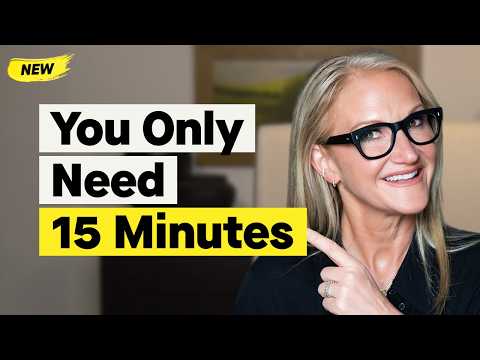
My Process For Achieving Goals: How to Change Your Life in 5 Simple Steps
Mel Robbins (host)
In this episode of The Mel Robbins Podcast, featuring Mel Robbins, My Process For Achieving Goals: How to Change Your Life in 5 Simple Steps explores five research-backed rules to set goals and sustain momentum daily Setting a meaningful personal goal can restore a sense of control and purpose when life feels overwhelming and reactive.
Five research-backed rules to set goals and sustain momentum daily
Setting a meaningful personal goal can restore a sense of control and purpose when life feels overwhelming and reactive.
The process begins with radical clarity—decide exactly what you want, write it down, and use visualization to encode it into your brain.
Robbins argues you must “fire your family” as your primary support system and instead build a team of people who understand or share the goal.
Goal achievement requires both a personally compelling “why” (will) and a practical “how” (way), including making the process more enjoyable and identity-based.
Progress is built through the “Hot 15” (15 minutes of action) and maintained by a consistency mindset that treats setbacks as pauses, not failure.
Key Takeaways
A personal goal can be a life raft during stressful seasons.
Robbins’ core claim is that adding something meaningful (even small) immediately increases perceived control because it’s chosen by you and not dictated by work, headlines, or other people’s demands.
Get the full analysis with uListen
Clarity is the real starting line—decide, specify, and write it down.
Most people “manage goals in their head,” which keeps them vague and easy to postpone; writing creates a visible target and a concrete commitment you can revisit.
Get the full analysis with uListen
Use multi-sensory rehearsal to override negative mental loops.
Drawing from Dr. ...
Get the full analysis with uListen
Stop expecting your family to be your motivation or coaching staff.
“Fire your family” means don’t outsource emotional validation or know-how to people who don’t share the goal; instead, take responsibility and find support among communities who understand the pursuit.
Get the full analysis with uListen
Every goal needs both a powerful why (will) and a practical plan (way).
Based on Dr. ...
Get the full analysis with uListen
Make progress easier by adding instant gratification to the process.
Using Katy Milkman’s behavioral science, she suggests “temptation bundling” (e. ...
Get the full analysis with uListen
Consistency wins because you never lose unless you quit.
Citing Angela Duckworth, Robbins reframes discipline as returning after interruptions; missed days don’t erase prior effort—your “bricks” remain, and identity-based return is the skill that guarantees long-term success.
Get the full analysis with uListen
Notable Quotes
“Clarity is freedom. Know what is important to you, and it will grant you the freedom to ignore everything else.”
— James Clear (quoted by Mel Robbins)
“Fire your family.”
— Mel Robbins
“There’s two requirements for any goal… the will and the way.”
— Mel Robbins (summarizing Dr. Elliot Berkman’s research)
“Find 15 minutes to work on this. That’s it. I call it the Hot 15.”
— Mel Robbins
“You will never lose if you don’t quit.”
— Mel Robbins
Questions Answered in This Episode
How do you distinguish a goal you truly want from one you think you “should” want (especially when family pressure is involved)?
Setting a meaningful personal goal can restore a sense of control and purpose when life feels overwhelming and reactive.
Get the full analysis with uListen AI
In the “fire your family” rule, what’s the best way to communicate boundaries if your goal changes time, routines, or shared responsibilities at home?
The process begins with radical clarity—decide exactly what you want, write it down, and use visualization to encode it into your brain.
Get the full analysis with uListen AI
Can you give concrete examples of what counts as a ‘brick’ for goals that feel abstract—like improving a relationship with an adult child or finding community?
Robbins argues you must “fire your family” as your primary support system and instead build a team of people who understand or share the goal.
Get the full analysis with uListen AI
What does a strong intrinsic ‘why’ sound like in practice, and how can someone tell if their why is too outcome-focused (status, appearance, approval)?
Goal achievement requires both a personally compelling “why” (will) and a practical “how” (way), including making the process more enjoyable and identity-based.
Get the full analysis with uListen AI
How would you apply the Hot 15 to a goal that requires long blocks of time (writing a thesis, building a business, training for an endurance event)?
Progress is built through the “Hot 15” (15 minutes of action) and maintained by a consistency mindset that treats setbacks as pauses, not failure.
Get the full analysis with uListen AI
Transcript Preview
Today, I'm going to teach you how to take back control of your life, of your time. I want you to identify something that's important, something that really is meaningful to you. I mean, maybe you wanna lose weight or start meditating or sell your art or leave the relationship or, heck, put yourself back out there and fall in love with somebody incredible or run that marathon, pay off the debt, go back to school and get your master's degree, move to a new city, write the book. I'm gonna teach you five rules that reveal the mistakes that most people make when they go after their goals. All right, rule number one, decide what you want and write it down. I feel like I should duck 'cause I feel like you're gonna throw something at me. Rule number two, fire your family. Rule number three is this great research. You gotta know why you're doing it, and this is deeply personal, and your way. Rule number four changes the game. It's called the Hot 15. And finally, don't quit. It's your friend Mel, and welcome to The Mel Robbins Podcast. I'm so glad that you're here. It is such an honor to be together and to spend this time with you right now. And if you're a new listener or you're here because somebody shared this conversation with you, I just wanna take a moment and personally welcome you to The Mel Robbins Podcast family. You pushed play on the exact thing you need to hear today. And I wanted to talk about this topic because I've been reading your emails, and so many of you feel overwhelmed, powerless, out of control. You have no time. You're exhausted. The world seems to be falling apart, and at the same time, your life, your job, the demands of taking care of everybody, it's running you over. And so if you feel like you have no time for yourself, you're in the right place. Because today, I'm going to teach you how to take back control of your life, of your time. You're gonna love this. This is all based on research. The way that you reclaim yourself, your time, and your life is by setting an important personal goal. I get it. It's a little counterintuitive. You're super busy. You have no time, but hear me out. The research shows that if right now, in the middle of everything else that's going on, you add in something meaningful, you will immediately start to feel more in control of your life and your time. It could be anything. Getting back out in your garden, going back and singing in the choir, something you haven't done in ten years, volunteering in the community, getting your hospice training. Pursuing something meaningful right now is how you say to yourself, "Okay, things are crazy, but I am not just my job. I am not just the emails I answer. I am not just the bills I pay. I'm not just the things I do for everybody else. I matter." And when the world feels heavy, you need something inserted into your week that lifts you up. It's almost like giving yourself a life raft. That's why it's important. These personal goals anchor you in the middle of the storm because a goal is something you've chosen. A goal is something that you say is important. A goal is something that you can control. It's the one thing that the world or your job, everything else that you're doing, can't take away from you. And I'm gonna teach you five rules, five rules that are gonna help you get really clear about what you want right now, what's, like, important to you, and also five rules that reveal the mistakes that most people make when they go after their goals. These are five rules that if you follow them, you can not only start to insert this goal into a busy life right now, you'll also see yourself pursuing it successfully. They're all backed by science and research. You're gonna hear all about it from the psychologists, the neuroscientists, and the researchers that will explain why these five rules work. And so whether you've been thinking about your goals recently, and that's why you hit play on this, or you got something in the back of your mind that's just been rattling around for decades, if you're sitting here listening, going, "Mel, you're right. My whole life, all I ever do is work and respond to emails and take care of everybody else. I, I, I've forgotten who I am. I don't even know what I want. I don't know what my goals are," this episode today I dedicate to you. Now, I've tested every one of these five rules in my own life. I've used these five rules when I launched this podcast. That's a huge goal that I had for years. I used these rules when I sat down to write The Let Them Theory book. I also used these same five rules over the past year to launch Pure Genius Protein. That had been a major goal of mine to do something. I was able to insert it into a busy life using these five rules. You're gonna see how these rules work. And these rules also work for these beautiful small goals. Small goals are so important. Like, I think one of the things that we do in life is we really make ourself wrong for having these small goals. Like, maybe you have a small goal, like you'd just like to learn how to be a better cook. That's a beautiful goal. I mean, imagine if you pursued that. Maybe you wanna volunteer, like it's something you've been thinking about. Get more engaged in your community. Give back, but you, you just haven't taken the time to insert it into your life because you keep telling yourself you got no time for that. You'll do it later when you find time. No, no, no, we're gonna follow the research. Put it in now, and you'll feel more in control. So I have a goal of increasing my grip strength, and one of the reasons why is so many of the experts that have come on this podcast have been talking about, for women in particular, our grip strength is a really important thing. And so I've been working on something just called, like, the dead hang, where you hold on to a pull-up bar. I'm not even asking myself to do a pull-up yet. I'm just holding on. Another one, drinking more water. You always see me with this big mason jar. If you're listening and you're not watching on YouTube, I almost always have a huge mason jar, big wide-mouth one, sitting next to me 'cause I'm trying to drink more water. Here's another little goal of mine.I really want to feel closer to my adult kids, and it means I gotta kinda shift how I'm showing up, because how you show up with your kids when they're young adults is different than how you stay close to them when they're adult adults. Maybe you've got a goal like this. Maybe you wanna start a meditation practice, or you wanna start journaling. Maybe you wanna sell your first piece of art. Maybe you really wanna get that business plan done. Maybe you do wanna volunteer in the community. Maybe you're inspired to get a certification, like you wanna take that yoga teacher training, or you just wanna have a evening stretching routine, or maybe you've got kinda something big. As you're listening to me, you're going, "Whoa, if Mel's gonna give me five rules, I might as well work on writing that book. I might as well make a plan to move to a new city or a different country. I might as well stop talking about that YouTube channel or podcast and actually do it." Whatever it is that your goal is, it's gotta be personal, and it's important. And once you insert this personal goal, this thing that's meaningful to you that you're working on, it's sorta like having a little secret project, and you get a little secret quest that you're working on. Kinda makes things feel like, "Okay, there's something else going on other than reading the headlines, other than answering the emails, other than making it to the next Zoom call, other than stressing about everybody else in my life. There's something going on that's important." And these rules are gonna help you get clear about what that is and honest with yourself, and they're gonna help you get started, and more importantly, they're gonna help make it easier week after week to keep inserting this thing in, because you're gonna find that every time you do, that week gets a little bit better. All right, so let's just jump in with rule number one. Now, rule number one: decide what you want and write it down. I feel like I should duck, 'cause I feel like you're gonna throw something at me. Like, "Really? That build-up, Mel? And now you're gonna be like Captain freaking Obvious? Decide what you want and write it down?" Yeah. Believe it or not, this is the rule that almost everybody misses, because you manage your goals in your head. And think about it. You can't hit a target that you don't see. So rule number one, you have to get clear about what you want, and then second, you gotta write it down. You know, I remember Oprah once, somebody asked her, "Oprah, why do you think so many people get stuck?" Her answer, "Because most people never take the time to get clear about what they want." Really let that sink in. Most people never take the time to get clear about what they want. And right now, you're not clear because you keep saying, "I don't have time. I'm too exhausted. There's so much going on in the world. My goals don't seem important right now." They're actually extraordinarily important. And so maybe the reason that you've never, ever seen this come to fruition is because you haven't gotten past the point of just thinking about it. You never got specific and honest with yourself and said, "This is exactly what I want." There is so much power that comes from declaring something as a goal. But if you haven't taken a moment to write down on a physical piece of paper that your goal right now this week is to insert meditating, do you think you're actually gonna do it? Of course not, because it's up there floating around in your mind with everything else that you keep trying to remember to do and then forget to do, just like me. I mean, let's just role-play for a little bit. How long have you been thinking about volunteering in the community? A decade? A year? How long you been thinking about picking up a paintbrush again? Or hitting Publish on that video that's been sitting in Draft on social media or YouTube? Or truly updating your website? You know you gotta have a better website, but you can't do your web- Or resuming the gym membership that you put on pause a year ago. Is it getting you any closer to that goal just thinking about it? No. In fact, it kinda tortures you a little bit. And the reason that you feel overwhelmed by everything else going on in your life is because you're not making a decision to stop thinking about these things and actually do it. And so this first step, get clear about what you want and write it down, is how we do that. It's how we get serious. And if you're sitting there thinking, "Well, Mel, I don't even know what to write down. I don't even know what I want," here's what I will promise you. As you listen to our conversation today, by the time this episode is over, you will have about 15 things that have popped into your mind. Because I guarantee you what's going on with you is you've just become so reactive responding to everything and everyone else, that you haven't slowed down long enough and gotten quiet enough and giving yourself permission to really think about what you want. And here's another way you can think about this. What problem in your life are you trying to solve? What problem in your life are you trying to solve? I'm gonna give you two examples. First, I'm gonna give you one from my husband, Chris, that was a problem he was trying to solve that allowed him to get clear about what he wanted, that then became a goal that was important that he inserted into his busy life, and it gave him a tremendous amount of meaning. So my husband, Chris, is a death doula. He is also a holotropic breathwork instructor, and he leads a men's retreat, and he's getting his master's in spiritual psychology. He meditates every single day.And he had a problem in his life. He felt like he was lacking community. He felt like he was missing out on a community of people that he could see, you know, on a regular basis that were also in a meditation practice. And so when he realized that he had this problem, that he was lacking community, his goal became, "Well, how do I create it?" And you know what that man did in the middle of everything else going on? He said, "You know what I'm gonna do? On Tuesday nights at 5:30, I think I'm just gonna hold a free meditation circle for an hour. I'm gonna post it on the local Facebook. I'm gonna find a place in our community to let me host this thing." You'd be surprised what your local library or community center or a restaurant that might not be open on a Tuesday night might let you do, uh, as a way to kinda give back to the community. And sure enough, for the last year, Chris hosted a weekly one-hour meditation circle. He had a problem, and the problem in his life was community, and he made it a goal to solve it. Isn't that beautiful? Now, stop and ask yourself this. Do you think if you were to do something similar for an hour every week, even though you're so busy, like, if you had something on a Tuesday night that you did for an hour that really lifted you up and created meaning in your life, don't you think your life would feel a little bit better right now? Can't you see how inserting something simple, even when just two people show up, maybe five, I think the most they ever had was seven show up, it didn't matter because it was so meaningful to be connected to people and to have this thing every week to look forward to and to know that you were doing something for you that did something important in your life. You know, the same thing happened for me with Pure Genius Protein. A lot of people are like, "Oh, you know, did you wanna start a business?" I was like, "I actually was not looking to start a business." It started as a personal goal. I just wanted to put my health first. You know, my daughter looked at me about a year ago, and she grabbed me by the shoulders, and she said, "Mom, I have to tell you something." She said, "You need to start prioritizing your health. You're 56 years old. You're running yourself into the ground. You need to really take all the health advice seriously. I'm worried about you. I'm worried about how you are just running yourself into the ground. I realize you love what you do. I realize you care a lot." And you probably relate to that. You know, the reason why you're so tired and you're so busy is you care so much. That's why you do so much. And so I started listening to the experts on this podcast. I gotta resistance train. You've heard that too. I gotta start prioritizing protein. Then I went to my doctor, and my doctor's like, "Okay, Mel, for you and your health, you gotta get about 125, 140, you know, grams of high-quality protein every day." Now, I cook. I, I, I, I love to eat. I, I, I thought, "This isn't gonna be a problem." Do you know how hard it is to get 125 grams of protein every day? And so here I start going for this thing that I think is gonna make me feel better, but I can't actually achieve it, so now it's making me feel worse. And as many egg bites as I would eat and smoothies that I would make and chicken breast that I would cook and salmon that I would roast and bars that I would choke down, I'm just like, "I can't do this." I either can't get the goal or I'm eating 5,000 calories, and that's not part of the goal here. So I had a problem. How do I get more high-quality protein in? And I'm not gonna sit around and wait for somebody else to solve this. I'm not gonna cross my fingers and hope that somebody else figures out how to make this better. I think I wanna get involved and solve this problem that I had. And once I decided, "Okay, I wanna... I, I, I think it would be very meaningful to work with world-renowned researchers and medical experts, become a founder of a, a protein company, something I've never done in my life, and work on this problem and make the product better," that would add a lot of meaning to my life. And so that's how that became a goal of mine this year, to step into Pure Genius Protein, to recruit a world-class medical board, to really be committed to creating the best possible product you could because this was something I was looking for. So again, it didn't start out like, "I'm gonna start a protein company." It started out with a real problem that I was grappling with, something that was important to me. And so as you keep listening, you're gonna hear examples that inspire you and say, "Oh, I'd like to do that. Yeah, that would, that would put a lot of meaning into my life." Or I invite you to listen and think about the problems that you're trying to solve because inside that problem, whether it's a lack of community or you're struggling to achieve your health goals, or there's something going on with a family member that's become a problem, and you really, you know, wanna invest in solving it, or there's something going on in your career, that can also become the root of the goal that matters to you, and this is why rule number one matters so much. If you can't get clear with yourself, if you don't know what's important, you're gonna get swallowed up by everything else. You know how I always say, "If everything's important, nothing is"? If you don't declare what's important, nothing will seem important in your life. And I wanna bring in one more expert, James Clear. So James Clear wrote Atomic Habits. That's that number one New York Times bestselling blockbuster of a book. He's a good friend. He's an expert on habit formation. He has this quote that I love: "Clarity is freedom. Know what is important to you, and it will grant you the freedom to ignore everything else." See, I often think that one of the reasons why you have no time is it's easy to get to a point in your life where everybody else's stuff is more important. If you can declare something that is important-It gives you the freedom to ignore everything else. I'll give, I'll give you the perfect example of this. If you've ever had young kids in daycare, and the daycare pickup is 6:00, that is important to you if you are a working parent. And when 5:00 rolls around, if you've got an hour commute, you know, keep in mind, you also-- I- you don't wanna be the last parent there as they've turned off the lights, and they're standing there with your baby in the hallway waiting for you. I've been there. But if it's important to you, have you ever noticed lots of things disappear? That Zoom call can wait. The emails can wait. And that's why it's so important. James is not the only researcher who can back this up. The late Dr. Jim Doty, who is the renowned Stanford neurosurgeon and neuroscientist, has done extensive research on what happens when you name what you want, when you write it down, and then when you add in one other thing that I'm about to explain to you. Now, Dr. Doty is one of the most extraordinary human beings I have ever had the privilege of learning from. He founded the Stanford Center for Compassion and Altruism Research, and his research as a neurosurgeon and a neuroscientist shows that your brain changes through repetition. In neuroscience, it's called Hebbian learning. What fires together, wires together. And Dr. Doty explained that the fastest way for you to wire in the importance of this goal is to bring online as many sensory systems as you can, like smell and taste and emotion. Dr. Doty said, if you have a goal, he wants you to take a pencil. I'm holding a pen, it doesn't matter. You take a pencil, you write it down, and when you're writing it down, you're doing something physical, tactile. Then you're gonna read it silently to yourself, so you look down and you read it silently. Then you read it out loud, okay? You're gonna volunteer for hospice. You're gonna write that book. You're gonna put yourself back out there and meet the love of your life. You're gonna do the dead arm hang for a minute. Then you visualize, and when you visualize yourself doing it, I want you to not just visualize, "Okay, it's been a minute, now you drop." You visualize this, and you ask how you can get certified to volunteer, and then you visualize yourself going to the meeting, and then you visualize yourself driving the meals or sitting bedside with somebody. And see what you want in your imagination. And as you do this, your brain builds the circuitry to make it easier in real life. And it's not just neuroscientists that can explain this. This is a technique that Olympians use. They visualize their routines before they do them because basically it's a way to do the mental reps to get your brain to anticipate what's gonna happen. This is why pilots train in simulators. Your brain loves rehearsal. And so when you combine all three, naming it, writing it down, visualizing, it works so well. Every sensory channel you activate lights up different parts of your brain, and when these systems fire up together around the same thing that you want, you create deeper, stronger neural pathways, and it allows the goal to really become part of your subconscious. You're not just thinking about it anymore. You have encoded it into your brain, and now your brain's like, "Oh, yeah, we're doing this. We, we think-- We, like... I can visualize doing this." You see how powerful this is? And this is particularly important if you're constantly, like, talking yourself out of everything. Dr. Jim Doty says all of that, like, nastiness, all the ways you say, "No, I'm too late, I'm too this, I can't do this," that's a part of your brain called the default mode network that is just in overdrive. Why? Well, he's already taught you this. Because repetition causes your brain to remember things. You know how long you've been saying this garbage to yourself? And that's why you can use this process that Dr. Doty taught us on this podcast, and I'm simplifying for you right now. You gotta get clear about what you want, and you gotta write it down because we are going to override that loop of negativity that's been in there probably your whole life. If you don't declare what's important to you, if you don't get clear about what you want, the things that are meaningful, everybody else's stuff is gonna fall right in the frontal line, so do not skip this step, okay? Now, once you know what do you want, what is it, what-- that's important to you, let's talk about rule number two. Okay, and I'm gonna warn you, you're not gonna like this rule. But when it comes to your goals and the things that matter to you, fire your family. You heard me right, fire your family. This is a huge mistake that people make. See, you think that when you set a goal, your family is supposed to become your biggest cheering squad. That is the biggest mistake that you could possibly make, and the reason why is that these goals that you have, they're not goals for your family, they're goals for you. Most of the time, your family is not gonna be your biggest cheerleader. Your family is gonna be like, "Wait a minute. What, what are you doing? How are you doing that? Why do you wanna do that?" See, if your family doesn't share the goals that you have, if your family has never done the thing that you want to do, they're not gonna understand why you wanna do it, and they're not gonna know how to get it done. So they can't support you in doing something that they don't care about. They can't support you in doing something they don't understand. And this brings me to a bigger point.Your goals and the things that bring meaning to your life are your responsibility. They're not your family's responsibility. Like, there are so many instances in my life where, I can think of one right now. Uh, my daughter, Sawyer. My daughter had always had this huge goal, like, this is an amazingly enormous goal. She'd always wanted to travel solo through Asia, backpacking for, like, five months. That was her dream. Do you know what that sounds like to me, her mother? My biggest nightmare. I argued against it. I didn't understand it. I was scared. I was the least supportive person in the family. Well, luckily for Sawyer, she had fired me a long time ago. She didn't care what I had to say because she knew it would haunt her for the rest of her life if she didn't pursue this thing that was meaningful to her. And that's why you gotta fire your family. I'll give you another example. My husband, Chris, he is working on his first ever book. I am so proud of him. I mean, this has been a goal of Chris's for probably five years, and he didn't start by writing out a book. You know what he started by doing? Getting clear that he wanted to do more writing, and that led to him joining a writing group online where, uh, it sounds kinda boring, but you basically just go on Zoom, and everybody writes [laughing] while you're sitting there, and then you talk about it. And then there's assignments where you all write about certain things and read about your writing, and it was this beautiful thing that he did. And then that led him, after a couple years of just being in a writing class, to say, "Hey, I, I'm very clear I wanna write a book. I don't even know what it's about. I just wanna write a book." And he's been writing a book for two and a half years. Now, here's what I, I gotta tell you. I haven't read a single word of his manuscript, and that's not because I don't care. It's because he hasn't asked me to. I don't really know what the book is about. Like, I kinda have a general idea, but it's changed or la- I don't know the title. I don't know what he's thinking about for the cover design. I just know that every single day the man writes, and I also know he fired his family. There is not one cell in Christopher Robbins' body that is saying, "Your family's not supportive," because he's not even expecting us to be. He's doing it for him. And I want you to just stop and really think about how powerful that is. How powerful is it to realize that you can do something just for yourself, that you can insert something into your life that's meaningful to you without having to seek validation and support from everybody else around you because you're doing it for you? That's why this research is so important, that when you got clear about what you wanted, what you want is for you, and that's incredible, and that's available to you. Now, here's the nuance. You're gonna fire your family, but I didn't say you had to do it alone. What does that mean? It means don't make your family the support team. If there's something in your life that you wanna do, first you gotta get clear about what it is. You gotta understand you're doing it for you because it makes you feel more like you, and it brings something into your life. And then ask yourself, "Well, if I were to do this with a team, what could that look like?" And let me give you an example of what that looks like. So I've been hosting The Mel Robbins Podcast for three and a half years. About two years before I recorded my first episode, first, followed rule number one, I got very clear about what I wanted, and what I wanted was to start a podcast because I really wanted to have longer conversations with you, and I also wanted to learn more. I wanted to have a podcast where we could sit down, you and me, with some of the world's most renowned experts and interesting people and learn and gain from their wisdom and feel encouraged and inspired and just have our minds expand and our lives expand. But that was two years getting clear before I recorded my first episode. Now, second, I fired my family. I didn't even think about getting them to work on this 'cause they'd never hosted a podcast before. So what did I do? Who was my team? Well, you know, I called my buddy Jay Shetty. I knew Jay from the speaking world, not from the podcast world, and I asked him for advice. I started following people online, like Steven Bartlett, Diary of a CEO, and Alex Cooper from Call Her Daddy, and Rich Roll from the Rich Roll Podcast, and really becoming a student. So you can create a team by following people that you've never met. You can create a team not just by following the greats, but anything that you wanna do, whether it's becoming a better gardener. You know, one of our senior producers, Amy, who's helping me on this podcast, she took an online master gardening course from the University of Vermont online. Isn't that the coolest thing ever? She recruited a team. And oftentimes there are small groups, professional groups, that organize around the thing that you want, whether it's gardening or it's knitting or it's hospice or it's yoga or it's starting a YouTube channel or it's getting out of debt. That's your team 'cause you don't have to know everything. You just have to be clear about what you want. Then you fire your family after you've written it down and you start visualizing it, and then you start to look around for who might be ableTo inspire you. What team could you join online or in your community of people who have done this thing or are trying to do this thing? What professional society is full of people? What events are out there that are talking about this? That's how you get the support that you need. And one more reason why this is important. When you fire your family, you have to take full responsibility for the things that you want in your life, instead of outsourcing them to your family. Like, a lot of the mistakes that people make when it comes to goals is you start saying you want things that you think you should want. And oftentimes, it's because of the pressure coming from your family that you think you should change your job, you think you should move to a different city, you think you should be interested in baseball or knitting or football or something else. And so firing your family also cuts this umbilical cord to the people you're related to and forces you to truly own what's important to you and why it's important to you. All right, that's rule number two. Stop outsourcing your motivation to your family. Fire your family. And I hope you're starting to feel a little relief, because once you stop outsourcing your goal to the wrong people and you start taking ownership, change becomes possible, and your goals don't feel so out of reach. And that brings me to the third rule. And the third rule is another critical thing that most people don't understand. I know I certainly didn't. And once I learned rule number three, which comes from groundbreaking research on goals, I understood why I had had a hard time keeping and sticking to my goals. And it had to do with the fact that I didn't understand that there are two requirements that are necessary for you to achieve a goal. And this research, it's gonna change the way you think about goals for the rest of your life. It comes out of the University of Oregon, and it was conducted by professor and psychologist Dr. Elliot Berkman. Dr. Elliot Berkman is also the co-director of the Center for Translational Neuroscience at the University of Oregon. And his research explains exactly why you may have not been able to meet goals in the past, or you haven't been able to kinda, like, create the changes that you're looking to see in your life. And what I love about his research is it's super specific, it gives you a template, and it's empowering. Because he says there's two requirements for any goal, any project, any change you wanna make. The two requirements are the will and the way. So let's unpack these according to the research. Think about the thing that's important to you or the problem that you wanna solve, the goal that you're gonna insert into your life right now, okay? And so the first component that we gotta have based on the research is what Dr. Berkman calls your will. That's why. I'm gonna call it as your friend, you gotta have the why and the way. Why does this goal matter to me? And think about the example that I gave you with my husband, Chris. Why did he wanna start a meditation circle? It wasn't to meditate. The why was for community. And that's critical because when you get clear about why you want something, it taps into this thing that psychologists and researchers call intrinsic motivation. That is the truest, purest form of motivation because it is coming from an internal source that is personal to you. So let me ask you, if you want to go back to school, why do you wanna get your master's? Why? Is it because you think you should? 'Cause that's not a good why. Why do you wanna get your master's? Is it because it's gonna make you proud of yourself? Is it because you feel like you've stopped learning, and it's gonna expand the satisfaction you have to be a student again? Is the why because you wanna make a career pivot, and the master's would help you be able to get a job in this new field? Why do you want this thing? Why do you wanna run a marathon? You know, when I was in my 30s, I ran four marathons, and the reason why I wanted to run the first marathon is because I just always had it on a bucket list. I just knew I would be proud at myself if I completed something like that, because I always felt like I was the kinda person that as a race was, um, finishing, I'm the person that slows down. You know how a lot of people speed up and lean forward? I ran track in high school, and I would see the finish line coming. I'm like, "Oh, thank you. My God, this thing's over." And I'd kinda, ugh, limp across the finish line. I know, not great. But what happened is I finished my first one, and I had so much fun training with a friend of mine that was also running it, that my why changed. Why do I wanna run a marathon? I'll tell you why. [laughs] Because it became the perfect excuse to be able to disappear for three or four hours every week with my girlfriends and train and talk. The why wasn't about running at all. It was about time with friends. That's what motivated me. Do you see why this is so important? Why do you wanna write a book? Is it because you think you're gonna be a bestseller, or is it because you have a story to tell, or there's just something about how it would feel to know that you are the kind of person that writes every day? You gotta dig deep to find this why.Why are you doing it? And this is so important because the why is what will get you through those annoying, inconvenient, "I don't feel like it." If you're the kind of person that's like, "I have no discipline and I have no willpower," it's because you're no-- you don't understand the why for what you're doing. And it can be anything. This is where goal setting gets so personal, because it's gotta tie back into your values, your identity, the way you see yourself. Let me give you another one. Um, let's say that you wanna just become a better cook. Now, the why could be that in the next three to five years, you wanna buy a house or you wanna buy a condo, and if you keep burning through all your money on stupid things like delivery, you're not able to save money. So do you see how the why might also surprise you? It might not have to do with cooking at all. It might have to do with something way deeper. And the research is very clear that without having a deeper connection, you're gonna quit, because this why is the reason that you keep showing up. The why is what fuels willpower. It's like putting gas in the tank. I'll give you another personal example, because I know so many people have their health and losing weight and being stronger and longevity as a goal. So I've already shared a, a lot that health is my number one goal this year, and that's why I am super focused on protein. It's why I'm doing so much more resistance training. I used to be a yoga and a Pilates gal. I am now heavy, heavy weights. Now, here's where it gets interesting. I've had health-related goals my whole life, and I've been really spotty in terms of my ability to stick to them, and I now understand why. I never figured out the will part, my why, that gave me the willpower. There were years where I was trying to lose weight 'cause I thought I should. There were years where I was trying to get in shape because I wanted to have six-pack abs, but the truth is, I really didn't want to. I didn't care. I, I, I just felt like I should, right? There's so much pressure from the media to look a certain way. And that explains why I was never really that motivated or consistent about it, because the reason I was doing it wasn't authentic or personal to me. Now, lately, I have-- I'm so proud of myself. I have gotten so consistent about exercising, and the reason is because of these rules I'm telling you. And I also got very clear about the why. It's not so that I look good in a bathing suit. That's a benefit. The real reason is I don't want to be frail when I get older. And I'm fifty-seven, and I've gone through such a major transformation of my body with all these hormone changes, thanks to menopause, that that was scary enough. But the truth is, as I look out over the next ten years, if Chris and I are lucky, our kids are falling in love and they're getting married, I wanna dance at all their weddings. If they start having kids and we're lucky enough to have grandkids, I wanna be in the pool and on the mountains and going for walks and lifting them up, and I am tired of everything else from work, worrying about the headlines, and taking care of everybody else coming first, and my health happens only when I'm feeling motivated. And so I am committed to becoming the kind of person who works out every day, who takes care of their health, where it's just part of my daily life. And so now that I understand my why, that I am the kind of person that takes care of myself because I am the kind of person who is going to do everything I can to live a strong, long, vibrant, healthy life, that has changed everything. So think about your why. Why do you wanna drink more water? Why is it important that you finalize the divorce? Why do you wanna volunteer? Why does cleaning out the back bedroom and turning it into a proper office, why does that matter to you? That is the first critical component of your goal, and that is what's gonna fuel you. Now let's talk about the second component, and this is the way. You got the why and you got the way. Thank you, Dr. Berkman. And what does that mean? That just means how the heck are you gonna do this thing? So let me give you a very obvious visual for the way that I think about this piece of the research, the way. Where you are right now, imagine that there is a beautiful brick path that is in front of you that leads you to the thing that you want to insert into your life, this important goal that you have. Whether it's writing the book, or it's doing the dead hang, or it's volunteering for hospice, or it's going back to graduate school, this brick path leads you from where you are to the thing that you really want that's important. Every single brick just represents one action that you're gonna take, whether you take it once a day, whether you take it once a week, whether you do something once a month. Because the way that you do anything, the way that you lay a path, is just brick by brick by brick. And we're gonna get into how you're gonna insert action now into a crazy busy life. Don't worry about that at all. But there's a couple things I'm going to share with you based on research that will help you start to think about, "Okay, well, how do I start doing this thing?" Okay? And the first one I wanna share with you is really fun. This research comes from Professor Katy Milkman. She's one of the world's leading behavioral scientists, an endowed professor at Wharton School of Business, and she has this incredible trick to make your goals stick. Okay, you ready?Now that you understand what you want and why you want it, and we've fired your family, how do we make this fun? It sounds obvious, but I think so many of us go through life with the wrong mindset. You're like, "Okay, I gotta get healthy. Ugh." Or, "Oh, I gotta, I gotta become financially free. Ugh." And if it feels hard, you're not gonna wanna do it. If it feels hard, it almost feels like you've been doing something wrong. What if we flip that? What if you don't need to make this hard? What if the thing that you wanna do could be, like, super fun? You already know why you wanna do it, so how about we make it easier for you to do it, right? Professor Milkman says, "Stop making everything a grind and build instant gratification into this path wherever you can." And look, it's not always possible. You know, as I'm hanging there with my sweaty palms, feeling like my arms are gonna rip out from their sockets and I'm only twenty-three seconds into this, it's not that fun, okay? But there's way more ways than you think to make something more enjoyable, and we rarely even stop to try to do it. And here's what this looks like for me. I'm gonna give you a bunch of suggestions. I love listening to fantasy audiobooks. It's my total guilty pleasure, so I only allow myself to listen to fantasy audiobooks when I'm working out. And I don't allow myself to listen to an audiobook in the car or while I'm doing housework. Nope. I save it for working out, whether I'm on the treadmill or I'm lifting heavy weights or I'm doing that dead arm hang. It makes it fun. That's how you make it consistent. Nobody said it had to be hard. I mean, you could set up, if writing is your thing, maybe you clear out a space and you put some, like, cool things on your desk, or you have beautiful flowers there and you burn an incense and you lock the door so nobody can come in the room and you got thirty minutes to yourself. That's kinda fun, right? And if you're still scratching your head and you're like, "Okay, I can envision the bricks model, but I'm just-- The, the YouTube-- How do I do this thing? You know, I don't know how to start, uh, really working on the business plan. I don't know how. I know my why, but I've never done something like this before," here's one of the best tricks on the planet. Are you ready? Because we really live in a moment where you don't have excuses anymore. If you don't know how to start, if you don't know how to break down this goal that you have into individual bricks, which are just all the little actions that you're gonna take... Microsoft Copilot is a sponsor of this podcast and a sponsor of our tour. It is the AI platform that I use, 'cause I've been using Microsoft products since 1990 when Windows came out, and it's incredible how much time it can save you so you can focus on the things that matter. Just tell it about your goal. Tell it you need to, to break it down into the smallest things. Give me a list of thirty actions I could take, so one every day for thirty days and, by the way, could you make the actions a-- infuse it with a little bit of fun. It can help you find the way. It can help you infuse it with fun. And here's one final thing about the way you're gonna do it. You know why you wanna do this thing. I think you're really starting to understand the power of owning it for yourself and how making the time makes you feel like you're in control of your time. But another trick from James Clear is really attach what you're doing not to the outcome. It's not about writing the book. It's not about being able to do ten pull-ups. It's not about the better relationship with your adult kids. It's not about the number on the scale. The research is very clear that when you attach this important goal to your identity, it's who you're becoming. That changes everything. Like, who's the kind of person who achieves the goal that you just set? Maybe you're just the kind of person that prioritizes your health. It's not about six-pack abs. It's not about losing fifty pounds. You're the kind of person that respects yourself enough that you just prioritize your health. You don't miss workouts 'cause you know how you feel. It's a non-negotiable. You're the kind of person who keeps promises to themselves. I'll tell you, I'm the kind of person that makes my bed every morning. I'm the kind of person that walks my dogs every day. I'm the kind of person that drinks a lot of water. I'm the kind of person who plans my meals instead of winging it. Same thing with meditating. The goal isn't to meditate. If the why is, "I want to feel more peace in my life. I wanna meditate because I wanna be grounded. I wanna meditate because I wanna train my mind and body to be able to respond to life instead of constantly reacting to life," then how you apply this is you say, "I'm the kind of person who chooses peace. I'm the kind of person who meditates every day because of how it settles me and makes me feel more powerful." Do you see how that slight difference changes the way you're approaching something? It's become who you are instead of what I do. It's not a box you're checking. It's a way of being. So now that we have declared what we want, we have fired our family and taken full accountability for the thing that we want to put into our life, now that we've understood and dug deep and figured out the deeply personal why this matters to me-And we started really getting strategic about the ways in which we can start working on this now. Rule number four changes the game. It's called the Hot 15. Find 15 minutes to work on this. That's it. I call it the Hot 15. You can lay a brick on this path in just 15 minutes a day. In fact, you can lay a brick on this path in just 15 minutes a week. That's it, Hot 15. Now, imagine if your meditation practice, the first couple bricks that you lay down this week, is just you walking to your most comfortable chair with a cup of tea in your hand and sitting down. You don't even have to meditate [laughs] 'cause you just got yourself there, and you did that for seven days. You've just laid seven bricks. Imagine if your goal is to be the kind of person who walks every day because it's a way to reset your circadian rhythm. It's a way to get outside and bring your senses alive. Imagine if the first 10 times you do it, your Hot 15 is just putting on your sneakers, walking to the end of your driveway, turning around, and walking back inside. Because now what you're doing is you're just using the Hot 15, those hot 15 minutes, to build up the routine of starting 'cause you're the kind of person that gets outside every day. And what I've found with this Hot 15 is that you can find 15 minutes even on the busiest days. Like, you can find 15 minutes in a waiting room at a doctor's office. You can find 15 minutes while you're riding the subway. You can find 15 minutes first thing in the morning. You know, if you can find time to doomscroll, you can find 15 minutes, and really, it works. That's how I've written every single book I've ever written. I start with the first bricks of just the Hot 15, 15 minutes every morning. I get up the stairs, I'm doing my Hot 15, and then I stare at the screen, and I don't know what to write, and then I'm done. I didn't write anything. Guess what? I show up the next day. We're laying another brick on this path 'cause I'm the kind of person that, that writes. That's what I do, even when I got nothing to say. And so I sit at my desk, and then I think, "Okay, well, maybe I won't type. Maybe today I'll open up a book, and I'll, I'll hand write." And then, then I'll write a sentence, and the sentence is literally like this: "I don't know what to write," so I'm just writing, "I don't know what to write. Why am I brain-dead? Why can't I think of anything?" And I start to write out what I'm thinking for 15 minutes, and then I'm done. That's another brick. Don't you see that this is cool? Like, if you wanna make more money, you can spend 15 minutes a day starting to learn how to get out of debt. You can spend 15 minutes looking at your current bank account and seeing all the subscriptions that are sucking money out of your account, and that's one brick. And then tomorrow, your Hot 15 is starting to unsubscribe, unsubscribe, unsubscribe. And that's like ding, ding, ding, money back in your account. There's another brick. So if you want more money, if you wanna hit a big goal, if you wanna make progress toward this thing that's important to becoming a person that you really are proud of, start with 15 minutes a day. Those 15 minutes is where you say, "Y'all can wait because this is what matters to me." It's a way to really come back to yourself. And for me personally, I like to do this in the morning, and I don't, I don't really consider myself a morning person. I've trained myself to love my mornings because it's the one shot I have all day before the rest of the world comes in and steals my attention, and I'm in reaction mode. It's the one moment I have clean to be able to focus on what matters to me. And there's a lot of research behind this. There's this biologist, Dr. Christoph Randler, and his research was featured in Harvard Business Review, and it found that people who anchor their intention in the morning, this is so cool, are dramatically more likely to follow through on personal goals. So what does this mean? This means if you wake up before you look at your phone and you remind yourself, "Okay, let's do the Dr. Dodie exercise." Imagine waking up and you're like, "Okay, I want to write a book. This is what matters to me." Then you write it down. Then you read it. Then you visualize yourself doing it. You just anchored that intention in the morning. You are going to be dramatically more likely to follow through on that Hot 15 and lay that brick today. That's the Hot 15 'cause nobody said this had to be hard. In fact, how do you lay a path from where you are to where you wanna go? Brick by brick by brick by brick. And that brings me to rule number five. You will never lose if you don't quit. That's it. That's it. A- and I get it. Like, life gets busy. You get tired. You get discouraged. You're sick. The flu hits you. Somebody in your family is struggling. You gotta travel for work. You know, maybe something blindsides you, the headlines, they just, like, take you down for a couple days or a week. You just don't feel like it. And then what do you do? Well, you beat yourself up. You're like, "Okay, well, I only laid 14 bricks. I guess I better end this path. You know, I guess I screwed up again. I blew it again." Uh, let's just stop and, and, and think about the visualIf you did 14 actions, those bricks are still there. Like, we just throw our hands in the air and say it doesn't count. It does count because you can keep coming back to it anytime you want to. All of the bricks are there. You've started laying the path, and the only way you lose is if you don't come back and lay another brick. It's that simple. And I love this rule. I love this rule so much because it's true. There's some really interesting research about this. Angela Duckworth, who's a professor of psychology at the University of Pennsylvania. She's also the founder and CEO of Character Lab and the author of the number one New York Times bestselling book, Grit: The Power of Passion and Perseverance. She studies willpower discipline, and she told me something incredible when she was on the podcast. She said, "You know, Mel, people with willpower and grit and discipline, that doesn't look like intensity. It looks like consistency, that slow, methodical, laying a brick, then laying another brick." You know, she used the example of Michael Phelps, who has won 23 gold medals as an Olympic swimmer, and his coach said that, you know, Phelps doesn't give a ten out of ten at every practice. In terms of intensity, he does, like, a seven or an eight, but what does he do? He lays a brick every day. He swims every day. That's consistency. And when Dr. Duckworth says consistency, she doesn't mean never missing a day. She means if you get sick, if you, if you have an injury, if you, you know, fall off the horse, you come back. Elite performers, oh, my God, when they lose or they, like, have doubt, or they, like, have a really bad day, or they're going through a breakup, or they, you know, didn't get what they wanted, or they get injured, they come back. And that's why understanding this research from Dr. Berkman, the will, which I call the why, why do you want this thing and the way you're gonna achieve it, it's so critical. Because if you wanted to start meditating consistently because you wanna be the kind of person that meditates, and you also want more peace in your life, let's say life intervenes. You lose somebody you love. You're grieving for six months, and you haven't meditated in six months. You're still the kind of person who meditates. You still want peace in your life. And I want you to turn around and look behind you because every single day that you have meditated in your life, that's a brick on the path. It's still there. So what would a person who meditates and who wants more peace and power in their life do if they haven't meditated in six months and they're starting to miss it? Well, they would start meditating again, just like a person who exercises because they're the kind of person that prioritizes their health. If they had an injury and they couldn't exercise, or they just had a three-year stretch of stress and train wreck and like, "Oh my God," what does that kind of person do when all of a sudden they slow down for a second and say, "What do I want? What's important to me, and why do I want that?" And no, it's not anybody else's respon-- Well, they would start exercising again. What does a writer do if they haven't written anything in years? They would start writing again. That's the power of what you learned today, and now you have all five of these rules and all of this amazing research, and it's time. It's time for you to take the things that you learned and insert something meaningful into your life now. Just decide what you want and then write it down. Read it, say it out loud, and really imagine yourself laying that brick. Imagine yourself doing it because that's a way that you not only get clear about what you want, but you train your mind to help you get it. Second, you're gonna fire your family. Stop looking to them for support, and if you want to find a team, just look for people who are already doing it. Look for people that are trying to do this because they understand why this matters, and they're gonna be the best support. Rule number three is this great research. You gotta know why you're doing it, and this is deeply personal, and it can change over time, and your way. And there are lots of ways that we discussed and tools that you can use to brainstorm about all these little bricks that help you pave the way day after day, week after week, over time. You're gonna use your Hot 15. Fifteen minutes is all it takes. Let's make this easy and fun. Fifteen. I like to do it first thing in the morning, but you can do it at night if you didn't get it done. And finally, don't quit because this isn't a race. There is no deadline. The reason why you're doing this is because you recognize that you deserve to have something that's worth getting out of bed for. You deserve to have something every week that you look forward to. You deserve to have something that matters to you, that is bringing meaning to your life, that's important to you, because that's what makes life fulfilling.And I also wanna acknowledge you. You did something enormous today. Now, it might not feel enormous to you, but it is. You didn't just think about making your life better. You didn't just think about your goals. You chose to make time to be here with me. You listened or you watched, and you really took this in. And I want you to remember this moment. The next time you're lying in bed and you're staring at the ceiling, you think, "Can I really do this?" Yes, you can. Of course you can. Because now you know how. And it's not just me telling you this, it's the research that proves that this will work. And more importantly, I'm really proud of you because I think this is the first brick. I think this is the first brick, the first action on a path that's leading you somewhere new. You deserve to have a more meaningful life, and by figuring out what you want and putting it into your life right now, you're not only gonna feel more in control of your time, you will feel your life getting better right now. And in case no one else tells you this, I wanted to be sure to say I love you and I believe in you, and I believe in your ability to create a better life. Follow these five rules. Start working on something that's important to you, and your life is gonna start feeling better right now. All righty, I'll see you in the very next episode. I'll be there to welcome you in the moment you hit play. I know you're thinking, "Mel, I love this." I wanna thank you for watching all the way to the end. I also wanna say if that subscribe button is lit up, please hit it. Here's why. I know you're the kind of person that loves supporting people who support you, and hitting subscribe, it's free. It's the best way for you to support me and to support the team here at Mel Robbins. We love bringing you these videos that are supporting you in achieving your goals and living a more meaningful life, so thank you for hitting subscribe. That way, you're not gonna miss a thing. And I know you wanna watch another video, and so you're gonna love this one next, and I'll welcome you in the moment you hit play.
Install uListen to search the full transcript and get AI-powered insights
Get Full TranscriptGet more from every podcast
AI summaries, searchable transcripts, and fact-checking. Free forever.
Add to Chrome