William Von Hippel - How We Evolved
Chris Williamson (host), William Von Hippel (guest), Narrator
In this episode of Modern Wisdom, featuring Chris Williamson and William Von Hippel, William Von Hippel - How We Evolved explores how Evolutionary Pressures Shaped Human Cooperation, Brains, Sex, And Happiness Psychologist William von Hippel explains his “Social Leap” theory: how being forced out of African rainforests onto the savanna pushed our chimp‑like ancestors toward bipedalism, cooperation, better throwing, and ultimately large human brains.
How Evolutionary Pressures Shaped Human Cooperation, Brains, Sex, And Happiness
Psychologist William von Hippel explains his “Social Leap” theory: how being forced out of African rainforests onto the savanna pushed our chimp‑like ancestors toward bipedalism, cooperation, better throwing, and ultimately large human brains.
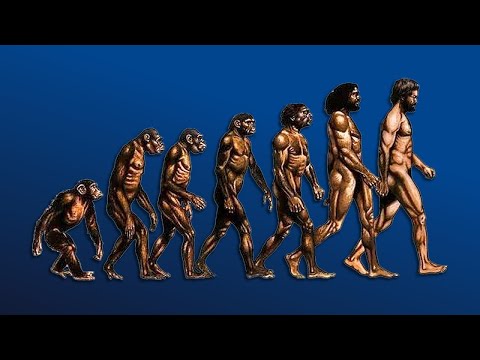
He traces the timeline from early Australopithecus through Homo erectus to Homo sapiens, showing how cooperation for defense and hunting created strong selection for intelligence, social skills, and theory of mind.
Von Hippel links these ancient pressures to modern traits such as tribalism, gossip, status competition, fairness concerns, pair‑bonding, and our fraught relationship with food, happiness, and comparison.
The conversation closes by connecting evolution to contemporary risks and possibilities—AI, self‑destruction, cyborg futures—and practical ways we can use self‑awareness to counter outdated instincts in a modern world.
Key Takeaways
Being forced out of the rainforest onto the savanna reshaped our entire species.
As forests dried and disappeared, our ancestors had no choice but to enter the open savanna, where they were suddenly vulnerable to predators; survival there demanded new solutions—bipedalism, weapons, and especially cooperation.
Get the full analysis with uListen
Bipedalism plus throwing enabled weak individuals to defeat strong predators together.
Standing on two legs freed the hands and remodeled the torso, shoulders, and wrists for powerful throwing, making it possible for groups armed with stones or spears to kill or repel lions and other large animals from a distance.
Get the full analysis with uListen
Cooperation made big brains worth the metabolic cost.
Brains are extremely energy‑hungry; once our ancestors could coordinate hunts, divide labor, and plan together, extra brain tissue began to pay off, driving rapid expansion from Australopithecus to Homo erectus and eventually to modern humans.
Get the full analysis with uListen
Our social intelligence created tribalism and intergroup hostility as well as cooperation.
Evolution favored strong cooperation and kindness within the group, but caution and aggression toward outsiders competing for resources or carrying unfamiliar diseases—laying the groundwork for modern ethnocentrism, prejudice, and even genocidal behavior.
Get the full analysis with uListen
Sexual selection wires us to compare ourselves relentlessly to same‑sex rivals.
What matters for mating success is not absolute quality but how you stack up against others; this drives constant status comparison, sensitivity to fairness, and the “hedonic treadmill” of never feeling like enough despite objective gains.
Get the full analysis with uListen
Human mating systems likely revolved around serial monogamy with some infidelity.
Evidence from hunter‑gatherers and anatomy (e. ...
Get the full analysis with uListen
Our Pleistocene minds are poorly matched to modern environments—but awareness creates leverage.
Instincts tuned for scarcity, small groups, and physical danger now play out in consumerism, anxiety, traffic rage, and tribal politics; using conscious reflection—the “mindfulness gap”—we can override unhelpful impulses rather than be driven by them.
Get the full analysis with uListen
Notable Quotes
“The savanna made us cooperative and friendly to each other, but it did that in order to make us more effective killers.”
— William von Hippel
“Brains are super expensive. Our brain uses 20% of our metabolic energy at all times.”
— William von Hippel
“It doesn’t really matter how good of a guy I am. What matters is how I compare to the other guys in my group.”
— William von Hippel
“We’re trying to make this primitive brain fit a modern world that moves far faster than evolution can.”
— Chris Williamson (paraphrasing the discussion)
“We’re not totally at the mercy of our unconscious mind… the key is to stop and ask yourself why you’re feeling this way.”
— William von Hippel
Questions Answered in This Episode
How might understanding the Social Leap change the way we design institutions like schools, workplaces, or cities to better fit our evolved psychology?
Psychologist William von Hippel explains his “Social Leap” theory: how being forced out of African rainforests onto the savanna pushed our chimp‑like ancestors toward bipedalism, cooperation, better throwing, and ultimately large human brains.
Get the full analysis with uListen AI
If cooperation evolved partly to make us better at killing, how can we consciously redirect that same cooperative power toward large‑scale global problems rather than conflict?
He traces the timeline from early Australopithecus through Homo erectus to Homo sapiens, showing how cooperation for defense and hunting created strong selection for intelligence, social skills, and theory of mind.
Get the full analysis with uListen AI
Given our hard‑wired status comparisons, what practical strategies can individuals use to pursue ambition without being trapped on the hedonic treadmill?
Von Hippel links these ancient pressures to modern traits such as tribalism, gossip, status competition, fairness concerns, pair‑bonding, and our fraught relationship with food, happiness, and comparison.
Get the full analysis with uListen AI
How should insights about ancestral mating systems and pair‑bonding influence modern expectations about lifelong monogamy, marriage, and relationship design?
The conversation closes by connecting evolution to contemporary risks and possibilities—AI, self‑destruction, cyborg futures—and practical ways we can use self‑awareness to counter outdated instincts in a modern world.
Get the full analysis with uListen AI
As AI and technology amplify our cooperative intelligence, what safeguards are realistically needed to prevent our greatest evolutionary strengths from becoming our downfall?
Get the full analysis with uListen AI
Transcript Preview
(wind blowing) Hello, friends. This week, I'm sitting down with William Von Hippel, who is a professor of psychology at the University of Queensland in Australia. His work's been covered in The Australian, New York Times, The Economist, Harvard Business Review, Time Magazine, and the Sydney Morning Herald, amongst many other publications. And on top of that, William Von Hippel sounds like a baron from medieval times, which is- it's the sickest name ever. So, I first came across Bill's work when I heard him on Joe Rogan's podcast a couple of weeks ago, and I was absolutely fascinated. Very fortunately, we've managed to find a slot in Bill's book tour, which he's currently undergoing in America, and I managed to sit down with him to go through his new book, The Social Leap: The New Evolutionary Science of Who We Are, Where We Come From, and What Makes Us Happy. If you have ever wondered about how great apes in trees became bipedal beings out on the plains and then evolved into the humans that you see before you today, this podcast is really for you. There's a beautiful story element and a narrative behind what Bill talks about, plus there's loads of implications for how we operate today. Again, the same as with my podcast I did with Professor Robin Hanson, The Elephant in the Brain, why we are the way we are nowadays is a lot due to the environment that we evolved in. But in other news, I have got some messages about why there wasn't a podcast up on audio platforms last week. And if you do not follow me on social media, you may not know why. However, we did another YouTube exclusive, what it's really like starring on Take Me Out. Uh, after the What It's Really Like On Love Island podcast, we decided to double down. If it ain't broke, don't fix it. Sure enough, the podcast has taken off really quickly and it's been covered by some of the UK press, which is always good news, despite them misquoting me and one of them misspelling my name, but whatever, it's fine (inhales) . Um, but we're back on a schedule. I've got Johnny and Yusuf coming up very, very soon to do some special edition Christmas podcasts. I've also got the fattest, thickest, longest section of recording (laughs) that I've ever had to do in the build up to Christmas, so you may even get two a week over the Christmas holidays, but don't hold me to it. In the meantime, we're gonna find out why we are the way we are and where we came from. Oh yeah, P.S. The first minute and a half might sound slightly different to normal. I was still fighting with Skype at this point, but don't worry, I was victorious. Normal audio services resumed after a couple of minutes. (upbeat music) Professor William Von Hippel, how are you today?
Good. Very happy to be here.
Install uListen to search the full transcript and get AI-powered insights
Get Full TranscriptGet more out of YouTube videos.
High quality summaries for YouTube videos. Accurate transcripts to search & find moments. Powered by ChatGPT & Claude AI.
Add to Chrome