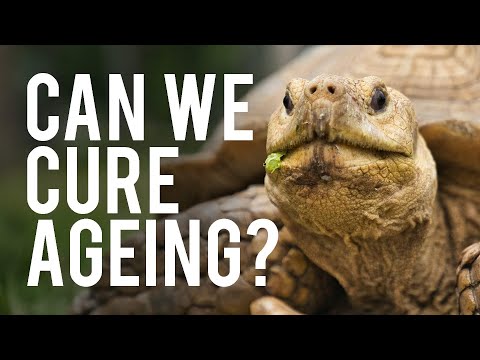
Why We Get Old & How We Can Stop It - Dr Andrew Steele | Modern Wisdom Podcast 265
Dr Andrew Steele (guest), Chris Williamson (host), Narrator
In this episode of Modern Wisdom, featuring Dr Andrew Steele and Chris Williamson, Why We Get Old & How We Can Stop It - Dr Andrew Steele | Modern Wisdom Podcast 265 explores can We Cure Aging? Andrew Steele Explains Science, Trade‑offs, Future Tech Dr. Andrew Steele argues that aging is both a measurable increase in mortality risk and a biological process driven by identifiable cellular and molecular changes. He explains why evolution produced aging as an energy trade‑off with reproduction, why targeting aging itself may be more effective than treating individual diseases, and how emerging tools like senolytics, stem cell therapies, gene editing, and AI‑driven biology could radically extend healthy lifespan. Steele is cautious about current lifestyle fads and supplements, emphasizing standard health advice and, above all, more aging research as the most impactful lever. He believes substantial lifespan extension could plausibly arrive within the lifetimes of people alive today, though timelines and ultimate limits remain deeply uncertain.
Can We Cure Aging? Andrew Steele Explains Science, Trade‑offs, Future Tech
Dr. Andrew Steele argues that aging is both a measurable increase in mortality risk and a biological process driven by identifiable cellular and molecular changes. He explains why evolution produced aging as an energy trade‑off with reproduction, why targeting aging itself may be more effective than treating individual diseases, and how emerging tools like senolytics, stem cell therapies, gene editing, and AI‑driven biology could radically extend healthy lifespan. Steele is cautious about current lifestyle fads and supplements, emphasizing standard health advice and, above all, more aging research as the most impactful lever. He believes substantial lifespan extension could plausibly arrive within the lifetimes of people alive today, though timelines and ultimate limits remain deeply uncertain.
Key Takeaways
Think of aging as rising death risk and fixable biology, not just “getting old.”
Statistically, human mortality risk doubles roughly every eight years; biologically, aging is driven by specific cellular changes (hallmarks) that can be slowed or reversed in animals, framing aging as a treatable process rather than an inevitable fate.
Get the full analysis with uListen
Target aging itself instead of chasing thousands of separate age‑related diseases.
Most cancers, heart disease, strokes, and dementias share the same underlying aging biology; treating aging could reduce the incidence of many conditions at once, likely more efficiently than tackling each of the 11,000+ classified diseases separately.
Get the full analysis with uListen
Evolution did not “design” us to age on purpose; aging is a trade‑off.
Organisms allocate limited energy between body maintenance and reproduction; in many environments, evolving to have more offspring sooner beats investing heavily in long‑term repair, making aging an accidental byproduct of fitness optimization, not an adaptation.
Get the full analysis with uListen
Senolytic drugs that clear senescent cells can make old animals biologically younger.
In mice, selectively killing senescent (aged, dysfunctional) cells delays cancer, maintains cognitive function, improves physical health, and extends healthy lifespan, demonstrating that at least some aspects of aging can be reversed in whole organisms.
Get the full analysis with uListen
Evidence for calorie restriction and intermittent fasting in humans is mixed and limited.
While eating less clearly extends lifespan in many short‑lived species, monkey and human data show health benefits but ambiguous effects on lifespan, and practical regimens can carry downsides like bone loss, anemia, and reduced immunity; Steele urges caution rather than zealotry.
Get the full analysis with uListen
Near‑term longevity gains will likely come from standard health habits plus new therapies.
Not smoking, maintaining healthy weight, exercising (especially strength training), and managing diet may buy 5–10 extra healthy years, while upcoming interventions like senolytics, improved stem cell therapies, and possibly drugs like metformin could add more on top.
Get the full analysis with uListen
The biggest personal lever right now is advocating for more aging research funding.
Because the largest lifespan gains will likely come from biomedical breakthroughs rather than marginal lifestyle tweaks, Steele argues that political and public support for biogerontology could have far greater impact on how long and how well we live.
Get the full analysis with uListen
Notable Quotes
“We can either go after thousands of individual diseases, or we can go after the root cause, and that’s aging.”
— Dr. Andrew Steele
“Evolution is reproduction of the fittest, not survival of the fittest.”
— Dr. Andrew Steele
“Aging is the single largest cause of suffering in the world.”
— Dr. Andrew Steele
“It’s not going to be as simple as taking a single pill that slows or reverses your ageing.”
— Dr. Andrew Steele
“Every year you stay alive longer is another opportunity for some medical breakthrough to happen that could benefit you.”
— Dr. Andrew Steele
Questions Answered in This Episode
If senolytics work so well in animals, what are the main scientific and safety hurdles to using them widely in humans?
Dr. ...
Get the full analysis with uListen AI
How should individuals balance the uncertain benefits and real downsides of aggressive dietary restriction or fasting when the human data are so mixed?
Get the full analysis with uListen AI
What ethical frameworks should guide decisions about distributing powerful anti‑aging treatments if they significantly extend lifespan?
Get the full analysis with uListen AI
How might societies need to redesign work, retirement, and education if healthy lifespans routinely doubled?
Get the full analysis with uListen AI
Given limited resources, how much funding should shift from traditional disease‑specific research into aging biology as a common root cause?
Get the full analysis with uListen AI
Transcript Preview
Toward the end of the book, I start talking about what our cure for aging is actually gonna look like. And I think it's gonna be much more complicated than anything we've talked about so far. The reason I've got some faith that it's gonna happen is because we're undergoing a computational revolution in biology at the moment. You know, even if we don't get to general intelligence, I think we're gonna get to a point where AI programs are able to interpret this huge sort of torrent of data that biologists are producing in a way that humans just can't understand.
What is aging?
That is an excellent question. There are many, many different ways you could define this, and I think e- every different scientist could give you a different answer. But I've got two ways of thinking about it, one of them statistical, one of them biological. And the statistical way of thinking about it, which I think is the most sort of catchall definition of aging, is it's what happens to your risk of death with time. So the longer you've been alive, how much does your risk of death increase? So let's take the example of humans. Um, if you're in your 30s, your risk of death is about one in 1,000 per year. If you're lucky enough to make it as far as 80, your risk of death goes up to 5% a year. So it's- it's, you know, hundreds of times more. And what... Uh, s- yeah. Yeah, so what that means actually, if you look at the stats, is... Can I start that again? 'Cause I think it's not hundreds of times, is it? The difference between five and 1,000 is on- it's 200. It's 200 times more. I'm right. (laughs)
That's fine.
Sorry. Let me do that-
It's correct.
Let me-
It's correct, Andrew. We're- we're- we're-
(laughs)
We're, the- the- the internet, you're here because you're a scientist, not because you're a mathematician.
(laughs) And what you find actually is the- the better people are at maths, in terms of, like, the- the proper theoretical hardcore maths, the worse they are at mental maths. And you find yourself second-guessing yourself all the time.
(laughs)
If you get a proper hardcore number theorist, they can't add two and five.
(laughs)
(laughs)
I remember my-
So that-
My old housemate did a PhD in pure mathematics, and he once ordered a four-seater taxi for five of us because apparently in pure math, you count from zero.
(laughs) Yeah, yeah, it's off by one error. Classic in computer programming as well. (laughs)
Unbelievable, man.
So-
You spend all this time doing maths, you can't count to five?
I know. Got a PhD, can't even manage it. So what, where was I? Yeah, yeah. So the- so humans, the- the sort of way to sum up all that stuff that I just failed to add up in my head is that our risk of death doubles every eight years. So you can say in some sense, our rate of aging is encapsulated in this number. We're saying that if our... That's, you know, this... It's called the mortality rate doubling time. So how long does it take your mortality rate to double? And if you look around the animal kingdom, this isn't universal at all. For mice, it's a matter of months. Um, but if you look at something like a giant tortoise, um, which you'll find on the cover of my book, and the reason is that they're what's called negligibly senescent. They have a risk of death which is constant with time. So effectively, their mortality rate doubling time is infinite. And that doesn't mean they're immortal. It doesn't mean they're gonna live forever, but what it does mean is it doesn't matter how long ago they were born, um, their risk of death stays the same. So that's the statistical definition of death. The biological definit- sorry, of aging. The biological definition of aging, I'd say, is to look at the individual components of the aging process. And there was a paper published in 2013 called The Hallmarks of Aging, and it lists these nine different changes in your cells, in your molecules. Um, and they- they tend to increase with age, all of these things. Um, they tend to... If you accelerate these changes, then the animals will have their aging accelerated, so they'll die more quickly. And if you slow these changes down, then the animals get less disease and die more slowly. So that's the sort of criteria by which they define these different hallmarks, which are a sort of more nitty-gritty, molecular, what's-actually-going-on definition of aging, as opposed to that high-level statistical one we started with.
Install uListen to search the full transcript and get AI-powered insights
Get Full TranscriptGet more from every podcast
AI summaries, searchable transcripts, and fact-checking. Free forever.
Add to Chrome