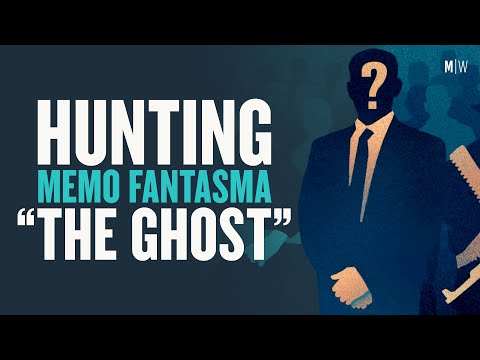
Hunting An Invisible Drug Lord - Jeremy McDermott | Modern Wisdom Podcast 339
Chris Williamson (host), Jeremy McDermott (guest)
In this episode of Modern Wisdom, featuring Chris Williamson and Jeremy McDermott, Hunting An Invisible Drug Lord - Jeremy McDermott | Modern Wisdom Podcast 339 explores inside Colombia’s Invisible Cartel: Sued By A Ghost Drug Lord Journalist Jeremy McDermott explains his years-long investigation into Guillermo "Memo Fantasma" Acevedo, a high‑level Colombian trafficker who chose anonymity and political protection over flashy narco violence.
Inside Colombia’s Invisible Cartel: Sued By A Ghost Drug Lord
Journalist Jeremy McDermott explains his years-long investigation into Guillermo "Memo Fantasma" Acevedo, a high‑level Colombian trafficker who chose anonymity and political protection over flashy narco violence.
Memo allegedly moved hundreds of tons of cocaine, laundered millions through elite Bogotá real estate, acted as a DEA informant, and cultivated powerful allies, including links to Colombia’s vice president’s family.
McDermott details how Memo erased his judicial history by corrupting prosecutors and police, leveraged sealed U.S. indictments, and built a legitimate façade in Colombia and Spain while remaining largely untouchable.
For exposing him, McDermott now faces criminal libel charges in Colombia that could result in prison, highlighting how legal systems can be weaponised by organised crime to silence investigative journalism.
Key Takeaways
Anonymity is now a more effective protection for kingpins than violence.
Modern high‑level traffickers like Memo avoid narco theatrics and private armies, operating quietly through business fronts and political connections to reduce law‑enforcement attention and prolong their careers.
Get the full analysis with uListen
Control of trafficking routes, not production or retail, generates the real profits.
While producers and street dealers earn 150–300% margins, those who move cocaine from Colombia to distant markets can make around 3,000% profit, making route‑holders like Memo the true power brokers.
Get the full analysis with uListen
Systemic corruption can effectively erase a criminal past.
Memo allegedly bribed prosecutors and police, buried cases in special peace tribunals, and used his status as a DEA informant to have indictments sealed, leaving virtually no actionable paper trail in Colombia.
Get the full analysis with uListen
Sophisticated real-estate schemes turn dirty cash into clean, recurring income.
By buying land via relatives, swapping it with developers for offices and shops, and then paying debts with property titles, Memo avoided suspicious bank movements while creating millions in “legitimate” rental income.
Get the full analysis with uListen
Political and elite partnerships provide both legitimacy and protection.
Doing lucrative projects with the husband of Colombia’s vice president and getting his children into elite schools tied powerful figures to Memo’s interests, increasing their incentive to shield him from scrutiny.
Get the full analysis with uListen
Criminal libel laws are potent tools for silencing investigative reporting.
Because Colombian criminal libel doesn’t require plaintiffs to prove falsity, figures like Memo and the vice president can trigger state investigations and potential prison sentences for journalists instead of civil disputes.
Get the full analysis with uListen
Following the money may be more legally viable than proving old drug crimes.
With statutes of limitations and evidentiary hurdles on decades‑old trafficking and murders, McDermott focuses on ongoing money laundering and unexplained wealth as the most realistic route to eventually imprison Memo.
Get the full analysis with uListen
Notable Quotes
“This guy has been everywhere, and he's managed to wipe the footsteps.”
— Jeremy McDermott
“Crime pays, Chris, can I just say that? In his case crime has paid, at least so far.”
— Jeremy McDermott
“He cannot sue a journalist who has proven not only his existence, but his criminal record, and get away with it.”
— Jeremy McDermott
“The fact he's still out there shows that the risks are sufficiently low for you to make it worthwhile.”
— Jeremy McDermott
“Don’t you think it’s brilliant? It’s a shame that he applied his talents to criminality.”
— Chris Williamson
Questions Answered in This Episode
How many other “Invisible” traffickers like Memo Fantasma might currently be operating with similar political and institutional protection?
Journalist Jeremy McDermott explains his years-long investigation into Guillermo "Memo Fantasma" Acevedo, a high‑level Colombian trafficker who chose anonymity and political protection over flashy narco violence.
Get the full analysis with uListen AI
What specific reforms would most effectively prevent prosecutors, police, and peace tribunals from being co‑opted by organised crime in countries like Colombia?
Memo allegedly moved hundreds of tons of cocaine, laundered millions through elite Bogotá real estate, acted as a DEA informant, and cultivated powerful allies, including links to Colombia’s vice president’s family.
Get the full analysis with uListen AI
How can international bodies and foreign governments respond when criminal libel laws are weaponised against journalists investigating transnational crime?
McDermott details how Memo erased his judicial history by corrupting prosecutors and police, leveraged sealed U. ...
Get the full analysis with uListen AI
To what extent do consumer countries bear responsibility for creating the economic incentives that make careers like Memo’s so attractive?
For exposing him, McDermott now faces criminal libel charges in Colombia that could result in prison, highlighting how legal systems can be weaponised by organised crime to silence investigative journalism.
Get the full analysis with uListen AI
Could investigative models like McDermott’s—heavy reliance on underworld sources and financial forensics—be scaled or institutionalised to systematically expose other invisible kingpins?
Get the full analysis with uListen AI
Transcript Preview
At no point have you said worried about perhaps being killed?
Yeah. And, and I had a, a long chat with a couple of underworld sources about whether he would be the sort of chap who would go down that route. And one source said, "Yeah, you'll probably have an accident. Someone'll try to rob you, except they're not really there to rob you, and you'll get killed in the attempt." But then all the others, including this source, said, "No, he's not that stupid." Chris, he's not gonna sue me and kill me.
(laughs)
I really think that's a one or the other situation here, you know? So I should be slightly relieved that he's suing me, I guess. (wind blows)
Are you being sued by a drug lord?
I am, unfortunately, in criminal court. Um, and if convicted, face up to five years in prison, um, and a hefty fine. Um, and I won't be allowed to continue my work as a journalist so long as I am still under sentence.
That seems like an intense position to be in.
Uh, it's an unusual position to be in, in the sense that, um, we get sued a lot, but I've never been sued by a drug trafficker who's actually been named but not yet convicted, nor indeed been arrested. So, um, yeah, strange position to be in, um, but we're still, um, we're still plowing on.
What are The Invisibles?
The Invisibles, Chris, is a name we, um, we've been giving to drug traffickers here, uh, in Latin America, particularly in Colombia where, where I, where I live, um, that decided a while back that their best protection was not a private army, but was being anonymous, simply not being on anybody's radar. And, you know, if you, if you have a look at the, the Colombian drug world going back to Pablo Escobar, you know, he had his army of sicarios. And then after Pablo Escobar, we have the paramilitaries, and they end up demobilizing more than 30,000 heavily-armed fighters. Then, of course, we've got the Marxist guerrillas. So there is a tradition of extreme violence, verily, very heavily armed cartel structures, um, in Colombia and still today in Mexico. And the, um, this generation or this group of drug traffickers realized that, uh, they would left- leave Pablo Escobar to take all the heat. Um, and Memo Fantasma actually started his career in the Medellin cartel, so he goes all the way back. He's been e- he's been in the business for 30 years. Um, and so he's been quietly moving, we think, anything up to 100 tons of cocaine over the last, um, three decades, um, living in the shadows. Um, living under Pablo Escobar, and then after, the paramilitaries, um, always operat- operating, um, initially in and out of Medellin, um, and simply been able to do his business without appearing on, uh, on certainly the public's radar. Although he was on the US radar and Colombian police radar, but he was an informant for the DEA, and that seems to have protected him.
Install uListen to search the full transcript and get AI-powered insights
Get Full TranscriptGet more from every podcast
AI summaries, searchable transcripts, and fact-checking. Free forever.
Add to Chrome