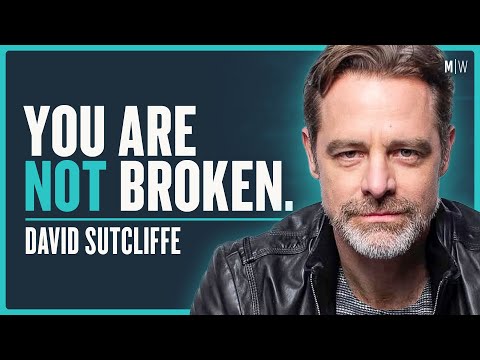
How To Stop Betraying Yourself & Be More Authentic - David Sutcliffe
Chris Williamson (host), David Sutcliffe (guest), Narrator
In this episode of Modern Wisdom, featuring Chris Williamson and David Sutcliffe, How To Stop Betraying Yourself & Be More Authentic - David Sutcliffe explores stop Self-Betrayal: Authenticity, Faith, and Facing Your Fear Chris Williamson and David Sutcliffe explore what it means to live authentically, arguing that authenticity is embodied truthfulness in the present moment, not oversharing or impulsivity. They connect authenticity with confidence, faith, and synchronicity, emphasizing the need to trust inner impulses rather than external expectations or cultural fear-mongering.
Stop Self-Betrayal: Authenticity, Faith, and Facing Your Fear
Chris Williamson and David Sutcliffe explore what it means to live authentically, arguing that authenticity is embodied truthfulness in the present moment, not oversharing or impulsivity. They connect authenticity with confidence, faith, and synchronicity, emphasizing the need to trust inner impulses rather than external expectations or cultural fear-mongering.
Sutcliffe explains how childhood patterns of self-betrayal to maintain parental approval shape adult relationships, drive hidden motivations for success, and make self-compassion difficult. He advocates confronting fear through action, learning emotional containment (not repression), and practicing vulnerability in a discerning way, especially for men in relationships.
The conversation also dissects the costs of external success—fame, money, status—showing how these rarely resolve inner wounds and often trap people further in inauthentic lives. Both men discuss transitioning from a domineering, war-time, productivity mindset to a more fluid, faith-based, service-oriented way of living as they mature.
Ultimately, they frame growth as moving from narcissistic, externally validated striving to a life oriented around presence, service, and honest contact with one’s full emotional life—light and shadow included.
Key Takeaways
Authenticity is selective, embodied truth—not radical transparency.
Sutcliffe defines authenticity as being present and truthful with yourself while consciously choosing where and how to show different ‘masks. ...
Get the full analysis with uListen
Confidence grows from repeatedly trusting your inner impulses.
He suggests listing times when you followed intuition and it worked out to rebuild faith in your inner compass. ...
Get the full analysis with uListen
Self-betrayal usually precedes feeling betrayed by others.
When clients feel wronged, Sutcliffe asks where they ignored an intuition, desire, or truth beforehand; it’s almost always there. ...
Get the full analysis with uListen
You can’t think your way out of fear—you must act.
They argue that mental over-analysis can’t resolve emotional or fear-based problems. ...
Get the full analysis with uListen
Discernment in relationships means sharing enough to be felt, not everything.
Total emotional dumping can be destabilizing, but hiding out of shame erodes trust. ...
Get the full analysis with uListen
Self-compassion is blocked by an unconscious belief that you are ‘bad.’
Because children interpret rejected traits as inherently bad, many adults carry deep shame and mistrust of their own goodness. ...
Get the full analysis with uListen
External success will not fix internal emptiness—and can trap you.
Both describe seeing highly successful, famous people remain deeply neurotic and constrained by their status. ...
Get the full analysis with uListen
Notable Quotes
“If I'm gonna make mistakes, I want them to be my own mistakes.”
— David Sutcliffe
“Once you stop listening to those innermost impulses, you start to forget that they're there.”
— David Sutcliffe (paraphrasing John Cassavetes’ impact on him)
“You can’t solve a problem of the mind with the mind. It has to be through action.”
— David Sutcliffe
“We all had to betray ourselves as children in order to stay in connection and in favor with our caregivers.”
— David Sutcliffe
“External validation will not fill an internal void.”
— Chris Williamson
Questions Answered in This Episode
Where in my life am I currently betraying my own instincts to maintain connection, approval, or safety?
Chris Williamson and David Sutcliffe explore what it means to live authentically, arguing that authenticity is embodied truthfulness in the present moment, not oversharing or impulsivity. ...
Get the full analysis with uListen AI
If I listed every time I trusted my intuition and it worked, what patterns about my ‘authentic self’ would start to emerge?
Sutcliffe explains how childhood patterns of self-betrayal to maintain parental approval shape adult relationships, drive hidden motivations for success, and make self-compassion difficult. ...
Get the full analysis with uListen AI
How can I practice emotional containment—fully feeling my emotions without repressing them or dumping them on others?
The conversation also dissects the costs of external success—fame, money, status—showing how these rarely resolve inner wounds and often trap people further in inauthentic lives. ...
Get the full analysis with uListen AI
Which parts of myself did I learn as a child were ‘bad,’ and how might those disowned traits still be silently running my adult decisions?
Ultimately, they frame growth as moving from narcissistic, externally validated striving to a life oriented around presence, service, and honest contact with one’s full emotional life—light and shadow included.
Get the full analysis with uListen AI
What would it look like to shift from a war-time, tyrannical inner coach to a benevolent, demanding-but-compassionate inner leader?
Get the full analysis with uListen AI
Transcript Preview
How do you come to think about the role of authenticity in a good life?
(laughs) Well I, I guess I try to be as authentic as I can. I don't know if that's a thing we can ever do perfectly, and it, it, we can't, we have to be discerning about where we want to be authentic. But as long as we're making choices, meaning I'm not gonna show up at work and always be my authentic self. There's always a mask that we're wearing. But if I'm doing that consciously, then, uh, then I can still maintain my authenticity. For me, authenticity is really just truth, kind of being the truth of who I am, which takes a lot of work, because we don't always know who we are, and we have habitual thought patterns and responses to life that cause us... I mean, we're authentic to those, but to be authentic to ourselves, to go after exactly what it is we want, um, to be present all the way, maybe that's a, another way to define it, being present in the moment, which is a really hard thing to do. Always being present. There's so many ways that we, we leave, you know, whether it's through distraction or drugs or alcohol or pornography, or we get lost in our mind. So part of authenticity for me is just being embodied, being here, being present, being in the moment, telling the truth as best we can, and I think that's empowering. I think that leads to an empowering life. And, uh, you know, it's really what I try to teach people, you know? How do we find our, our authentic self? I know it's an overused word, but, um, I think that's what we're all longing for, because when we're aligned in some way within ourselves, we're true to ourself and that feels good. So even if things go badly, at least we're true to who we are, we're making our own mistakes.
Mm-hmm. Mm-hmm.
Not the, you know, some ... Not being guided by some idea of who we're supposed to be or what we're supposed to be doing. And I've, I've certainly done plenty of that in my life. I, I made a commitment (laughs) early on, if I'm gonna make mistakes, I want them to be my own mistakes. I wanna learn from them.
Oh, that's such a cool idea.
My failures.
The, the idea of making a mistake and it not even being yours.
Painful. Painful. I learned this as an actor, because when I first started out in Hollywood, you know, you get there and you think that everybody is, knows what they're doing. (laughs) And they're smarter than you. At least that's what I thought. And, uh, you know, so you listen to a lot of directors, you know, tell you how to play scenes, and, um, it got to a point where, uh, you know, I would, I would see the scene and, and I thought, "Yeah, I don't think that was the right choice." Now, it's my face on the screen, right? So if it's not resonating, it, people aren't thinking about the director, they're thinking about me. So there was a certain point I just decided to take ownership of everything. And occasionally you'd get into conflict with directors, but the choice was, um, um, I gotta do it my way. Uh, I wanna listen, of course, um, to what people are saying, saying and take that information in. But ultimately I have to do it my way and live or die by it.
Install uListen to search the full transcript and get AI-powered insights
Get Full TranscriptGet more from every podcast
AI summaries, searchable transcripts, and fact-checking. Free forever.
Add to Chrome