 Pivot
PivotBig Tech CEOs Kiss the Ring at Donald Trump’s Inauguration | Pivot
At a glance
WHAT IT’S REALLY ABOUT
Big Tech Titans Bow To Trump As Democracy, TikTok Teeter
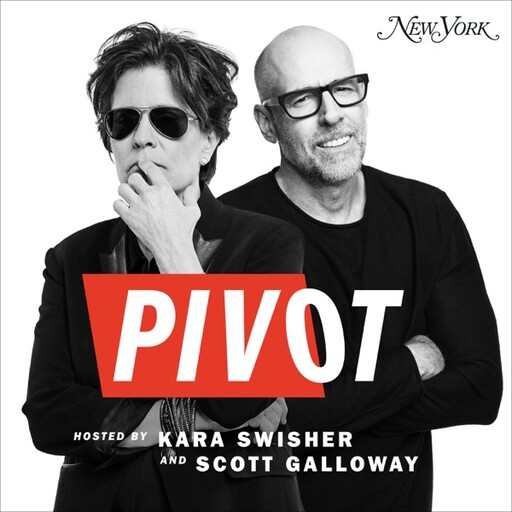
- Kara Swisher and Scott Galloway riff on Trump’s inauguration, focusing on the spectacle of Big Tech CEOs attending and what that reveals about power, shareholder incentives, and creeping autocracy. They contrast this with Biden’s largely overlooked but historically important farewell warning about a new tech-industrial oligarchy. The conversation then turns to the TikTok ban, China’s leverage over Elon Musk, and the broader failures of U.S. policy to address Chinese apps and data security coherently. In the back half, they dissect Trump’s cabinet confirmations—especially Pam Bondi and Pete Hegseth—as signs of hollowed-out governance, and close with economic implications of the LA fires, bank exposure, climate risk, and how tariffs and immigration policy may drive inflation.
IDEAS WORTH REMEMBERING
5 ideasExtreme wealth hasn’t translated into political independence for tech CEOs.
Despite being among the richest people in the world, leaders like Musk, Zuckerberg, Bezos, Cook and others are still willing to “kiss the ring” at Trump’s inauguration to protect shareholder value and regulatory favor, showing how shareholder incentives overpower personal principle.
Biden’s tech-industrial complex warning may age like Eisenhower’s speech.
Swisher and Galloway argue Biden’s farewell remarks on an emerging oligarchy of tech and money are historically important even if largely ignored now, akin to Eisenhower’s prescient warning about the military-industrial complex.
The TikTok fight is about geopolitical credibility as much as data security.
They stress that backing off the congressionally mandated TikTok divest-or-ban would signal to China that the U.S. “blinks,” weakening U.S. bargaining power on broader trade and security issues regardless of which party is in power.
Elon Musk’s behavior shows how economic dependence curbs ‘free speech absolutism.’
Galloway notes Musk loudly attacks U.S. and democratic leaders but is conspicuously deferential toward China and other regimes that can harm his businesses, illustrating how economic exposure creates selective speech and geopolitical risk.
Democrats are attacking the wrong vector on Trump’s defense nominee.
They argue Senate Democrats focused too much on Pete Hegseth’s personal scandals and not enough on exposing his lack of domain expertise—missing a chance to publicly demonstrate his strategic and operational incompetence for the Defense role.
WORDS WORTH SAVING
5 quotesI refuse to normalize this shit.
— Kara Swisher
None of these people want to go. None of them have to. They’re all worth $100 billion… I don’t know why you would be that rich and be pushed around like that.
— Kara Swisher
Between X and social media, they have basically just squeezed out… Is Biden still president? You wouldn’t know.
— Scott Galloway
We’re blinking right now. And I think that has geopolitical ramifications across any negotiation, whether it’s China or trade.
— Scott Galloway
He can be a low-character person and still, I hate to say this, be probably a competent Secretary of Defense. What you can’t be is a high-character person who doesn’t know what the fuck you’re doing.
— Scott Galloway
High quality AI-generated summary created from speaker-labeled transcript.



