EVERY SPOKEN WORD
15 min read · 3,213 words- 0:00 – 0:25
Emergency episode: warning signs of escalating authoritarian tactics
- SPSpeaker
The more Donald Trump gets away with, if he is allowed to pardon people, and there's not enough uproar about it, and nothing happens, then he's gonna, um, uh, pick- he's gonna arrest people without due process on the streets or detain them, uh, even if they're American citizens. [upbeat music]
- KSKara Swisher
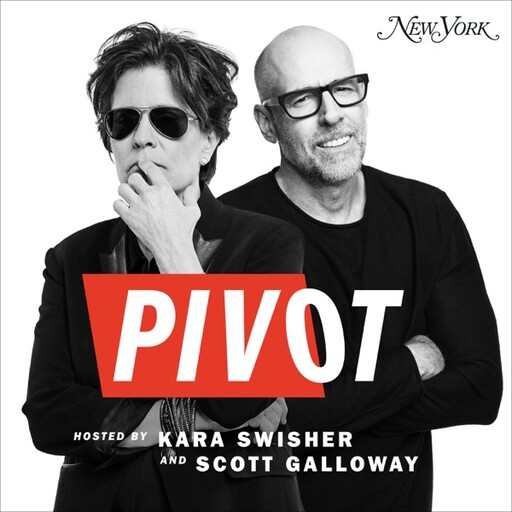
Hi, everyone. This is Pivot from New York Magazine and the Vox Media Podcast Network. I'm Kara Swisher.
- SGScott Galloway
And I'm Scott Galloway.
- 0:25 – 0:55
What happened: Don Lemon arrested while covering the Grammys
- KSKara Swisher
Uh, again, Scott, we have to do an emergency episode. This is getting kind of ridiculous. Uh, we had to jump in here to talk, uh, to our audience about what's happening right now with journalist and our friend Don Lemon. Right now, he was recently on the show, uh, as a guest host while you were away. Um, but he was arrested by authorities in Los Angeles Thursday night, where he was covering the Grammy Awards, um, accused of violating federal law tied to a protest he covered as a journalist at a Minnesota church earlier this month. Lemon and three other journalists were arrested in
- 0:55 – 1:56
DOJ and Pam Bondi’s role: disputed warrants and court resistance
- KSKara Swisher
connection with the, with this, uh, this event at the City's church in St. Paul, Minnesota. Attorney General Pam Bondi said she ordered the arrest of Don and three others, uh, citing a connection to a coordinated attack on the church. Don has repeatedly said he was there as a journalist, not a protester, and if you watch what he did there, that's what he was doing, including interviewing the pastor and others. A magistrate judge rejected an earlier attempt by the DOJ to bring charges against Don, uh, and other protesters, and the DOJ petitioned a federal appeals court to force the judge to issue an additional warrant, only to be denied, but the DOJ went ahead anyway, even though courts and prosecutors within those offices in Los Angeles and Minnesota are resisting this. Lemon's lawyers called the attack... uh, the arrest, an attack on the First Amendment, obviously, and says Lemon will fight the case in court. He's supposed to be, uh, arraigned, uh, today in Los Angeles. Obviously, Don's a friend of ours, a friend of mine. Um, he's been, uh, been reaching, uh, reaching out.
- 1:56 – 3:26
Why Kara believes Lemon was clearly doing journalism
- KSKara Swisher
At Pat- when he, when he was fired from CNN, he and I got to know each other 'cause I helped him sort of mount what he was doing, which was independent journalism, and I've been very proud of him, what he's been doing. He's doing a lot of street journalism, taking his, his, uh, microphone to people, asking them questions. He's built a big following on YouTube. I think he crossed a million subscribers recently. But what's- what he's doing is really amazing. He's doing these things, and what he does, he's a man on the street, essentially. And so he went into this church while this event was taking place and, um, and was doing reporting, and which a lot [chuckles] of reporters should do, you know? I think he's found a new life in doing it as an independent journalist, and it's pretty, um, pretty amazing, all the stuff he's been doing. Very varied and talking to all kinds of people, not just, uh, liberals or but conservatives. He goes in places other journalists don't go. Um, and I think it's a real value, what he's doing. And so he was doing this here. Um, he was... Then it was the Grammys. I mean, it's very varied where he goes. Uh, he was in New Orleans for New Year's and stuff, and so what he was doing here was journalism. And because, you know, he's had a target on him by the Trump administration, who never liked him when he was at CNN, and, uh, and so this is what they're doing, and they're getting- what they were getting is a lot of pressure from church groups for this group going into a church, and you can debate whether they should have gone in that church, but a journalist certainly could follow a group of people in there. He did not coordinate the attacks. They're gonna try to allege he did, that he was part of it. Um, but
- 3:26 – 4:30
“Fascist handbook”: targeting journalists to frighten and silence
- KSKara Swisher
it's really, again, part of this, uh, what I said, uh, on, in today's episode that just aired, was they're gonna keep escalating 'cause they're desperate, and they're losing the public case. Um, and so part of their, their, their, uh, handbook here, the fascist handbook, is to attack journalists. It's happened in Turkey. It's happened in all manner of the aut- uh, authoritarian countries, and this is what you do. And, uh, and so doing these high-profile cases, even though judges and lawyers do not want to do this and say it's full of shit, which it is, um, is really frightening. Um, and it's meant to frighten, and what we have to do is push back. We have to fight it, but the fact is, they will keep doing this, and they will not back out. They will not de-escalate. This is part of the, the... This is part of the problem, is you all think you can work with these people, and you cannot. Uh, any thoughts you have? I, I'm, uh, it makes me nervous. I have a lot of people who have, have been threatening to me, and, uh, it makes every journalist-
- SGScott Galloway
I'm sure
- KSKara Swisher
... who's doing any kind of speaking out, um, uh, really, uh, really at, at risk, I would say.
- 4:30 – 5:02
Scott’s distinction: not protest policing—this is targeted criminalization of journalism
- SGScott Galloway
Yeah, I think it's important to distinguish that this wasn't, uh, you know, 50 people refusing to leave an area, and they get arrested one by one for trespassing.
- KSKara Swisher
Mm-hmm.
- SGScott Galloway
This was our attorney general, the federal government, specifically targeting specific journalists-
- KSKara Swisher
Mm-hmm
- SGScott Galloway
... and essentially deciding to criminalize journalism, which, at the end of the day, converts politics into policing.
- KSKara Swisher
Mm-hmm.
- SGScott Galloway
And also, this really should be-
- KSKara Swisher
Well said
- SGScott Galloway
... a cause for alarm bec- well, it's the first step-
- KSKara Swisher
Mm
- SGScott Galloway
... in state capture of truth.
- KSKara Swisher
Mm-hmm.
- 5:02 – 5:55
Historical parallels: Turkey, Russia, Weimar, Hong Kong—and the slippery slope
- SGScott Galloway
They, they arrest journalists. That's kind of the first step towards mass repression, and it's not usually just journalists. They go after loud critics-
- KSKara Swisher
Yeah
- SGScott Galloway
... polarizing figures-
- KSKara Swisher
Mm-hmm
- SGScott Galloway
... people that the public, quite frankly, are already split on. So Don Lemon is a controversial figure. A lot of people don't like him and will celebrate this, but once you normalize-
- KSKara Swisher
Mm-hmm
- SGScott Galloway
... criminalizing journalism from whatever political spectrum-
- KSKara Swisher
Mm-hmm
- SGScott Galloway
... the enforcement widens really fast. And just some historical context, this happened in Turkey in 2013. The initial arrests were seen as, quote-unquote, "law enforcement," and within five years, Turkey became the world's largest jailer of journalists. Uh, Russia in the 2000s, early cases targeted, quote-unquote, "controversial reporters," and the result now is that Russia now ranks in the bottom 10% globally for press freedom. The other, the, you know, I always go to the money here. When a society
- 5:55 – 6:40
Economic consequences: repression drives self-censorship and decline
- SGScott Galloway
starts doing this, it almost always, uh, predates economic collapse, whether it's Egypt, whether it's Hungary. This isn't a good move for the economy because what happens here is it's not the censorship itself-... but it creates an environment of self-censorship-
- KSKara Swisher
Absolutely
- SGScott Galloway
-where people stop, start spiking stories, et cetera.
- KSKara Swisher
Well-
- SGScott Galloway
And this isn't-- Also, this line ten- this line... The last thing I'll say, this line-
- KSKara Swisher
Mm-hmm
- SGScott Galloway
... tends to be a difficult line to cross back easily.
- KSKara Swisher
Yeah.
- SGScott Galloway
Once you start normalizing, they did it in the Weimar Republic, they did it in Hong Kong.
- KSKara Swisher
Mm-hmm.
- SGScott Galloway
Once you start normalizing the arrests of journalists and controversial figures, it's, it's a fast hill down and a slow hill, uh, back.
- 6:40 – 7:41
Soft capture vs hard arrests: billionaire influence and media compliance
- KSKara Swisher
Yeah, I would agree. I mean, one of the things that's really disturbing is it's not just this arrest, which is the explicit version of it, is what we're talking about is the capture by these tech billionaires of these institutions that are sort of soft-pedaling. Now, it's one thing for Fox News. We know they feel like a state propaganda arm most of the time, not always, but most of the time. You know, I've talked to a lot of people, they call, uh, Fox News entertainment, but it's actually propaganda, and, and everyone kind of expects it. In this case, there's this sort of this slow burn, whether it's Jeff Bezos, you know, uh, you know, deep sixing the Kamala Harris, um, endorsement or ma- or ch- or making changes or, or gutting out The Washington Post, whether you have Larry Ellison, um, at through Oracle, owning a big chunk of TikTok and also changing CBS News into this both-sider-ism kind of situation. Um, it's, i- it's that too, the sort of soft grab of, of press power, which happens in these places, and then this very hard grab, which is to arrest
- 7:41 – 9:11
First Amendment stakes: reporting protests, press rights, and government overreach
- KSKara Swisher
journalists. And you're right, they're picking someone who they've had a beef with for a long time, who the... You know, i- it's in a church, so it creates that kind of like, "How dare he go in a church?" But this is where journalists go, everybody. I'm sorry. You can have your... You can-- Th- this should be litigated through the courts with the protesters, whether they trespassed or not, whether they were, you know, on private property. But Don Lemon's a journalist, and he followed them in there, and so-- and frankly, more journalists should have followed him in there. The fact that he was one of the few, there was just a few of them there. And so when you're covering these protests, often journalists get caught up in, um, in the-- they don't get caught up in the protests, but they're there when there's, um, you know, say, tear gas or whatever, and they're often pushed to the ground. They're often a- abused. I have-- Years ago, I was in a... Uh, there was a protest at, uh, at a neo-Nazi rally in Germany, and I got hit with all kinds of things, and it was such a melee kind of stuff. And but Don was... If you go and watch it, he was interviewing people, including people at the church. And while they may have been offended by the fact that he was there interviewing them, he's allowed to do that under the First Amendment. And it-- Let me just say, the First Amendment says, "Government shall make no law." This is the government acting. Um, again, i- it's, it's really frightening. And of course, Pam Bondi, the Justice Department, has been an arm of Donald Trump, not the independent body it is, it it's long previously had been in terms of, of relationships with
- 9:11 – 12:57
Bigger pattern: immigration crackdowns, midterm pressure, and intimidation politics
- KSKara Swisher
president. She is a lackey. She-- All these people are lackeys, um, to, to this authoritarian experiment. And let me s- let me stress, Donald Trump's, uh, poll numbers are tanking, like tanking, like astonishingly. Everyone is worse and worse among all kinds of groups of people. And so what they have to do is this, and therefore, next week in Ohio, they're gonna, they're gonna make a spectacle of, uh, Haitian immigrants there, try to get rid of them because they lose their ability to stay there, then. They're gonna be doing that. They're gonna send ICE in with mass goons all over the place. They're gonna-- They go to Georgia and do the election thing. This is not-- This is all of one piece, and journalists, attacking journalists is, is, is part of it, and they will n- they will double down and double down and double down until the midterms. And if they can stop those midterms, they most certainly will. I don't believe they can, but they will do everything in their power to create a, a, a situation where they'll be able to pull the Insurrection Act or whatever they wanna do so that they can suppress. And the only good thing that you have here is everybody is speaking out against this, and secondly, um, uh, that this is a big country. It's a little harder to control this country. And as you can see from what's happened in Minneapolis, that is the kind of reaction that you're gonna get. These-- Those protests, uh, were largely peaceful, people standing up, average citizens. They can't keep pretending everybody is a paid agitator. It's one of their tricks, and it shows weakness, but it also shows brutality and a kind of strength that should be frightening to all Americans. Um, I'm not gonna get on high of journalists and First Amendment, but hello, it's the First Amendment. We have a right to all the amendments, [chuckles] all the, all the Bill of Rights, and slowly, uh, the Trump administration is trying to take away your constitutional rights, uh, and definitely just did that to Don Lemon today.
- SGScott Galloway
I don't have a background in journalism. You, you and me, we texted this morning. You're obviously very rattled and upset by this-
- KSKara Swisher
Mm-hmm
- SGScott Galloway
... and I understand. But as someone who's watching the whole thing but doesn't... Uh, I, I don't have a lot of familiarity with the First Amendment or, or a background in journalism, but what I do perceive is the following, and that is, let's be-- [chuckles] let's just call this what, what it is. The attorney general, appointed by the president, isn't arresting journalists to enforce laws. She's arresting journalists to shape reality, and once the state... The way I see it, once the state decides who may safely speak, politics stops being a debate, and it becomes a permission structure. And also, as someone who spends a lot of time thinking and studying World War II and twentieth-century conflict history, a history around this, around arresting journalists is brutally consistent. Countries that start arresting journalists-... in targeted ways, they don't become more stable, they don't become more truthful, they, or more democratic, they become quieter, then they become much poorer, and then much angrier. This is a cycle that repeats out consistently. So if you wanna be poorer and you wanna be angrier, you let the immediate slide of targeted arrests of journalisms turn, of journalists turn into a chill and a quiet. If there's not... History shows, if there's not immediate gag reflex pushback that forces the immediate rethinking and withdrawal of targeted arrest of journalists, history is clear: it slides fast-
- KSKara Swisher
Yep
- SGScott Galloway
... self-censorship, poorer, angrier.
- 12:57 – 16:18
Don’t ‘both-sides’ it: creators, free speech norms, and reading the First Amendment
- KSKara Swisher
Yep, and let me just say, finally, do not let them both sides this. Don't let them. They're trying to do it with Alex Pettit, they're trying to do it with Rene Goode. They're always trying to find excuses for murder. They're trying to find excuses for arresting journalists. There aren't any here. Uh, and, and our heart goes out to Don. I-- Don, Don's a friend. He's been a guest host here. He's very ebullient, and he's really working really hard to try to do something different. And, uh, like him or not, and I love him, uh, you, you really have to be terrified for people, including, and let me point out, the arrest, the, the sta- the taking of the Washington Post reporters', uh, fi- uh, computers and files without a word from Jeff Bezos. Uh, I mean, meanwhile, he's swanning around Paris at fashion shows. This is where we are, folks, and so pay attention.
- SGScott Galloway
Well, just again, I go to the economic side of it.
- KSKara Swisher
Yep.
- SGScott Galloway
The fastest part, growing part of our digital economy is the creator economy.
- KSKara Swisher
Yep.
- SGScott Galloway
And what does this mean for all creators? That you have some sort of Orwellian environment where you can-
- KSKara Swisher
Yep
- SGScott Galloway
... only certain people can speak about politics? Politics-
- KSKara Swisher
Mm-hmm
- SGScott Galloway
... and, and global issues, whether it's climate war- warming or the incel movement, or we're talking about, you know, free speech. W- uh, there's a wonderful part of the economy developing where people feel like they can express their views.
- KSKara Swisher
Yep.
- SGScott Galloway
And as somebody who leaves traditional media and is successful in the creator economy, and ends up in jail because of the viewpoint seems to be cross-haired with the current administration, I mean, you can just see how this begins immediately to start to damage the economy. And also, what kind of message does this send to young people that you have the opportunity to speak out and create your own content, only if it's the right type of content? There's a basic tenet of democratic societies, and it's the following, and it's simple, and it's, you know, but it's very straightforward, and that is the following: Pretty much anybody should be able to say pretty much anything about pretty much anyone else. That's it, and we have revered that, and we have protected it, and the moment, the moment that falls, it is really hard to put Humpty Dumpty back together again.
- KSKara Swisher
Absolutely. I mean, I, I, I like that you're actually focusing in on the, on the, on the business part of it, 'cause it's important, too. It's easy to get, you know, a high dudgeon here, which I have, but you're right. It... This is an exciting part of the economy, and, um, and, and the fact that, that they're doing this is just typical. This is so-- We're, we are hungry. We're becoming hungry. We're becoming, you know, this soft descent into hungry. [chuckles] I don't know what else to say. It's so ridiculous. A- and, and, uh, fix your- I'm looking up just, uh, the First Amendment. I'm just gonna read it for people, for goodness sake. Let me... Uh, I'm just gonna do it. Cong- It's very short, Scott, and it's first, so it's super easy. "Congress shall make no law respecting the establishment of religion or prohibiting the free exercise thereof, or abridging the freedom of speech, or of the press, or of the right of the people peaceably to assemble and to petition the government for redress of grievances." Well, folks, we're aggrieved, and we're gonna petition them for that. Anyway, Don, we're thinking of you.
- SGScott Galloway
We're gonna continue to peace- peaceably assemble. [chuckles]
- 16:18 – 17:04
Closing levity with a serious edge: “I’m people’s jail call”
- KSKara Swisher
Yes, and we are. You know why it's first? 'Cause it's best. Anyway, uh, I appreciate it, Scott. Thank you so much. I was super rattled this morning, and my good friend Scott, uh, as usual, has some amazing insights, and it's really important that we keep at this. And if I get arrested, Scott, will you come and get me? Will you come?
- SGScott Galloway
I, I'm literally... I'm proud to say, and this goes for you-
- KSKara Swisher
Yeah
- SGScott Galloway
... I'm people's jail call.
- KSKara Swisher
Okay. [chuckles]
- SGScott Galloway
I always carry a shit ton of cash-
- KSKara Swisher
[chuckles]
- SGScott Galloway
... and I'm a night person, so I'll come down anywhere late at night-
- KSKara Swisher
[chuckles] Okay
- SGScott Galloway
... with a bunch of c- cash and all like that.
- KSKara Swisher
Yeah. If it's for something else.
- SGScott Galloway
A lot of discretion, no questions asked. I'm your call, Kara.
- KSKara Swisher
All right. Thanks, Scott.
- SGScott Galloway
There you go.
- KSKara Swisher
All right, everybody. Thank you very much.
- SGScott Galloway
Thanks, everyone.
- KSKara Swisher
Again, that's the Emergency Show. Thanks for listening to Pivot, and be sure to like and subscribe to our YouTube channel. We'll be back with a full show on Tuesday.
Episode duration: 17:09
Install uListen for AI-powered chat & search across the full episode — Get Full Transcript
Transcript of episode G51U9ksElNM



