At a glance
WHAT IT’S REALLY ABOUT
Billionaire Heirs, Broken Deals: Paramount’s Messy Future Explained Briefly
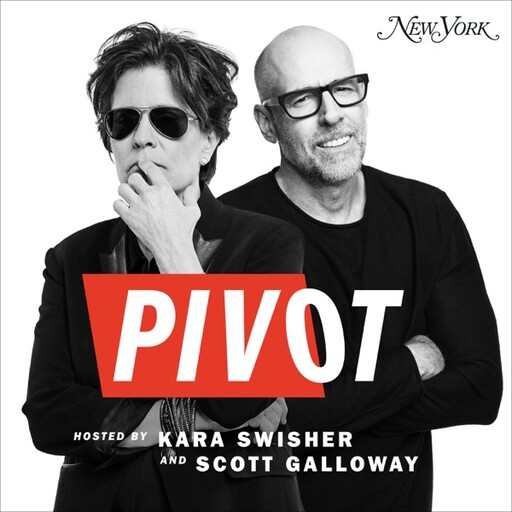
- Kara Swisher and Scott Galloway dissect the collapse of the proposed Skydance–Paramount merger after Shari Redstone, via National Amusements, abruptly ended talks over unresolved non‑economic terms. They argue Paramount has been effectively held hostage by the personal drama and ego of billionaire heirs rather than rational business logic. With Paramount stock down sharply despite being “in play,” institutional buyers like Apollo appear to be waiting out the dysfunction while only “billionaire children” circle the asset. Both hosts conclude the most rational path is to break up Paramount, sell off its valuable parts, and move past the dynastic control that’s eroding value.
IDEAS WORTH REMEMBERING
5 ideasParamount’s merger failure reflects governance dysfunction, not deal economics.
Swisher and Galloway emphasize that talks collapsed over non‑economic terms and personal drama, suggesting leadership and control issues—rather than price alone—are undermining value creation.
Dynastic control is destroying shareholder value at Paramount.
They argue that Shari Redstone’s reluctance and indecision, typical of ‘billionaire children,’ have driven Paramount’s stock down roughly 34% in six months, even while the company was theoretically “in play.”
Serious institutional investors are waiting for distress and clarity.
Firms like Apollo appear to be sitting on the sidelines until the pretzel‑like, ego-driven deals fail, expecting to eventually buy assets at more rational prices once the current drama burns out.
The most rational strategy is to break up Paramount’s businesses.
Galloway suggests selling the film studio to a buyer like Sony and folding cable networks into a larger roll‑up, focusing on cost-cutting in declining segments rather than pretending to engineer growth there.
Paramount’s underlying IP and franchises remain highly valuable.
Despite poor governance, both hosts note that Paramount still owns strong brands, hit shows, and legacy power (e.g., Paramount Pictures), making it attractive once control issues are resolved.
WORDS WORTH SAVING
5 quotesI am so sick of hearing about the neuroses of billionaires.
— Scott Galloway
The only people going after this thing now are billionaire children.
— Scott Galloway
None of it has anything to do with what's good for the business.
— Kara Swisher
This is all about personal drama playing out in a thing.
— Kara Swisher, relaying a banker’s view
Whenever you're selling anything, you just really want to hope that the child of a billionaire shows up.
— Scott Galloway
High quality AI-generated summary created from speaker-labeled transcript.



