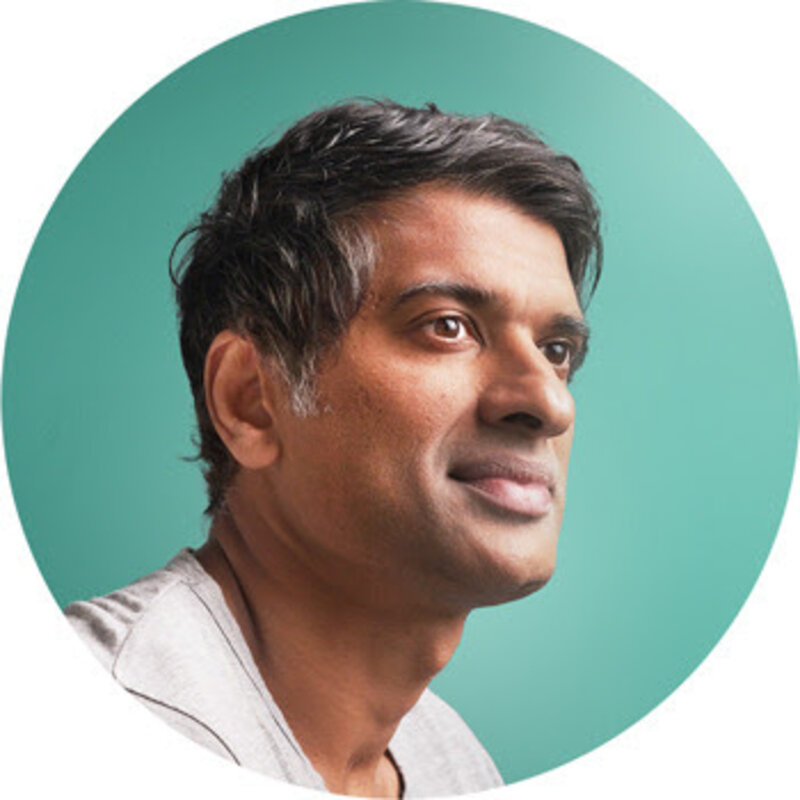
 Dr Rangan Chatterjee
The Uncomfortable Truth That Will Reinvent Your Life in 2026
Dr. Rangan Chatterjee on why intentional discomfort builds resilience, health, and freedom from comfort-traps.
In this episode of Dr Rangan Chatterjee, featuring Dr. Rangan Chatterjee and Dr. Rangan Chatterjee, The Uncomfortable Truth That Will Reinvent Your Life in 2026 explores why intentional discomfort builds resilience, health, and freedom from comfort-traps A large-scale fitness comparison suggests children today are significantly less fit than in the 1980s, which he links to increasingly comfortable lifestyles.
At a glance
WHAT IT’S REALLY ABOUT
Why intentional discomfort builds resilience, health, and freedom from comfort-traps
- A large-scale fitness comparison suggests children today are significantly less fit than in the 1980s, which he links to increasingly comfortable lifestyles.
- He frames intentional discomfort as a practical tool for improving both physical health and psychological resilience by proving you can override short-term urges.
- He cites research on “prevalence-induced concept change” to argue that when real problems decrease, people may start inventing or amplifying threats—making comfort a driver of anxiety.
- He offers customizable “one-time rules” (e.g., cold-shower finish, weekly Parkrun, no new episodes after a certain time, no eating after 7pm) to reduce decision fatigue and improve consistency.
- He emphasizes experimentation: pick one or two rules, adapt them to your life, and track how they affect sleep, cravings, mood, and self-trust.
IDEAS WORTH REMEMBERING
5 ideasComfort is not a neutral default; it can quietly weaken you.
He links widespread convenience to reduced baseline fitness and tolerance for challenge, arguing that without deliberate counterweights, comfort becomes a training program for fragility.
The biggest payoff of discomfort is often psychological, not physical.
Doing something hard on purpose (e.g., brief cold exposure) reinforces autonomy—“you” can override the brain’s immediate preference for ease—building confidence and resilience.
When real threats shrink, the mind may manufacture new ones.
The Harvard face-perception studies illustrate how people begin labeling neutral stimuli as threatening when true threats are rarer, mirroring how modern life can turn minor issues into major stressors.
Regular hard things can shrink everyday anxiety.
He observes that challenging activities (like running) occupy mental bandwidth in a healthy way, reducing rumination and making other stressors feel less consuming.
Rules beat willpower because they remove repeated decisions.
“One-time rules” (e.g., always go to Parkrun if you’re in town; never start a new episode after 9pm) reduce negotiation with yourself and make follow-through more automatic.
WORDS WORTH SAVING
5 quotesOn average, it takes children 90 seconds longer to run a mile than it did in the 1980s.
— Dr. Rangan Chatterjee
The powerful benefits really are psychological. They're you choosing intentionally to do something uncomfortable when you don't have to.
— Dr. Rangan Chatterjee
In essence, we will start to create problems when problems don't exist.
— Dr. Rangan Chatterjee
What you practice, you get good at. If you're practicing being comfortable all the time, you get really good at being comfortable.
— Dr. Rangan Chatterjee
You show yourself that you don't have to be at the whim of your brain's internal desires, that you can override them.
— Dr. Rangan Chatterjee
QUESTIONS ANSWERED IN THIS EPISODE
5 questionsWhat is the “powerful rule” you mention early on (you reference it but don’t restate it here), and how should someone choose their first rule?
A large-scale fitness comparison suggests children today are significantly less fit than in the 1980s, which he links to increasingly comfortable lifestyles.
How do you recommend balancing intentional discomfort with avoiding burnout—especially for people already under high life stress?
He frames intentional discomfort as a practical tool for improving both physical health and psychological resilience by proving you can override short-term urges.
The cold-shower evidence you cite mentions fewer sick days; what’s the most credible mechanism (immune, circulation, stress adaptation), and how strong is the data?
He cites research on “prevalence-induced concept change” to argue that when real problems decrease, people may start inventing or amplifying threats—making comfort a driver of anxiety.
How would you adapt “discomfort rules” for someone with chronic illness, pain, or disability so discomfort is constructive rather than harmful?
He offers customizable “one-time rules” (e.g., cold-shower finish, weekly Parkrun, no new episodes after a certain time, no eating after 7pm) to reduce decision fatigue and improve consistency.
Parkrun works because of community; what alternatives do you suggest for people without access to Parkrun or who feel socially anxious?
He emphasizes experimentation: pick one or two rules, adapt them to your life, and track how they affect sleep, cravings, mood, and self-trust.
Chapter Breakdown
Kids’ fitness decline as a warning sign of “comfort creep”
Dr. Chatterjee opens with a striking statistic: children today take significantly longer to run a mile than in the 1980s. He frames this as a symptom of increasingly comfortable modern living and invites viewers to reintroduce challenge intentionally.
Cold exposure: small, optional discomfort with outsized psychological payoff
He uses cold exposure as an example of discomfort people can choose, without making it a universal requirement. The emphasis is less on biohacking and more on training your mind to do hard things on purpose.
Why comfort can create “problems”: prevalence-induced concept change
He describes Harvard research showing that when real threats become rare, people start labeling non-threats as threats. He connects this to modern life, where reduced hardship can lead to heightened worry, rumination, and perceived stress.
Doing hard things shrinks anxiety and expands resilience
Regular challenge can reduce the mental “bandwidth” available for rumination. He gives relatable examples (like starting running) and clinical observations of how action and exposure help people feel better.
Discomfort rules: remove decision fatigue and make challenge automatic
He introduces the idea of “discomfort rules” as simple commitments that reduce repeated willpower battles. The goal is not constant hardship, but a deliberate balance of comfort and challenge.
Sponsored segment: WHOOP wearable and Cyber Sale offer
A brief ad break explains how the WHOOP band helped him understand and improve his health and wellbeing. He notes wearables aren’t for everyone but can be transformative for some.
Parkrun as a weekly commitment: “just get to the start line”
He highlights Parkrun as a community-based way to make discomfort social, supportive, and repeatable. The rule is to show up regardless of weather—community momentum carries you through the 5K.
Evening comfort traps: a simple rule to protect sleep
He reframes late-night streaming as a comfort-based habit that undermines sleep and next-day health. A one-time rule (like not starting a new episode after a set time) creates a clean boundary.
A modern comfort story: getting annoyed because an app won’t fetch water
A train anecdote illustrates how quickly expectations of convenience create frustration. He argues the antidote is practicing discomfort so minor inconveniences don’t feel like major stressors.
Morning “5-minute health action” to start the day with a win
He proposes a simple morning rule: do one five-minute health action immediately after waking. The point is to choose purposeful action over automatic scrolling and to build identity-level confidence.
Food boundary rule: stop eating after a set time to reduce late-night lapses
He applies the discomfort-rule concept to diet change, noting that late evening is when willpower is lowest and cravings are highest. A clear cutoff time can prevent regretful choices without requiring perfection.
Closing: pick 1–2 discomfort rules, notice the benefits, and iterate
He wraps by encouraging viewers to choose a small number of rules and tailor them to their lives. Tracking how the changes feel becomes the fuel for consistency and long-term change.
EVERY SPOKEN WORD
Install uListen for AI-powered chat & search across the full episode — Get Full Transcript
Get more out of YouTube videos.
High quality summaries for YouTube videos. Accurate transcripts to search & find moments. Powered by ChatGPT & Claude AI.
Add to Chrome