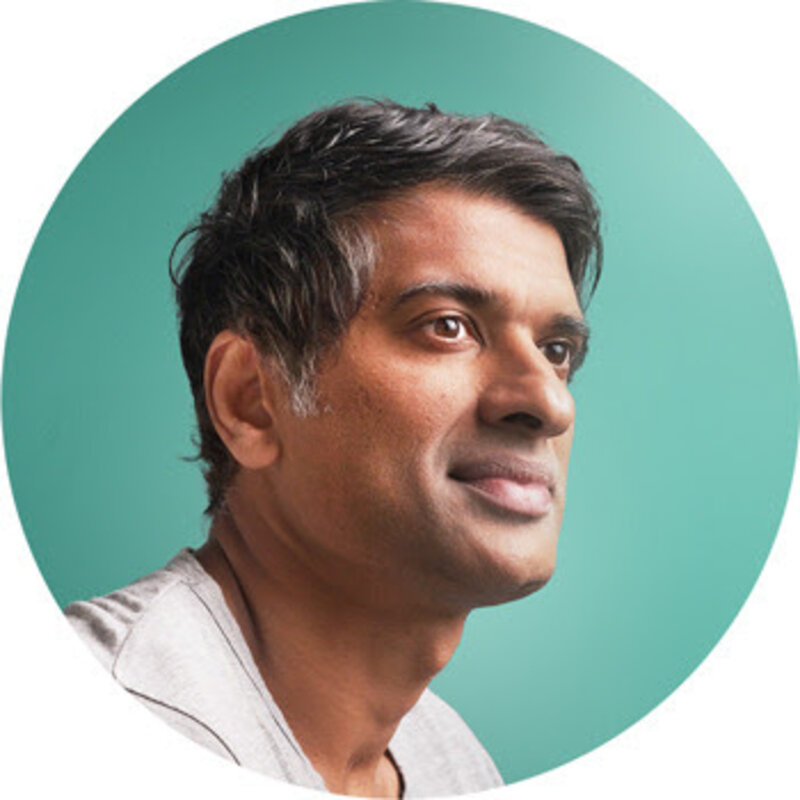
 Dr Rangan Chatterjee
Give Me 58 Seconds… I’ll Change Your Life Forever — Seriously.
Dr. Rangan Chatterjee on break invisible reliances to escape stuckness and reclaim personal freedom.
In this episode of Dr Rangan Chatterjee, featuring Dr. Rangan Chatterjee, Give Me 58 Seconds… I’ll Change Your Life Forever — Seriously. explores break invisible reliances to escape stuckness and reclaim personal freedom The core claim is that feeling stuck is less about laziness or willpower and more about “invisible reliances” such as needing to be liked, needing things to go perfectly, and prioritizing comfort.
At a glance
WHAT IT’S REALLY ABOUT
Break invisible reliances to escape stuckness and reclaim personal freedom
- The core claim is that feeling stuck is less about laziness or willpower and more about “invisible reliances” such as needing to be liked, needing things to go perfectly, and prioritizing comfort.
- The message reframes safety-seeking behaviors as “chains,” arguing that what feels safe can quietly trap you in the same patterns.
- A practical directive is offered: “cut the crutch,” tolerate friction, and reduce reliance to build autonomy—summarized as “minimal reliance equals maximum power.”
- The speaker emphasizes urgency by warning that the real risk is staying put and waking up years later unchanged, and suggests that changing one key reliance can shift your whole life.
- The video transitions into a call-to-action promoting free guides built around five small daily habits designed to improve energy, mood, and mindset over 30 days.
IDEAS WORTH REMEMBERING
5 ideasStuckness often comes from dependence, not deficiency.
The transcript argues your barrier isn’t laziness or willpower; it’s reliance on external approval, perfect conditions, or comfort that limits action.
What feels safe can be the mechanism of your trap.
Comfort and predictability can reduce short-term anxiety but reinforce patterns that prevent meaningful change over time.
Growth requires deliberate friction.
“Cut the crutch, face the friction” frames discomfort as a necessary ingredient for building capability and freedom.
Reduce reliance to increase agency.
“Minimal reliance equals maximum power” suggests that fewer emotional “requirements” (praise, certainty, ease) makes decisions more self-directed.
Approval-seeking blocks progress more than you think.
The speaker contrasts needing “everyone’s approval” with needing “your own permission,” positioning self-authorization as the leverage point.
WORDS WORTH SAVING
5 quotesYour problem isn't laziness or lack of willpower, it's invisible reliances on being liked, on things going perfectly, and on comfort.
— Dr. Rangan Chatterjee
The very things you lean on to feel safe are the chains that are keeping you stuck.
— Dr. Rangan Chatterjee
What feels safe is silently keeping you trapped.
— Dr. Rangan Chatterjee
You don't need everyone's approval, you need your own permission to grow.
— Dr. Rangan Chatterjee
You think you're avoiding risk by staying where you are, but the real danger? Waking up in five years in the same damn place.
— Dr. Rangan Chatterjee
QUESTIONS ANSWERED IN THIS EPISODE
5 questionsWhat are concrete examples of “invisible reliances,” and how can someone identify their own in daily life?
The core claim is that feeling stuck is less about laziness or willpower and more about “invisible reliances” such as needing to be liked, needing things to go perfectly, and prioritizing comfort.
How do you distinguish healthy needs (support, rest, belonging) from the kind of reliance that becomes a “chain”?
The message reframes safety-seeking behaviors as “chains,” arguing that what feels safe can quietly trap you in the same patterns.
If someone is reliant on comfort due to burnout or illness, what does “face the friction” look like safely and realistically?
A practical directive is offered: “cut the crutch,” tolerate friction, and reduce reliance to build autonomy—summarized as “minimal reliance equals maximum power.”
What is one high-impact reliance to change first—approval, perfectionism, or comfort—and why?
The speaker emphasizes urgency by warning that the real risk is staying put and waking up years later unchanged, and suggests that changing one key reliance can shift your whole life.
The video says “minimal reliance equals maximum power”; where can this mindset become unhealthy (e.g., isolation, rigidity), and how do you avoid that?
The video transitions into a call-to-action promoting free guides built around five small daily habits designed to improve energy, mood, and mindset over 30 days.
Chapter Breakdown
58-second premise: you’re not stuck—you’re relying on the wrong things
The video opens with a rapid reframing: the issue isn’t laziness or lack of willpower. It’s the hidden “reliances” you use to feel safe that quietly keep you trapped.
The three invisible reliances: approval, perfection, comfort
He names the core culprits that create inertia: needing to be liked, needing things to go perfectly, and prioritizing comfort. These feel protective in the moment but block growth over time.
Safety as a trap: what feels safe becomes the chain
The video argues that the very strategies used to feel safe can become constraints. In other words, perceived safety can quietly equal stagnation.
Action prescription: cut the crutch, face friction, build freedom
A direct call to action follows: remove the dependence and intentionally step into discomfort. The promise is that freedom and capability grow when you stop avoiding friction.
Core maxim: minimal reliance equals maximum power
He condenses the philosophy into a punchline: the less you depend on external conditions, the more agency you gain. Power comes from internal stability rather than external guarantees.
Approval shift: trade everyone’s permission for your own
He challenges the need for validation, arguing that self-authorization is what enables change. The key is giving yourself permission to grow rather than waiting to be endorsed.
The real risk: staying put and waking up five years later unchanged
He flips the usual risk narrative: avoiding change feels safe, but the bigger danger is long-term regret and stagnation. This chapter uses a vivid time-jump to make the cost feel real.
Small lever, big change: don’t change everything—change what you rely on
He reduces overwhelm by focusing on a single, high-leverage shift: alter the reliance and the rest of life begins to move. The emphasis is on targeted change rather than total reinvention.
Symptom check: exhausted despite sleep, stuck despite ‘doing it right’
He pivots to common viewer pain points—low energy and persistent stuckness—to signal relevance. The reassurance is that the viewer isn’t broken; they may be running unhelpful routines.
Offer: five tiny daily habits to transform life in 30 days (free guide CTA)
He presents a solution package: five small daily habits distilled from clinical experience to improve energy, mood, and mindset in a month. The call-to-action directs viewers to download free guides via link or QR code.
Next-video tease: feeling behind isn’t failure—it’s a signal
The video ends by setting up another piece of content: the idea that feeling behind may indicate flawed metrics for progress. He promises to save viewers time, stress, and pursuit of misaligned goals.
EVERY SPOKEN WORD
Install uListen for AI-powered chat & search across the full episode — Get Full Transcript
Get more out of YouTube videos.
High quality summaries for YouTube videos. Accurate transcripts to search & find moments. Powered by ChatGPT & Claude AI.
Add to Chrome