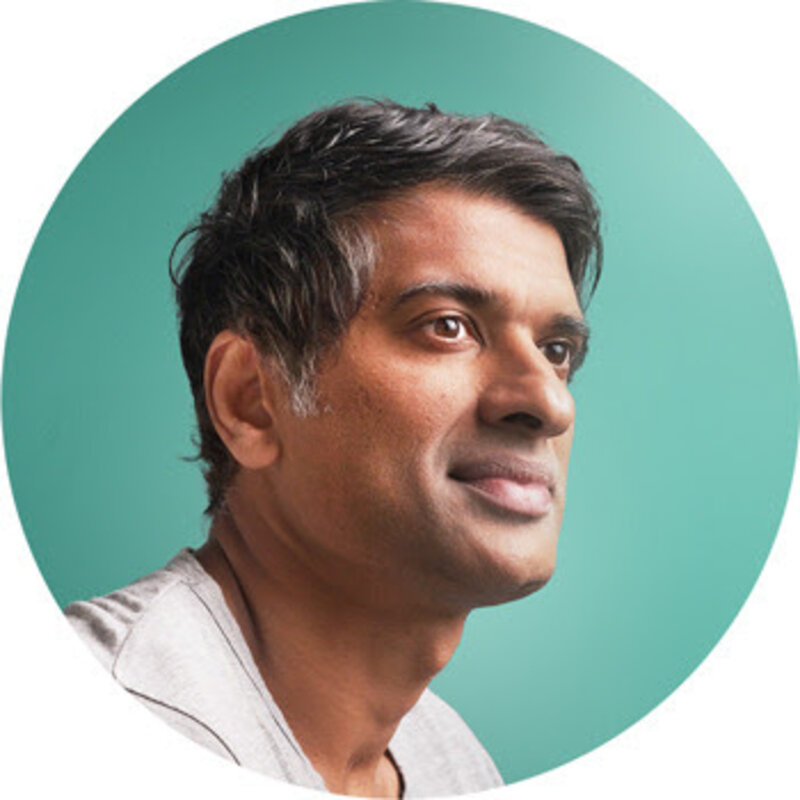
 Dr Rangan Chatterjee
This Decreases Your Lifespan Everyday (& Doctors Won’t Warn You) | Anti-Aging Reset w/ Mark Hyman
Dr. Rangan Chatterjee and Dr. Mark Hyman on modern food and lifestyle quietly accelerate aging—reset with data, habits.
In this episode of Dr Rangan Chatterjee, featuring Dr. Rangan Chatterjee and Dr. Mark Hyman, This Decreases Your Lifespan Everyday (& Doctors Won’t Warn You) | Anti-Aging Reset w/ Mark Hyman explores modern food and lifestyle quietly accelerate aging—reset with data, habits They argue many common symptoms (fatigue, skin issues, mood, gut problems) are downstream of food choices, yet conventional medicine is trained to treat diseases rather than create health through nutrition and lifestyle.
At a glance
WHAT IT’S REALLY ABOUT
Modern food and lifestyle quietly accelerate aging—reset with data, habits
- They argue many common symptoms (fatigue, skin issues, mood, gut problems) are downstream of food choices, yet conventional medicine is trained to treat diseases rather than create health through nutrition and lifestyle.
- Hyman explains why his 10-day detox/elimination approach removes gluten and dairy—claiming modern wheat and dairy differ from historical versions and can drive inflammation, gut permeability, and autoimmune issues in susceptible people.
- A major theme is “continuums not cutoffs”: lab ‘normal ranges’ can hide rising risk (e.g., A1c, insulin), motivating more advanced biomarker panels and trend tracking through Hyman’s company Function Health.
- They emphasize aging is strongly shaped by muscle and metabolism: time-restricted eating to enable autophagy, adequate high-quality protein (leucine threshold), and consistent resistance training to prevent sarcopenia, falls, and frailty.
- Longevity is framed as systems medicine plus culture: hormesis (fasting, exercise, heat/cold), plant phytochemicals, reduced ultra-processed foods, and Blue Zone social purpose/community as protective factors beyond any single intervention.
IDEAS WORTH REMEMBERING
5 ideasMany “mystery symptoms” should be treated as food-related until proven otherwise.
They argue you often can’t know which symptoms are diet-driven until you clean up food first (alongside movement, sleep, stress), because many issues are downstream of inflammation and metabolic stress.
Medical “normal ranges” can normalize dysfunction in a sick population.
They cite A1c and insulin as examples where risk rises well below common cutoffs; population averages shift reference ranges upward, masking early metabolic decline that still predicts mortality and cardiovascular risk.
Use elimination and reintroduction to identify personal triggers—especially for gluten/dairy.
Hyman’s approach removes multiple likely inflammatory triggers at once (for a short, doable window), then reintroduces foods one at a time to detect changes in gut, skin, energy, mood, and sleep.
Gluten sensitivity is framed as a spectrum, not a binary celiac diagnosis.
They distinguish biopsy-proven celiac disease from partial sensitivities and antibody “gray zones,” recommending an N-of-1 trial (stop for weeks, reintroduce, observe) rather than relying only on a yes/no label.
Metabolic health hinges on reducing refined starch and added sugar—especially at breakfast.
They describe typical breakfasts as “dessert,” arguing high-glycemic breakfasts elevate insulin and can raise stress hormones (cortisol/adrenaline), increasing hunger, cravings, and downstream weight gain.
WORDS WORTH SAVING
5 quotesYou should be the CEO of your own health.
— Dr. Mark Hyman
Food is the biggest cause of disease we're seeing in today's modern society, it's the biggest cure, and doctors know nothing about food.
— Dr. Mark Hyman
Essentially, the world is eating dessert for breakfast.
— Dr. Mark Hyman
The single biggest input to your biology is what you eat every day, and the information in that food is changing your biology in real time.
— Dr. Mark Hyman
If you have meaning and purpose, your life extension is seven years.
— Dr. Mark Hyman
QUESTIONS ANSWERED IN THIS EPISODE
5 questionsIn your 10-day detox, what exact sequence do you recommend for reintroducing gluten vs dairy, and what symptoms (skin, sleep, mood, stools) should people track to make the decision rigorous?
They argue many common symptoms (fatigue, skin issues, mood, gut problems) are downstream of food choices, yet conventional medicine is trained to treat diseases rather than create health through nutrition and lifestyle.
You suggest modern dwarf wheat and glyphosate exposure contribute to gluten issues—what evidence best separates gluten proteins themselves from pesticides or processing methods (e.g., sourdough fermentation) as the primary culprit?
Hyman explains why his 10-day detox/elimination approach removes gluten and dairy—claiming modern wheat and dairy differ from historical versions and can drive inflammation, gut permeability, and autoimmune issues in susceptible people.
Function Health reports high rates of positive ANA and thyroid antibodies—how do you prevent overdiagnosis and anxiety from “pre-autoimmune” markers, and what follow-up algorithm do you recommend before labeling it clinically meaningful?
A major theme is “continuums not cutoffs”: lab ‘normal ranges’ can hide rising risk (e.g., A1c, insulin), motivating more advanced biomarker panels and trend tracking through Hyman’s company Function Health.
You argue breakfast glycemic load can raise cortisol/adrenaline; what are your top 3 “default” breakfasts for someone who is time-poor but wants protein-forward, low-glycemic meals?
They emphasize aging is strongly shaped by muscle and metabolism: time-restricted eating to enable autophagy, adequate high-quality protein (leucine threshold), and consistent resistance training to prevent sarcopenia, falls, and frailty.
For people wanting longevity benefits without losing muscle, what fasting window and protein target would you set for (a) sedentary adults over 60, (b) endurance athletes, and (c) perimenopausal women doing strength training?
Longevity is framed as systems medicine plus culture: hormesis (fasting, exercise, heat/cold), plant phytochemicals, reduced ultra-processed foods, and Blue Zone social purpose/community as protective factors beyond any single intervention.
Chapter Breakdown
Food as the hidden driver of symptoms—and why you won’t know until you change it
Rangan and Mark argue that many everyday symptoms (fatigue, mood, skin, gut issues) may be downstream of diet, yet people often only discover this after cleaning up what they eat. They contrast “treating symptoms” with “creating health,” using food as the first pillar to address before assessing what problems remain.
A toxic food culture: how ultra-processed norms became ‘normal’ health
They discuss how the modern food environment makes healthy eating seem extreme because the baseline has shifted toward metabolic dysfunction. Mark explains that “normal” lab ranges and body weights reflect a sick population average, not optimal physiology.
Why Mark’s 10-day reset removes gluten and dairy
Mark explains that removing gluten and dairy isn’t ideological—it’s a practical way to reduce common inflammatory triggers quickly. He argues modern wheat and dairy differ substantially from traditional forms, contributing to gut inflammation and immune problems in susceptible people.
Beyond celiac: gluten sensitivity as a spectrum (and how to test it in real life)
They critique the binary medical mindset (“you have it or you don’t”) and propose that many conditions exist on a continuum. Mark suggests using a structured elimination-and-rechallenge approach and considering antibody ‘gray zones’ rather than relying only on strict diagnostic cutoffs.
Medical training hasn’t caught up: nutrition still missing from the curriculum
Rangan asks whether medical education has improved via Mark’s daughter in medical school; Mark says it hasn’t. They emphasize that doctors learn little clinically useful nutrition, microbiome science, insulin resistance, or environmental medicine—despite these driving modern disease.
Function Health and the problem with ‘normal’ lab ranges
They explore why standard lab reporting (normal/abnormal) misses early risk and how cutoffs vary by country. Mark describes Function Health’s model: broader biomarker testing, trend tracking, and actionable interpretation aimed at prevention and personalization.
The ‘autoimmune spectrum’: early signals, microbiome damage, and modern triggers
Mark highlights surprisingly high rates of autoimmune markers in Function members and frames autoimmunity as a long continuum rather than a sudden diagnosis. They connect early immune dysfunction to microbiome disruption, antibiotics, toxins, stress, and dietary triggers like modern gluten and additives.
Root-cause medicine for autoimmunity: asking ‘why’ instead of ‘what drug’
Mark contrasts conventional suppression-focused care with root-cause investigation. He outlines a trigger-hunting approach—dietary elimination, gut repair, toxin and infection screening—using medication when needed but not as the starting principle.
Protein, muscle, and longevity: balancing mTOR with autophagy
They unpack the polarized protein debate by focusing on biology: muscle is protective for longevity, yet constant mTOR stimulation may reduce autophagy. Mark recommends cycling between fasting windows (to promote cellular cleanup) and adequate high-quality protein (to build/maintain muscle), especially with age.
Resistance training as anti-aging medicine (and why walking isn’t enough)
Mark and Rangan emphasize resistance training’s outsized impact on aging, mobility, hormones, and independence. Rangan shares personal experience with his mother’s functional decline, making the case that strength is a major determinant of late-life quality and survival.
Hormesis: using “good stress” to activate longevity pathways
Mark introduces hormesis as non-lethal stress that triggers repair systems shaped by evolution. They cover accessible tools (fasting windows, exercise, hot/cold exposure) and more advanced options (hyperbaric oxygen), linking these to aging biology concepts.
Telomeres and ‘zombie cells’: two hallmarks of aging explained
They define telomeres as protective chromosome caps that shorten with replication and link them to aging metrics. Mark explains senescent (“zombie”) cells as inflammatory cells that resist apoptosis, contributing to ‘inflammaging,’ and notes emerging strategies to reduce them.
Rethinking breakfast: stop eating dessert in the morning
They argue that the typical Western breakfast (cereal, toast, muffins, sugary drinks) is essentially dessert and triggers metabolic and hormonal cascades that increase hunger and fat storage. Mark uses controlled studies to show identical-calorie breakfasts produce radically different downstream eating and physiology.
Sugar, cortisol, and food addiction: how refined carbs hijack stress and reward pathways
They connect high-glycemic breakfasts to rises in cortisol/adrenaline, framing refined carbs as physiological stressors. Mark also discusses evidence of addiction-like brain activation and a meaningful prevalence of clinically significant food addiction in both adults and children.
The 10-Day Detox and functional medicine: elimination as a systems reset
Mark details his 10-day detox as a short, doable intervention removing key inflammatory inputs (sugar, flour, ultra-processed foods, alcohol, caffeine; often gluten/dairy) while adding nutrient-dense whole foods. He positions it as functional/systems medicine in action—addressing root causes rather than compartmentalized symptoms.
Biological age, blue zones, and meaning: longevity as function + purpose
They distinguish chronological age from biological age and explain how epigenetic clocks can measure aging rate—and how lifestyle can reverse it quickly. Mark’s blue zone experiences highlight that long life is supported by default cultural patterns: real food, movement, community, and especially meaning and purpose.
EVERY SPOKEN WORD
Install uListen for AI-powered chat & search across the full episode — Get Full Transcript
Get more out of YouTube videos.
High quality summaries for YouTube videos. Accurate transcripts to search & find moments. Powered by ChatGPT & Claude AI.
Add to Chrome