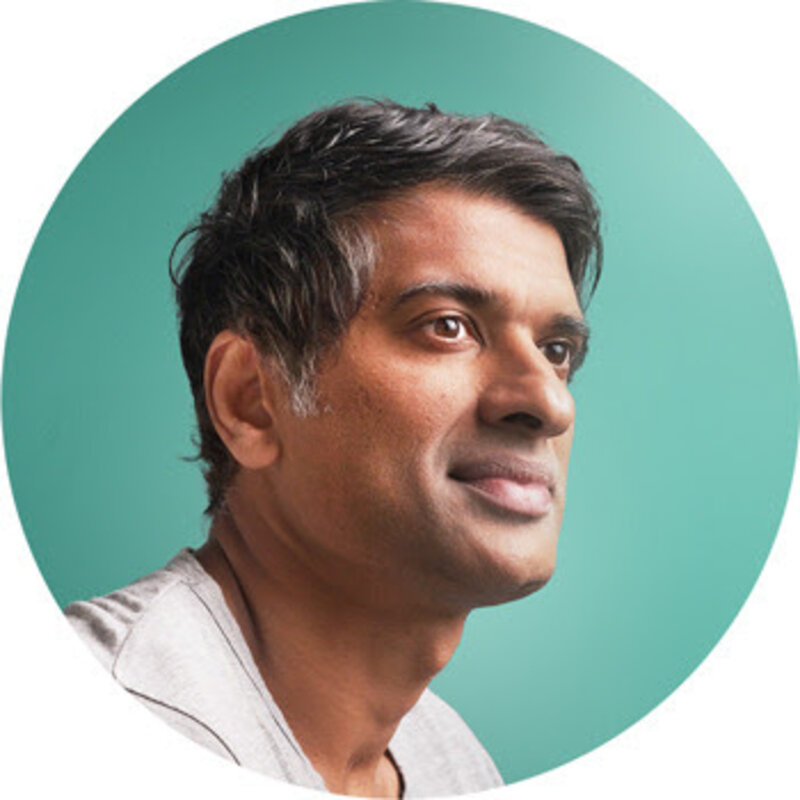
 Dr Rangan Chatterjee
The Forgotten Habit That Lowers Dementia, Depression & Aging | Daisy Fancourt
Dr. Rangan Chatterjee and Daisy Fancourt on arts engagement, the forgotten health habit, measurably improves mind and body.
In this episode of Dr Rangan Chatterjee, featuring Dr. Rangan Chatterjee and Daisy Fancourt, The Forgotten Habit That Lowers Dementia, Depression & Aging | Daisy Fancourt explores arts engagement, the forgotten health habit, measurably improves mind and body Large-scale studies and trials suggest arts engagement can meaningfully improve health outcomes, with effect sizes sometimes comparable to established pillars like exercise and sleep.
At a glance
WHAT IT’S REALLY ABOUT
Arts engagement, the forgotten health habit, measurably improves mind and body
- Large-scale studies and trials suggest arts engagement can meaningfully improve health outcomes, with effect sizes sometimes comparable to established pillars like exercise and sleep.
- Regular engagement with music, reading, dance, crafts, and cultural attendance is associated with lower blood pressure, improved cardiometabolic markers, and reductions in stress physiology.
- Evidence links arts participation to longer lifespan and slower biological aging, including younger “brain age” and decelerated epigenetic aging measured via DNA methylation clocks.
- Arts can support cognition and dementia care by building cognitive reserve, reducing agitation with familiar music, and leveraging preserved musical memory pathways in Alzheimer’s disease.
- The conversation highlights practical “behavior design” (daily minimums, variety, creative commute, planning for illness) and policy implications including arts-on-prescription, school curricula, access equity, and sustainable livelihoods for artists.
IDEAS WORTH REMEMBERING
5 ideasTreat arts engagement as a core health behavior, not a luxury.
Fancourt argues the evidence base has matured: arts engagement shows tangible biological and psychological effects, sometimes similar in magnitude to better-known lifestyle levers such as physical activity or sleep.
Regular arts exposure can lower blood pressure—especially when practiced consistently.
Trials in hypertension found that adding daily music listening to standard advice/medication produced additional systolic reductions (reported ~9–10 mmHg), consistent with strong relaxation and stress-modulating effects.
Benefits aren’t limited to music; multiple art forms trigger relaxation responses.
Dance, crafts, reading, and cultural attendance can produce short-term reductions in heart rate/blood pressure within 30–60 minutes, and longer-term additive gains when repeated weekly or more.
Arts engagement is linked to longevity and slower biological aging markers.
Multiple cohort studies show longer lifespans among those engaged in arts/culture even after accounting for wealth and other lifestyle factors; emerging research connects arts participation to younger “brain age” and decelerated epigenetic aging with effect sizes comparable to exercise.
Active/participatory arts can add “extra ingredients” beyond other healthy activities.
Replacing “just chatting” with a concert or pairing aerobics with dance can stack social connection and movement with multisensory stimulation, imagination, novelty, and cognitive challenge—often producing benefits beyond the base activity.
WORDS WORTH SAVING
5 quotesOver the last few decades, we've had this absolute explosion of scientific studies looking at how the arts influence our mind, brain, body, and behavior.
— Daisy Fancourt
I call screen-based arts engagement the ultra-processed food of the art worlds.
— Daisy Fancourt
People who've got the most frequent and diverse patterns of arts engagement have younger epigenetic age, decelerated epigenetic aging, actually with a really similar effect size to what we see from physical activity.
— Daisy Fancourt
It's effectively becomes a kind of whole brain workout, so it's a really good way of challenging yourself cognitively in a really sophisticated way.
— Daisy Fancourt
So now instead of scrolling the news on my phone and stressing myself on, out on the way to and from work, I read a book every day on the way to work on the train, and on the way home, I listen to music to calm myself down, and it has made such a difference bookending my workday in that way.
— Daisy Fancourt
QUESTIONS ANSWERED IN THIS EPISODE
5 questionsIn the hypertension trials you referenced, what type of music (tempo/genre), duration, and adherence were most strongly linked to the ~9–10 mmHg systolic improvement?
Large-scale studies and trials suggest arts engagement can meaningfully improve health outcomes, with effect sizes sometimes comparable to established pillars like exercise and sleep.
Which outcomes show similar benefits from receptive arts (watching/listening) versus participatory arts (making/doing), and where does participation clearly outperform?
Regular engagement with music, reading, dance, crafts, and cultural attendance is associated with lower blood pressure, improved cardiometabolic markers, and reductions in stress physiology.
What’s the strongest causal evidence so far that arts engagement slows biological aging (epigenetic clocks), and what confounders are hardest to fully rule out in cohort studies?
Evidence links arts participation to longer lifespan and slower biological aging, including younger “brain age” and decelerated epigenetic aging measured via DNA methylation clocks.
For families caring for someone with dementia, how would you build a ‘music protocol’ for bathing/mealtimes (playlist selection, volume, timing, and how to spot distress)?
Arts can support cognition and dementia care by building cognitive reserve, reducing agitation with familiar music, and leveraging preserved musical memory pathways in Alzheimer’s disease.
You describe screen-based arts as the ‘ultra-processed’ version—what specific elements of live/active engagement (social presence, multisensory input, unpredictability) seem to drive the extra benefit?
The conversation highlights practical “behavior design” (daily minimums, variety, creative commute, planning for illness) and policy implications including arts-on-prescription, school curricula, access equity, and sustainable livelihoods for artists.
Chapter Breakdown
Why the arts are a “forgotten” pillar of health
Daisy Fancourt argues that arts engagement deserves to sit alongside diet, sleep, and exercise because the evidence base has rapidly expanded and shows measurable effects on mind and body. She explains why this science has stayed relatively hidden, partly due to cultural assumptions that the arts are a luxury rather than essential health behavior.
Music and blood pressure: a surprisingly strong intervention
They discuss trials where adding daily music listening to standard hypertension care leads to additional reductions in systolic blood pressure. The conversation broadens to observational findings showing arts-engaged people tend to have healthier cardiovascular and metabolic markers even after accounting for other lifestyle factors.
Beyond music: which art forms reduce stress physiology?
Fancourt explains that multiple art forms—not just music—can trigger relaxation responses and short-term improvements in blood pressure/heart rate. Regular weekly engagement appears to produce cumulative, longer-term benefits.
Arts engagement, longevity, and slower biological aging
Using cohort studies and emerging biomarkers, Fancourt describes consistent links between arts/culture participation and longer lifespan. She highlights cutting-edge work on “brain age” and biological aging clocks suggesting arts engagement may decelerate aging processes.
Epigenetic clocks and gene expression: the ‘deep biology’ of art
They explore epigenetic aging (DNA methylation patterns) and how frequent, diverse arts engagement correlates with a younger epigenetic age—similar in magnitude to physical activity. Fancourt also references work showing classical music listening can shift gene expression related to neuronal protection and plasticity.
Why arts can outperform “relaxing” activities: added ingredients and supercharging
Chatterjee contrasts arts with other calming behaviors (walking, chatting), and Fancourt explains the ‘extra ingredients’ the arts provide—multi-sensory stimulation, imagination, novelty, and cognitive challenge. Examples include choosing a concert/exhibition with friends and dance-based exercise outperforming standard aerobic exercise in some studies.
Dance across the lifespan: balance, falls, bones, and practicality
The discussion turns to dance as an accessible, enjoyable way to combine movement, coordination, music, and social connection. Fancourt notes research linking regular dance with better balance, bone mineral density, and fewer falls, and suggests choosing any dance style you’ll stick with.
From ritual and bonding to ‘artistic passivity’: what we’ve lost
They examine the historical role of arts in healing, ritual, and social cohesion, and why modern life has shifted toward passive or background consumption. Fancourt cites data showing extremely low day-to-day active arts participation and introduces the idea that screen-based arts can be like ‘ultra-processed’ engagement—still beneficial but often weaker than live/participatory forms.
What counts as ‘arts engagement’: receptive vs participatory (and overlooked art forms)
Fancourt defines arts engagement and expands it beyond the obvious (music, painting, theater) to include culinary arts, horticultural arts, and even circus/magic—activities sharing creativity, sensory stimulation, and aesthetics. She distinguishes receptive engagement (watching/listening) from participatory engagement (making/doing), noting both can help mental health but participation may be especially important for cognition and some physiological outcomes.
Enjoyment, ‘sad songs,’ and emotional regulation via predictive coding
They unpack the role of pleasure and dopamine, including anticipation and tension–resolution in stories and music. Fancourt explains why even sad, angry, or frightening art can support wellbeing through ‘aesthetic distance,’ and how arts feed the brain’s predictive coding—training emotion regulation and resilience—while also noting personal triggers and individual differences.
Meaning, purpose, and arts in palliative care and bereavement
Fancourt describes how arts address psychological and social needs that medicine alone often can’t—especially at end of life. They discuss powerful examples from palliative wards where music and shared artistic experiences provide comfort, meaning, connection, and support for grieving.
Children, access, and inequality: why school arts provision matters
The conversation highlights the developmental role of arts in childhood—cognition, mental health, identity, self-esteem, creativity, compassion—and warns about reduced arts provision in schools. Fancourt stresses unequal access outside school and notes that early exposure predicts adult engagement, shaping lifelong health benefits.
Dementia applications: agitation, wayfinding, and why music remains accessible
They ‘close the loop’ on dementia by discussing practical uses of music during bathing/mealtimes to reduce agitation and distress. Fancourt explains design-based interventions (color pathways, artwork for navigation) and a key neuroscience insight: long-term musical memory is preserved late in Alzheimer’s, making familiar youth music particularly effective.
How to build an ‘arts diet’: daily doses, variety, and the creative commute
Fancourt offers practical guidance: treat arts like nutrition—aim for a daily minimum and diversify forms for different ‘ingredients.’ She introduces planning ahead (‘identify your chicken soup’) for times of illness, and shares her ‘creative commute’ swap—reading on the train and listening to music on the way home—to consistently bookend the workday with restorative engagement.
Arts in medicine and society: inflammation, surgery anxiety, prescribing, and equity
They review evidence that arts can modulate immune and inflammatory markers (e.g., drumming, expressive writing, broader proteomic patterns) and improve clinical experiences like pre-surgery anxiety—sometimes rivaling medication. The chapter expands to arts-on-prescription programs (including Greece integrating it into psychiatric care), spillover into healthier behaviors, the importance of equitable access, and the need to value artists and cultural infrastructure post-COVID.
EVERY SPOKEN WORD
Install uListen for AI-powered chat & search across the full episode — Get Full Transcript
Get more out of YouTube videos.
High quality summaries for YouTube videos. Accurate transcripts to search & find moments. Powered by ChatGPT & Claude AI.
Add to Chrome